Pantry Organization Mistakes That Make Clutter Come Back
Ten common setup mistakes that make an organized pantry fall apart, why each one causes trouble, and a small fix for each that does not mean starting again.
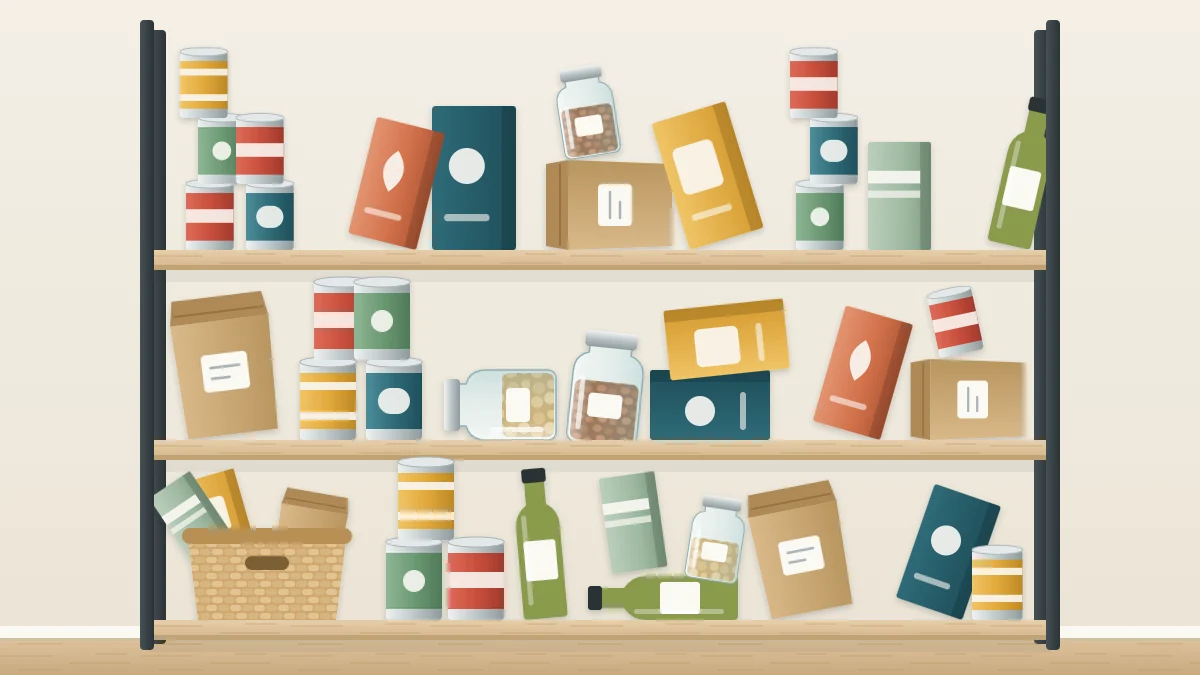
You emptied the shelves, wiped them down, lined everything up, and a month later the bags are slumping again. That is rarely a sign of laziness. Most pantry organization mistakes are built into the setup itself, so the pantry looks finished on day one and then quietly works against the people using it.
Below are ten of the most frequent ones, grouped by when they happen, each with the reason it causes trouble and a fix that does not mean starting over.
Mistakes made before anything goes on a shelf
1. Buying containers before sorting and measuring
A matching set bought first is sized for someone else’s shelves and someone else’s groceries. You end up with containers too tall for the gap, too small for a full bag, or simply more than you have food for. Sort what you own, measure the shelf width, depth and height, and only then decide what to buy. If you are near the beginning, the beginner’s guide to where to start sets out the order.
2. Organizing by package type instead of by use
All boxes together and all bags together looks neat, but nobody cooks by package shape. When taco shells sit with cereal because both come in boxes, each meal means visiting four shelves, and items go back wherever there is room. Group by how food is used: breakfast things together, baking together, weeknight dinner staples together.
Mistakes in how the shelves are filled
3. Filling every shelf to capacity
A shelf packed edge to edge has no room for the next grocery trip and no room for a hand. To take one thing out you move three, and they do not go back the same way. Leave a visible gap on each shelf, roughly the width of one or two packages. If there is no space for a gap, the pantry is holding more than it can organize, and something needs to move out.

4. Putting everyday items too high or too low
Whatever is hard to reach is hard to put back. If the rice you cook several times a week lives above your head, it will end up left on the counter or pushed onto the nearest shelf. Give the band between waist and eye level to the foods you use most, the top to light and rarely used things, and the bottom to heavy and bulky ones.
5. No place for backups
Backstock means unopened spares of foods you already have open. With no home of its own, it scatters: a second jar of sauce here, a third there, and a fourth bought because nobody saw the others. Give spares one dedicated zone and keep a single open item in the working area. The guide to where to keep pantry backstock covers the options.
Mistakes with containers and bins
6. Hiding food in opaque or deep bins with no label
A bin gathers loose things into one unit, which helps. An unlabeled bin you cannot see into becomes a drawer of forgotten packets. Either use clear bins, or label the front of every opaque one with the plain name of what belongs inside, and keep each bin to a single category.
7. Decanting everything
To decant is to pour food from its package into a container. It earns its keep for staples you buy repeatedly in soft bags. It is wasted effort for a box of crackers you finish in a week, and it adds a washing job each time. Decant the handful of foods where a rigid, see-through container solves a real problem, and leave the rest in their packaging. The guide to choosing pantry storage containers helps you decide which those are.
8. Throwing away the package too soon
The package carries three things a bare container does not: the date, the cooking directions and the allergen information. The label is where allergens are identified, so losing it loses that record. Before a bag or box goes in the recycling, copy the package date and directions onto a label, and cut out the ingredient panel to tape to the back of the container or tuck under the lid.
Mistakes in how the system is run
9. A system only one person understands
If the logic lives in one head, everyone else in the house puts groceries wherever they fit. Name zones with the words your household actually uses, label shelf edges as well as containers, and keep the number of categories small enough to remember. A fair test: can someone else unpack a grocery bag correctly without asking?
10. Never reviewing
Households change. A new work schedule, a child who starts packing lunches or a change in what you cook all shift what the pantry needs to hold. A layout that is never revisited slowly stops matching real life, and strays pile up in the gaps. A few minutes of straightening before each main grocery trip and a fuller look a few times a year is usually enough; the pantry maintenance routine lays out a simple version.
One belief to drop
It is easy to assume that decanting into attractive matching containers makes food keep longer or makes it safer. It does not. A tight-fitting lid helps keep out moisture and pantry insects and contains spills, and a clear side shows you how much is left. How long a food keeps still depends on the food, the date on its package and where it is stored.
How to tell which mistakes are yours
Stand in front of the open pantry and look for the symptoms instead of the causes.
- Things left on the counter: their home is too high, too low or too full (mistakes 3 and 4).
- Duplicates of the same item: backups have no zone, or something is hidden in a bin (mistakes 5 and 6).
- Empty or half-used containers: they were bought first or filled with the wrong foods (mistakes 1 and 7).
- Only one person can find things: the grouping or the labels do not match how the household thinks (mistakes 2 and 9).
Fix one thing at a time
There is no need to pull everything out again. Pick the symptom that annoys you most and correct the mistake behind it on a single shelf. Move the everyday foods into the easy-reach band, clear one gap, label one opaque bin. Then live with the change for two weeks before touching anything else.
Frequently asked questions
Why does a pantry get messy again so quickly?
Usually because the setup makes putting things back harder than leaving them out. Shelves filled to the edge, everyday foods stored out of easy reach and spares with no fixed home are the most common causes. Fixing those three often does more than another full clear-out.
Should I buy containers before organizing the pantry?
It is better to wait. Sort your food into groups, decide where each group will live and measure the shelf width, depth and height first. Then buy only the containers and bins that fill a real gap, in sizes that fit both the shelf and the packages you normally buy.
Do I need to decant everything into matching containers?
No. Decanting helps with staples bought again and again in soft bags, where a rigid container stacks and shows the level. Foods you finish quickly, or foods whose package directions you need each time, are usually easier to leave in their packaging, clipped and stood upright in a bin.


