Pantry Storage Containers: How to Choose the Right Ones
How to choose pantry containers as a system: measure the shelf first, pick shapes that use it, compare materials and lids, and size each container to the package you normally buy. Includes an honest note on what containers cannot do.
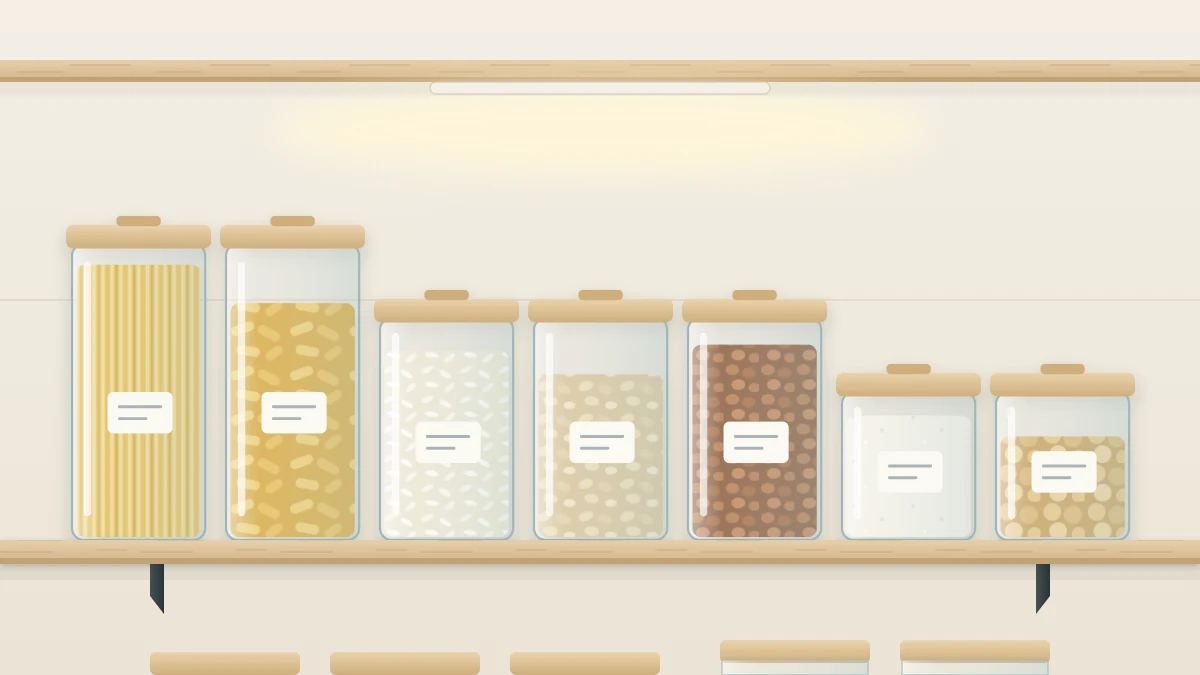
Choosing pantry storage containers is easier when you treat them as a system rather than a set. A system starts with your shelves and the food you actually buy, then works out which shapes and sizes fill that space. A set starts in the store, with whatever happens to be boxed together.
Here, a container means something rigid with a lid that holds one food. The points below cover shape, material, lids and size, along with a plain account of what a container does and does not do for the food inside it.
Start from the shelf, not the store
Before comparing products, measure the place the containers will stand. You need three numbers for each shelf: the width, the depth and the clear height to the shelf above. Write them down, and take off a little from the height so a container can be lifted out without tilting.
Then look at the food. Sort it first, so you know which staples you buy again and again and in what quantity. Those are the candidates. Anything you buy once, or finish within days, rarely needs a container at all.
Shape: why square beats round
Square and rectangular containers sit flush against each other and against the back and sides of the shelf. Round ones touch only at a point, leaving a gap between every pair and in every corner. Across a whole shelf, those gaps add up to a noticeable amount of unused space.
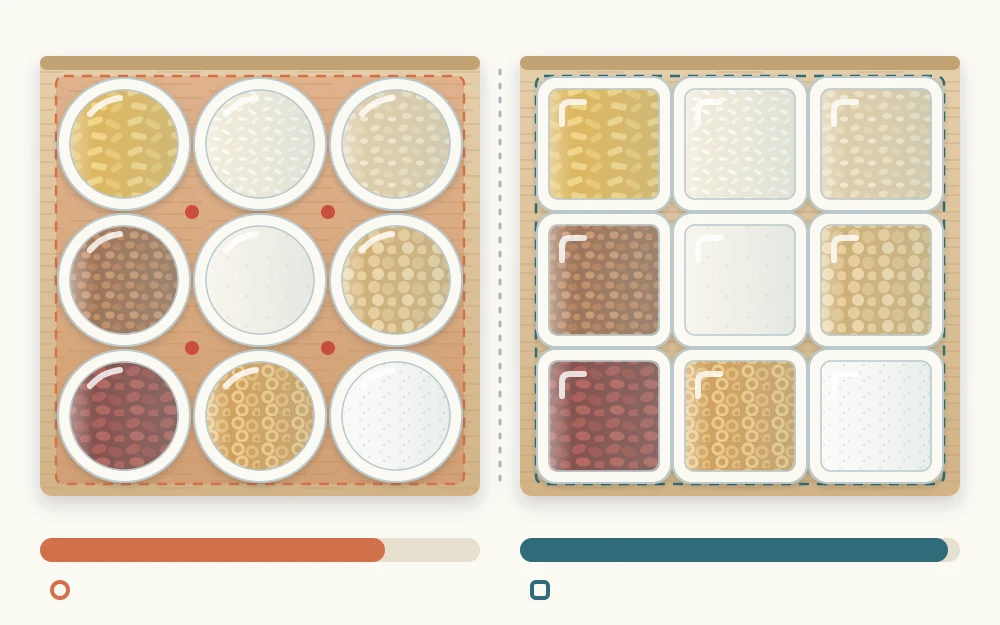
Two more shape points are worth checking:
- Straight sides. Containers that taper toward the base waste space lower down, even when the lids touch.
- Modular sizes that stack. In a modular range, two small containers have the same footprint as one large one, and lids are shaped so the next container sits securely on top. That lets you use the height between shelves and rearrange without leftover gaps.
Round containers still have their place: a round jar is easy to grip, and round shapes suit a turntable.
Materials compared
No material is best for everything. The right one depends on where the container will sit, who will handle it and whether you need to see the contents.
| Material | Weight and breakability | See inside? | Typical uses and cost level |
|---|---|---|---|
| Clear plastic | Light; may crack or scratch, but will not shatter | Yes | Everyday dry goods, cereal, snacks, high shelves and anything children fetch; low to moderate cost |
| Glass | Heavy; breaks if dropped | Yes | Dry goods on shelves at or below eye level; moderate cost, or free when reusing jars |
| Stainless steel or tin | Light to medium; dents rather than breaks | No, so it needs a label | Coffee, tea, baking supplies; moderate to higher cost |
| Ceramic | Heavy; chips and breaks | No, so it needs a label | A few frequently used items kept on show; moderate to higher cost |
Whatever the material, choose containers their maker sells for food storage, and follow the maker’s washing instructions. If glass appeals to you, the guide to glass jars for pantry storage covers jar types, sizes and where jars are a poor fit.
Lids and openings
The lid decides how pleasant a container is to use, so look at it as closely as the body.
- Wide openings suit anything you scoop or reach into: flour, sugar, oats, snacks. Check that your measuring cup or your hand fits through.
- Pour spouts suit foods you tip out, such as cereal, rice and small pasta shapes. A flap in the lid saves removing the whole lid at every use.
- How the seal closes varies: press-on lids, screw tops, clamps and lids with side latches or a push-button are all common. Try opening and closing it with one hand. A lid that is awkward will be left loose.
- Flat lids allow stacking. Domed or knobbed lids do not.
- Parts that come apart for washing, including any gasket, make it easier to get a container fully clean and dry before refilling.
Size to the package you buy
Pick each container to hold one full package of the food as you normally buy it. If the bag of rice you buy does not fit, you are left with a part-full container and a clipped bag to store as well, which is more clutter than you started with.
Capacity on the label is given by volume, and foods differ in how much room they take, so the practical test is the package itself. Check the maker’s guidance on what each size holds, or measure your usual bag against the container’s dimensions. When in doubt, choose slightly larger rather than slightly smaller.
Pouring food out of its package and into a container is called decanting, and it has a method of its own, including what to copy from the package before you throw it away. The guide on how to decant dry goods walks through it.
What a container can and cannot do
A tight-fitting lid helps keep out moisture and pantry insects, and it keeps spills contained if something tips over. A clear body lets you see what you have and how much is left. Those are real, practical benefits.
Good to know
A container does not make food safer, and it does not reset how long food keeps. That depends on the food itself, the date on its package and the conditions it is stored in. Keep the package date with the food when you remove the packaging.
Storage conditions matter whatever the food is kept in: a cool, dry spot away from heat and direct light. For more detail on storing food at home, see the FDA’s page Are You Storing Food Safely?
Buy in stages, not as a matching set
A large matching set is tempting, but it fixes the sizes before you know what you need. Sets often include several small pieces that hold very little and too few of the large size that a bag of flour requires.
A steadier approach is to buy for one zone at a time. Start with the three or four staples that cause the most trouble, try those containers in daily use, and add more from the same range if they work.
Two final points. Not every group belongs in a lidded container: packets, pouches and snack bags are better gathered in open storage, covered in the guide to pantry baskets and bins. And every container you cannot see into, or that holds a look-alike food, needs a name on it. The guide to pantry labels explains what to write.
Frequently asked questions
Are square or round containers better for a pantry?
Square and rectangular containers usually make better use of a straight shelf, because they sit flush against each other and against the shelf walls. Round containers leave gaps between them and in the corners. Round shapes still suit turntables and are comfortable to grip, so a mix can make sense.
What size containers do I need for flour, rice and pasta?
Choose a size that holds one full package of the food as you normally buy it, with a little room to spare. Because foods take up different amounts of space, compare your usual bag with the container's dimensions or the maker's guidance instead of relying on a general size chart.
Should I buy a matching container set?
It is usually better to wait. Sort your food and measure your shelves first, then buy individual pieces from one range for the staples that need them. A boxed set fixes the sizes in advance and often includes small pieces you will not use and too few large ones.


