Pantry Backstock: Where to Keep Extras and Bulk Buys
Spare food clutters a pantry when it is mixed with everyday items. Learn the one-open rule, four places to keep extras, how to set a ceiling per item and a quick restocking routine.
A multipack of canned tomatoes comes home, and the cans get tucked wherever there is a gap: two beside the pasta, three behind the cereal, one on the floor. A month later nobody is sure how many are left, so another multipack goes in the cart.
The spares themselves are not the problem. Backstock is unopened spare stock of things you already use, and keeping some is sensible. Pantry backstock only causes trouble when it is mixed in with everyday food. Give it a separate home and a simple restocking routine, and it becomes the most useful part of the pantry.
Working pantry and backstock are two different jobs
The working pantry is what you cook from this week: the open bag of rice, the jar of peanut butter in use, the box of crackers somebody is eating. It needs to be at hand and easy to see.
Backstock is the second bag of rice and the two unopened jars. Nobody needs to reach it daily. It only has to be findable when the open one runs out.
When the two share a shelf, every category takes up three times the room, the open package gets pushed to the back, and a second one gets opened by mistake. Mixed spares are a main cause of clutter and of buying duplicates.
The one-open rule
The whole system rests on one rule: one open item in the working zone, spares in the backstock zone. One open bottle of olive oil on the oil shelf, the other bottles elsewhere.
The rule frees the best shelves, because each food takes one slot at eye level instead of four. It also makes the quantity obvious: whatever is in the backstock zone is exactly what you have in reserve.
Where to keep pantry backstock
Backstock belongs in the space you would not choose for everyday food. Four places work well.
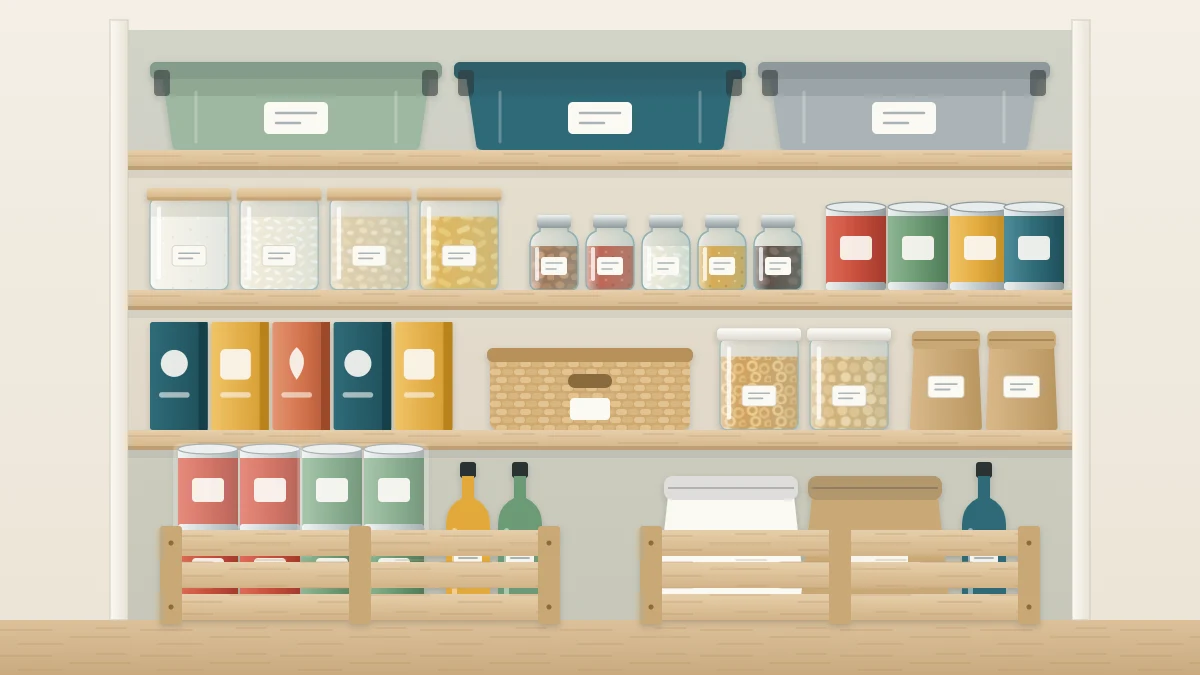
- The highest shelf. Hard to reach, so poor for daily use and fine for a monthly visit. Keep it for light things: paper-wrapped boxes, bags of pasta, cereal, snack multipacks.
- The lowest shelf or a floor crate. The right place for anything heavy: canned goods, bottles, jars, large bags of rice or flour. A low crate that slides out saves bending into a dark corner.
- The back of a deep shelf. The open item sits at the front and its unopened spares line up directly behind it. This keeps spares with their category and uses depth that is otherwise wasted.
- Outside the pantry. A hall closet, a shelf in a utility room or the bottom of a wardrobe can hold spares when the pantry is small.

Wherever you choose, the place should be indoors, cool, dry and away from heat and direct light. Avoid spots that get hot or damp, such as beside a water heater, against an appliance that gives off warmth, or in a garage or shed that swings with the weather. The Utah State University Extension page on food storage conditions has more detail on why the surroundings matter.
Good to know
Cans, jars and bottles are heavy. Keep them low, and before loading a high shelf, a door rack or a freestanding unit with spares, check the product’s stated load rating and installation instructions.
Organize spares by the same categories
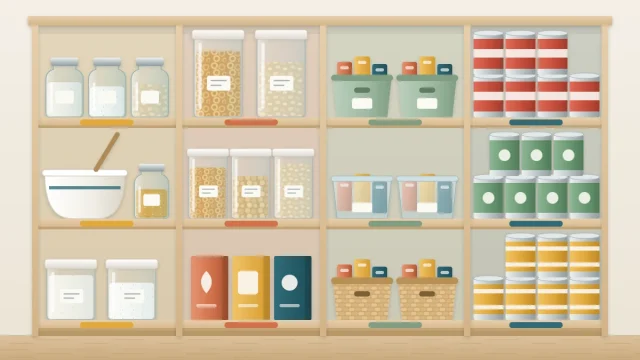
Arrange the backstock in the same groups as the main pantry: canned goods together, baking together, breakfast together, snacks together. If you have already divided the pantry as described in the guide to setting up pantry zones, simply repeat those zones on a smaller scale.
The payoff is that restocking becomes a straight swap. The pasta runs out, you go to the pasta section of the spares, and the replacement is there.
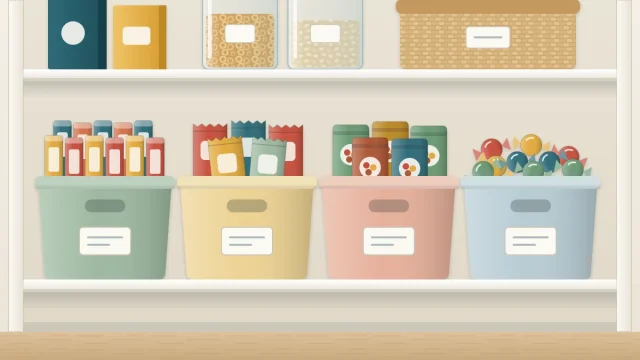
Open bins or crates work better than loose stacks for this. One bin per category, with a label on the front, lets you slide the whole group out and see what is in it.
Keep it visible or keep a list
Backstock that nobody can see is the food that gets wasted. A sealed box on a top shelf, a crate in another room or a row hidden behind taller packages is easily forgotten until the next clear-out.
There are two ways around this. The first is to store spares so they can be seen: clear or open bins, one layer deep where possible, labels facing out. The second, for anything stored out of sight, is a short list taped inside the pantry door or kept in a shared note. It needs only the item and the count. The guide to pantry inventory basics shows how to keep that kind of list without it becoming a chore.
Set a ceiling for each item
Decide the most you will hold of each thing, and write it on the bin label or the list. The right number depends on two things only: how much space the backstock zone has, and how fast your household uses the item. A food eaten every day can justify several spares. A food used once a month rarely needs more than one.
A sale is not a reason to exceed the ceiling. A low price on a case you have no room for costs you shelf space, and it means the oldest packages wait longer to be used.
A restocking routine that takes a minute
- When the open item runs out, take one spare from the backstock zone and move it to the working zone.
- Take the oldest spare first. Check the package date if the spares were bought at different times.
- Note the item on the shopping list straight away, unless you are still at your ceiling.
- When new spares come home, put them behind or beneath the ones already there.
Tip
Load a row of spares from the back and take from the front. The row then sorts itself, with the oldest package always nearest your hand.
The order matters most for foods you hold several of. The guide to food date labels and rotation explains the first-in, first-out habit in full.
How long an unopened spare keeps depends on the food, so go by the package date. For general guidance, see the USDA’s page on shelf-stable food safety.
Review the ceilings every few months. If a spare has sat untouched since the last review, lower that item’s ceiling to zero and buy it only when the open one is nearly gone.
Frequently asked questions
What is backstock in a pantry?
Backstock is unopened spare stock of things your household already uses, such as a second bag of rice or extra cans bought in a multipack. It is kept apart from the working pantry, which holds the one open package of each food, and it is drawn on only when that open package runs out.
Can I keep backstock outside the pantry?
Yes, if the pantry is small. A hall closet or a utility room shelf works, provided the spot is indoors, cool, dry and away from heat and direct light. Avoid places that get hot or damp. Keep a short list in the pantry so the spares stored elsewhere are not forgotten.
How much backstock should I keep?
There is no single right amount. Set a ceiling for each item based on how much room your backstock zone has and how quickly your household uses that food. Everyday staples may justify several spares, while occasional items usually need one or none. Do not exceed the ceiling because of a sale.