How to Set Up a Snack Zone in the Pantry
Give scattered snacks one home: gather them, drop the bulky multipack boxes, sort into a few open bins and set the shelf height by who should reach them. Includes an open-first bin for opened packages.
Snacks are the hardest-working food in most pantries. They are grabbed more often than anything else, by more people, usually in a hurry and often with one hand. That is why they end up as half-open boxes on three different shelves, each holding the last two bars nobody can see.
A snack zone fixes this by giving every snack one address: a defined stretch of shelf, a few open bins and a simple rule for opened packages. It takes an hour or less to set up, and it is one of the changes a household notices first.
Why snacks deserve their own zone
Most pantry food is handled by the person who cooks, at planned times. Snacks are handled by everyone, at any time, and rarely with care. A system that needs two hands, a lid or a moment of thought will not survive that kind of use.
A zone works because it lowers the effort in both directions. Taking a snack is easy, and so is putting the rest back. If the idea of zones is new to you, the guide to setting up pantry zones explains how the whole pantry can be divided this way; the snack area is simply the zone with the heaviest traffic.
Gather every snack and unbox it
Collect all the snacks in the house onto a table or counter. Check the other pantry shelves, the lunchbox cupboard, bags, the car and anywhere else a box may have been set down.
Seeing everything together tells you how much snack food you really keep, and what kinds. Set aside anything nobody in the household eats, and check the date on the package for the rest.
Take individually wrapped items out of their boxes
Multipack boxes are the main reason a snack shelf looks full while holding very little. A carton built for twelve bars takes the same space when it holds two, and its closed top hides how many are left.
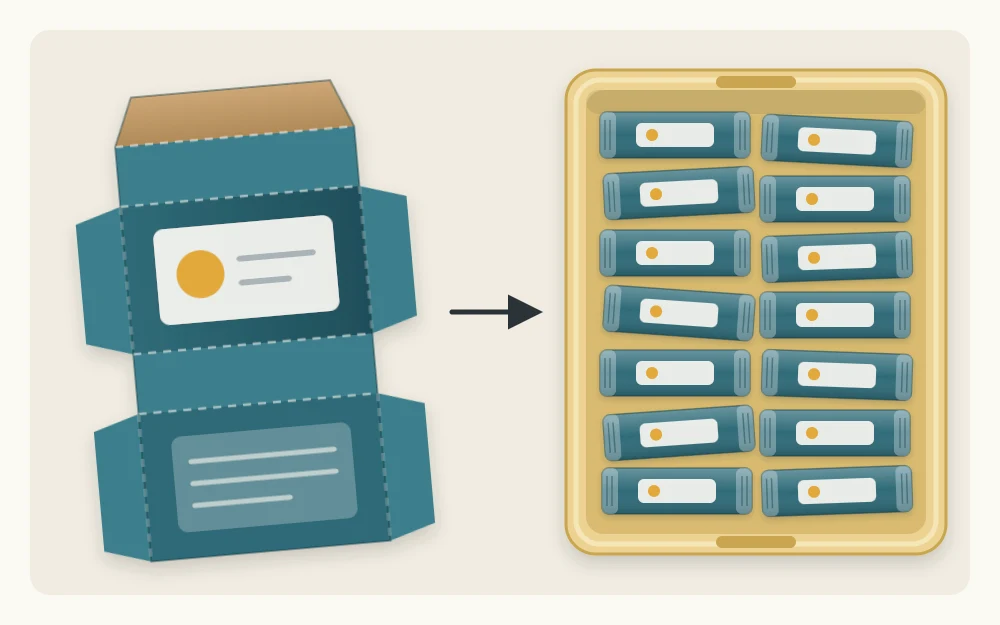
Remove the outer box and put the wrapped items loose into a bin. Flatten the carton for recycling.
Good to know
The outer box often carries information the inner wrappers do not: the package date, the ingredient list and the allergen panel. The package label is where allergens are identified, so before you recycle the carton, cut out and keep that panel, or copy what you will need, and store it with the snacks.
Sort into a few broad groups
Group the snacks into categories that match how your household thinks about them. Four or five groups are usually enough:
- Bars: granola bars, cereal bars and similar wrapped items
- Crackers and chips: bags, sleeves and small boxes
- Dried fruit and nuts: pouches, small tubs and trail mixes
- Sweets: cookies, candy and treats
- Lunchbox items: single-serve packs kept for packed lunches
Keep the groups broad. A bin for “bars” will be used correctly by everyone; separate bins for three kinds of bar will not. If one group is far bigger than the others, give it two bins instead of splitting it into finer categories.
Give each group an open bin
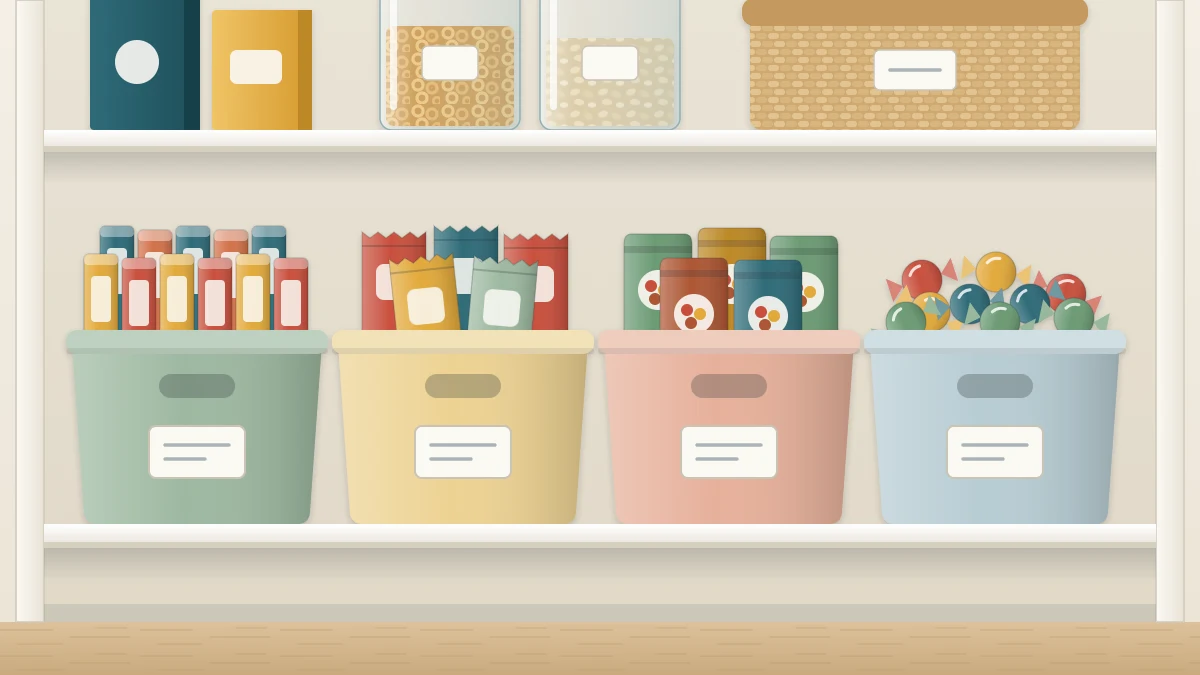
Each group gets a bin with no lid, so one hand can reach in, take something and drop the rest back. Lids, flaps and stacking all add a step, and a step is enough to send a snack back to the nearest empty shelf instead.
Look for bins that fill the depth of the shelf, so nothing gets lost behind them, with straight sides and a handle or cut-out at the front for pulling them forward. Clear or wire sides let you see how much is left. The article on pantry baskets and bins compares the types and how to measure for them.
Stand bags and pouches upright in the bin, one behind another, instead of laying them flat in a pile. Label the front of each bin with its group name. For children who do not read yet, a simple drawing does the same job.
Set the height by who uses it
Where the zone sits on the shelves decides who can use it without help. That is a choice you can make on purpose.
- Low shelves for snacks children may help themselves to. They can see into the bin, choose and put things back.
- Higher shelves for the snacks you want to be asked for. Out of easy reach, they need an adult.
- Eye level for adults for whatever the adults in the home reach for most.
This can mean the zone is split across two shelves, one low and one high, which is fine as long as each bin has a fixed place. If mornings involve packing lunches, put the lunchbox bin near the breakfast shelf so both are reached in one stop; the guide to a breakfast zone covers that part of the pantry.
Add an “open first” bin
Opened packages are where snack shelves go wrong. A bag of crackers opened on Monday gets pushed back, a new one is opened on Wednesday, and soon there are three partly eaten bags.
Put one small bin at the front of the zone for anything already opened. Close each bag with a clip, or fold the inner liner down and close the box, and place it there. The household rule is short: look in the open-first bin before opening anything new.
Opened snacks go stale faster than unopened ones, so closing them and eating them first is a matter of enjoying what you bought. If a package gives storage directions for after opening, follow those.
Size the zone and stop when it is full
Decide how much shelf the snacks get, and treat that as the limit. When the bins are full, the zone is full, and that is the signal to stop buying until some of it has been eaten.
If you buy snacks in larger quantities, the extra unopened packages are backstock: spares that live somewhere else, such as a high shelf, and refill the bins as they empty. Keeping them out of the zone stops the bins from overflowing.
If someone in your home has a food allergy
Some households keep certain snacks in a separate, clearly labeled bin or on a separate shelf. That is an organizing aid: it helps everyone find and return items to the right place. It is not a safety measure. The package label is where allergens are identified, which is one more reason to keep the label information with any snack you take out of its outer box.
Frequently asked questions
Should I take snacks out of their boxes?
For individually wrapped items, usually yes. Multipack cartons take the same space whether full or nearly empty and hide how many are left. Before recycling the box, keep or copy the package date and the ingredient and allergen panel if the inner wrappers do not carry them.
What kind of bins work best for snacks?
Open bins without lids, so one hand can take a snack and return the rest. Choose bins that fill the depth of your shelf, with straight sides and a handle or cut-out at the front. Clear or wire sides help you see how much is left. Measure the shelf before buying.
How do I stop the snack shelf from overflowing?
Treat the bins as the limit. When they are full, hold off buying more until some has been eaten. Store extra unopened packages away from the zone and use them to refill the bins. A small bin for opened packages, checked before opening anything new, also keeps partly eaten bags from multiplying.