A Breakfast Zone: Organizing Cereal, Oats, Coffee and Tea
Run mornings from one shelf. What belongs in a breakfast zone, where to put it, and how to contain cereal boxes, oats, tea bags, coffee and jars of spreads so everything is within one reach.
Mornings are the part of the day with the least patience for searching. If the oats are on one shelf, the honey on another and the tea behind the baking supplies, breakfast starts with three trips to the pantry and at least one “where is the…” called across the kitchen.
A breakfast zone puts everything the first meal needs from the pantry onto one shelf, or one stretch of a shelf, so the routine runs from a single spot. It needs no special equipment, only a decision about what belongs there and a few containers matched to the food.
What belongs in a breakfast zone
The zone gathers pantry food by the time of day it is used instead of by type. Typical contents:
- Cereals, oats and granola
- Spreads such as nut butters, honey and jam, either unopened or stored as their labels direct once opened
- Pancake or waffle mix and syrup
- Coffee and tea, along with sugar or sweetener if you keep them in the pantry
- Lunchbox items, if your mornings include packing lunches
Some of these could also sit in other zones: oats with dry goods, honey with baking. A zone is defined by how you use the food, so whatever you reach for mostly in the morning belongs here. The guide to planning pantry zones explains how to settle those overlaps across the whole pantry.
Choose the right shelf
Two things decide where the zone goes: who uses it and what it sits near.
Set it at the height of the people who make breakfast. If children pour their own cereal, the cereal has to be on a shelf they can reach and lift from safely, which usually means a lower shelf and containers light enough for small hands. If breakfast is mostly an adult making coffee, eye level is the better place.
Then think about distance. The zone works best on the side of the pantry closest to where the bowls are kept or where the kettle or coffee maker stands.
Cereal, oats and granola
Cereal boxes are tall, light and awkward. A half-empty box takes exactly as much shelf as a full one, the inner bag rarely closes well, and you cannot see how much is left without picking it up. There are two good ways to handle them.
Pour-spout containers
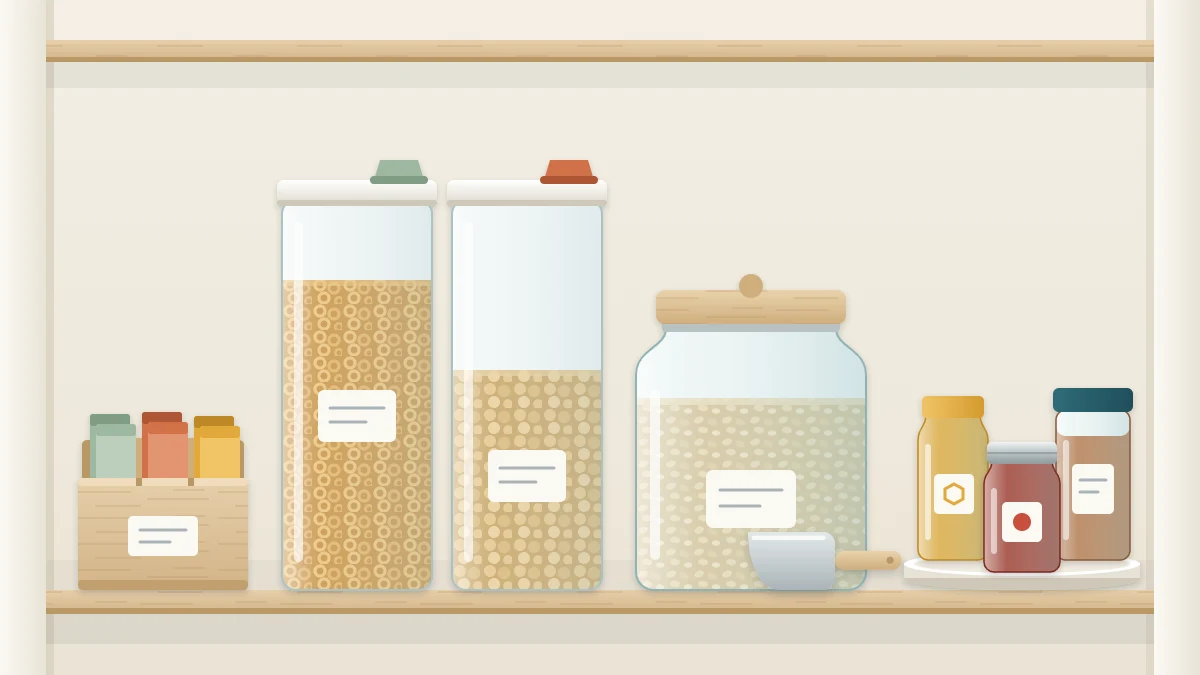
A pour-spout cereal container is a tall, narrow container with a flip-top opening. Choose one sized to hold a whole box of the cereal you buy, so there is no leftover bag to store. To decant simply means to pour the food out of its package into the container; when you do, note the package date on the base or on a removable label. Clear sides show the level at a glance, and a tight-fitting lid helps keep out moisture and contains spills.
Boxes filed upright in a bin
If you would rather keep the original packaging, or your household changes cereals often, stand the boxes side by side in a bin like files in a drawer, with the narrow end facing out. Fold the inner bag down and close it with a bag clip. The bin keeps the boxes from tipping and gives the cereal a boundary: when the bin is full, there is no room for another box.
Oats and granola
Oats and granola are scooped, not poured, so they need a different shape. Use a wide-mouth container, wide enough for your hand and a measuring scoop, and leave the scoop inside. Storing the scoop with the food removes one more thing to hunt for in the morning.
Coffee and tea
Tea bags and sachets are small, light and slippery, and their boxes collapse as they empty. A divided box or a shallow bin with compartments lets you file them upright by type, so every kind is visible from above.
Keep coffee in its own closed container, apart from the tea, since coffee has a strong smell. Whether that is the original bag folded and clipped or a separate canister, follow the package for how to store it.
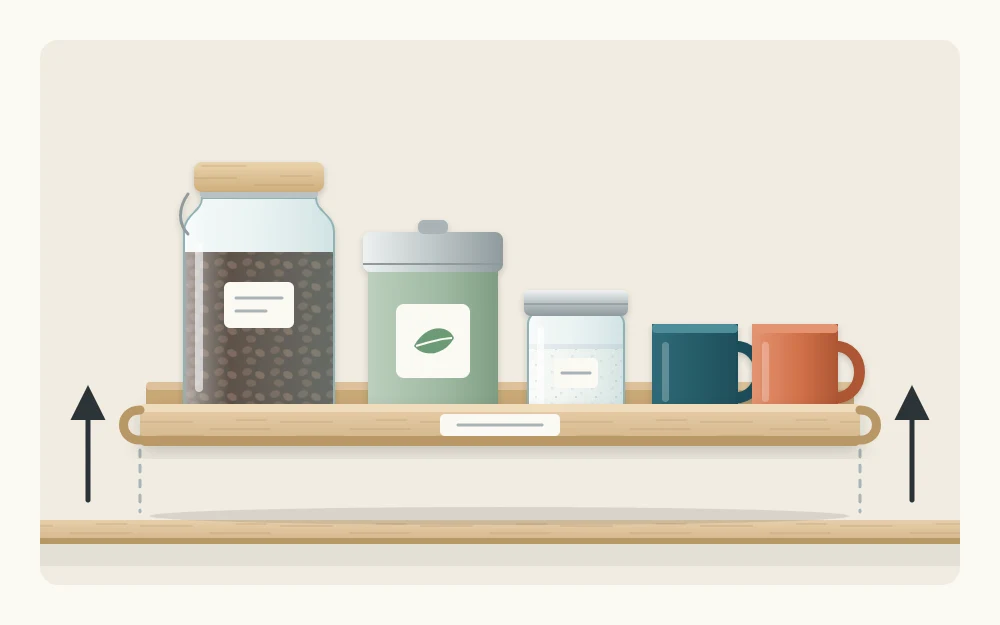
If you keep mugs, sugar and coffee together, a lift-out tray turns them into one unit that moves to the counter and back.
Spreads on a turntable
Jars of spreads are short, round and similar in size, which makes them easy to lose behind one another. A small turntable (often called a lazy Susan) solves that: a quarter turn brings the back jar to the front. Pick one with a raised rim so jars do not slide off, and check its diameter against the depth of your shelf before buying.
The turntable is one of several helpers that suit this zone. Risers, shelf dividers and under-shelf baskets are compared in the guide to pantry shelf organizers.
Good to know
For anything that says “refrigerate after opening”, the label decides, not the zone. The pantry turntable is for unopened jars and for spreads whose labels say they can be kept in a cupboard once opened.
Make it portable with a tray or bin
A tray or shallow bin that lifts out whole is the most useful single addition to a breakfast zone. Load it with the things that always travel together and it becomes a kit: lift it out, set it on the counter or table, and return it in one move when breakfast is over.
Choose a tray with a rim and handles, and one you can wipe clean, because syrup and honey drip.
Lunchbox items, if mornings include packing
When lunches are packed during breakfast, keeping those supplies next to the breakfast zone saves a second trip. One open bin of single-serve items is usually enough. If your pantry already has a snack area, place the two side by side, or decide which bin feeds the lunchboxes; the guide to setting up a snack zone covers how to sort and contain those items.
Keep it to what is actually eaten
A breakfast zone tends to collect good intentions: the cereal bought once and disliked, four kinds of tea when only one is drunk, a pancake mix from a holiday morning. Each one takes space from the food that is used daily.
Every few months, look at the zone and ask what has not moved. Items nobody reaches for can go to a general shelf, be used up in cooking or be passed on if unopened and within the date on the package.
Frequently asked questions
Should I decant cereal or leave it in the box?
Either works. A pour-spout container sized to one whole box shows how much is left and removes the half-empty box problem. Keeping boxes upright in a bin, with the inner bag clipped shut, suits households that change cereals often and keeps the cooking and ingredient information on hand without copying it.
Where should a breakfast zone go in the pantry?
Put it at the height of whoever makes breakfast, and on the side of the pantry nearest the bowls, kettle or coffee maker. If children serve themselves, use a lower shelf and containers light enough for them to lift. If it is mainly for adults, eye level is the most comfortable spot.
Can I keep jam and nut butter in the breakfast zone?
Unopened jars, yes. Once a jar is opened, its label decides where it lives: if it says refrigerate after opening, it moves to the refrigerator. Spreads whose labels allow cupboard storage after opening can stay on the pantry shelf, where a small turntable keeps them easy to reach.