How to Decant Dry Goods into Containers the Right Way
Which pantry staples are worth pouring into containers, which are better left in the package, and a six-step method that keeps the package date, cooking directions and ingredient panel with the food.

At a glance
What you need
- Clean, dry containers with lids
- Rimmed tray or baking sheet
- Wide funnel or scoop
- Erasable labels and a marker
- Scissors and clear tape
- Bag clips for leftovers
To decant is to pour food from its package into a container. Done well, it turns a shelf of slumping bags into a row you can read at a glance. Done in a hurry, it leaves you with an unlabeled jar of something white and no idea how long the grain inside needs to cook.
Decanting dry goods is a small project with a few easy-to-miss steps, and nearly all the regrets come from throwing the package away too soon. This guide covers what is worth decanting, what is not, and the order to work in.
What decanting does and does not do
Decanting is for convenience and visibility. A rigid container stacks, pours and scoops more easily than a bag, a clear one shows how much is left, and a tight-fitting lid helps keep out moisture and pantry insects and contains spills.
It does not extend how long the food keeps. The food in the container is the same food with the same package date as before. For storage times, go by the package and see the FoodKeeper tool on FoodSafety.gov.
What is worth decanting
The best candidates are staples you buy again and again that come in soft or awkward packaging:
- Flour and sugar, whose paper bags tear and dust the shelf
- Rice, oats and lentils, whose bags slump and will not stand
- Pasta, in half-open boxes or bags of different lengths
- Cereal, where a pour-spout container replaces a box and inner bag
The test is repetition. If the same food will fill the same container month after month, the container earns its shelf space. The guide to organizing flour, rice, pasta, grains and beans covers how to group these foods once they are in containers.
What to leave in its package
- Things finished within days. A box of crackers that is gone by Friday does not need a container; you would spend more time washing than storing.
- Foods with long cooking instructions. Mixes, seasoned rice and anything with ratios, timings and steps you will need to read every time are better left in the box, or decanted only if you copy the directions.
- Anything a household member must check for allergens every time. Leave it in the original package unless the label information goes with the food, as described in step 5.
- One-off purchases. A grain bought for a single recipe will not be bought again, so it has no container to return to.
Before you start
Choose containers by the package you buy, not by how they look as a set. A container should hold one full package with a little room at the top. If you have not bought containers yet, the guide to choosing pantry storage containers covers shapes, lids and sizes, and reminds you to measure your shelf height first.
Work through one food at a time so that packages and containers cannot get mixed up.
How to decant, step by step
- Wash and dry the containers completely. Wash new and reused containers and their lids, then let them air dry until no moisture remains in corners, rims or lid gaskets. Any dampness left inside will clump flour and sugar.
- Check that the capacity fits a full package. Compare the volume or weight printed on the package with the container size. If you are unsure, stand the unopened package beside the container before you cut anything.
- Pour over a tray. Set the container on a rimmed tray or baking sheet. Use a wide funnel or a scoop for fine foods, and tap the container on the counter to settle the contents as you go.
- Copy the label before discarding the package. Write on the container’s label the food name, the date printed on the package and, where needed, the cooking directions: the water ratio and the time are usually enough. The guide to pantry labels covers label types and where to place them.
- Keep the ingredient and allergen panel. Cut the panel out of the package and tape it to the back of the container, or tuck it inside the lid. The package label is how allergens are identified, as the FDA explains on its page Food Allergies: What You Need to Know, so that information should stay with the food.
- Close, wipe and shelve. Fit the lid, wipe the outside, and put the container in its zone with the front label facing out.
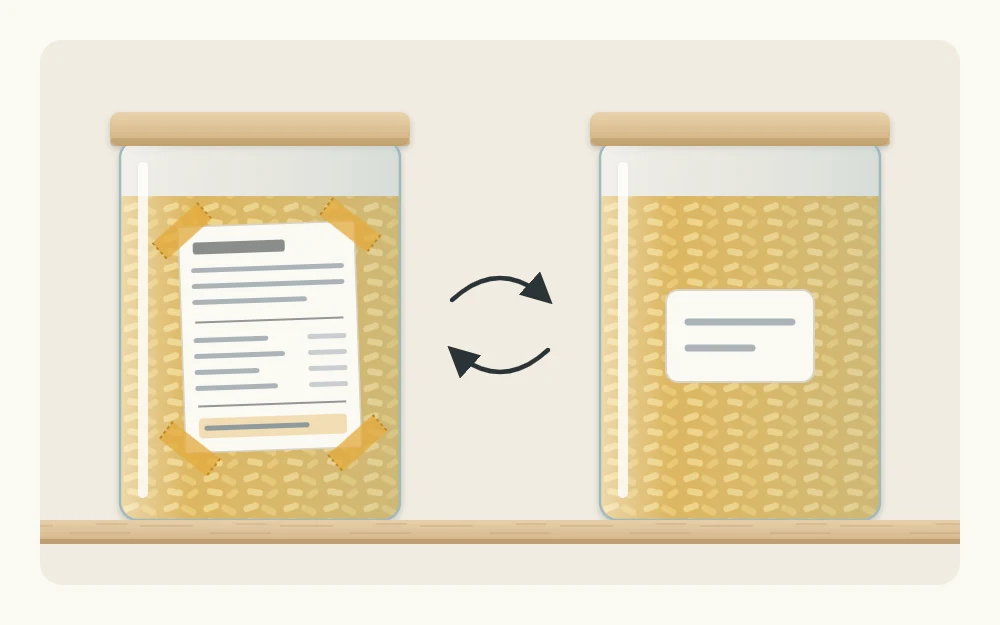
Good to know
A container with the panel taped on is an organizing aid, not a safety measure. Anyone who needs to check ingredients should still read the panel each time, and if the panel is missing, treat the contents as unidentified.
Do not top up
The most common mistake comes a month later. The container is a third full, a new bag comes home, and it gets poured on top. The older food is now buried under the newer, and the bottom layer may sit there through several refills.
Instead, finish what is in the container, wash it, dry it completely, and then refill. Replace the date on the label and swap the taped panel for the one from the new package, since ingredients and directions can change between purchases.
If a new package arrives before the container is empty, leave it sealed and store it behind the container or with your other spares until it is needed.
When the package does not all fit
Sometimes a package holds a little more than the container. Do not force the lid or start a second container for a few spoonfuls. Fold the top of the bag, clip it, and file it directly behind the container. Use that remainder for the first refill, once the container is empty and washed, before opening anything new.
Tip
Use erasable labels or a chalk marker for the package date. It changes with every refill, while the food name stays the same.
Start with three or four staples
There is no need to decant the whole pantry. Begin with the foods whose packaging annoys you most, live with those containers for a few weeks, and add more only if the routine of finishing, washing and refilling suits your household. A handful of containers kept properly labeled is more useful than a full matching wall of them with nothing written on the back.
Frequently asked questions
Why decant if the package date stays the same?
Decanting is for convenience and visibility: containers stack, pour and show how much is left. It changes nothing about the food, which has the same package date it had in the bag. Copy that date onto the container label, and check the package or the FoodKeeper tool on FoodSafety.gov for storage guidance.
Can I pour a new bag on top of what is left in the container?
It is better not to. Topping up buries the older food under the newer, so the bottom layer may never get used. Finish the container, wash and dry it completely, then refill it and update the date and the taped ingredient panel from the new package.
What should I write on the label of a decanted container?
Write the food name and the date printed on the package, and add brief cooking directions where you will need them, such as the water ratio and time. Cut out the ingredient and allergen panel and tape it to the back, because the package label is where allergens are identified.
