Why Pantries Get Cluttered and How to Stop It
A pantry that fills up again after every clear-out usually has a buying problem, not a tidying one. Here are nine common causes, the sign of each and a small habit that counters it.
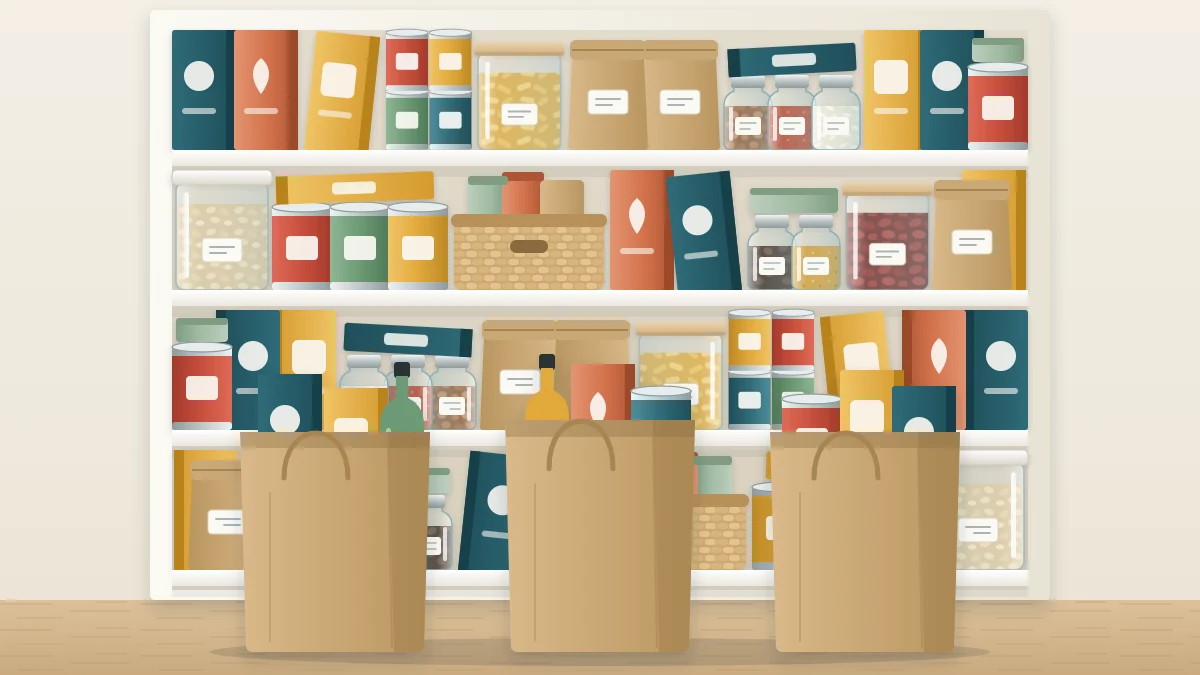
You spend a Saturday clearing the shelves, everything gets a place, and a few weeks later the pantry looks the way it did before.
That is rarely the real cause. Pantry clutter is usually a buying and returning problem, not a tidying problem: more food arrives than leaves, and what arrives has nowhere set to go. A clear-out removes the pile without changing what feeds it. The nine causes below are the common ones, each with a small counter-habit.
Causes that start at the store
Shopping without checking what you have
This is the biggest one. A shopping trip planned from memory brings home a third jar of mustard and no rice. The counter is modest: a quick look at the shelves before leaving, or a running list on the pantry door where anyone writes an item down the moment it runs low. A fuller version of that habit is in the guide to pantry inventory basics.
Bulk deals bigger than the storage
A case of twelve is only a good buy if twelve fit somewhere. When they do not, they spread across every shelf. Set a ceiling for each item, a maximum number you will hold, and treat it as fixed regardless of the price. The guide to where to keep extras and bulk buys explains how to choose that number.
Aspirational ingredients
Specialty flours, unusual grains and sauces for meals nobody ends up cooking sit for a long time because throwing them out feels like admitting defeat. Give them a “use it or pass it on” bin and a review date a few weeks ahead. On that date, anything still in the bin goes into this week’s meals or to someone who will cook with it.
Gifts and one-off ingredients
The jar of chutney from a gift basket and the spice bought for one recipe have no category, so they drift. Put them in the same bin as the aspirational ingredients.
Causes that start at home
Duplicates opened in parallel
Three boxes of the same cereal, all open, take three times the space of one and all go stale-tasting together. This happens when a new package is easier to reach than the open one. The rule is one open at a time: the open package sits in front, and spares stay closed and behind or in a separate spot.

A category with no home
If nobody can say where the snack bars live, they will live wherever the last person put them. A floating category is the clearest sign that the pantry has gaps in its layout. Assign every group of food one shelf area and label the shelf edge or the bin so the whole household can see it.
Packaging that takes more room than the food
A large outer box holding four remaining granola bars occupies the space of a full one. Remove outer boxes once a multipack is opened and stand the contents in an open bin. Keep any panel you still need, such as cooking directions or the ingredient list, with the food.
Several shoppers in one household
Two people who each pass a store on the way home will both buy pasta. The fix is a single shared list, on paper in the pantry or in a shared note on everyone’s phone, that is checked before buying and updated after.
A pantry that is simply full
Sometimes there is no hidden cause: the shelves hold as much as they can. Past that point, apply the one-in, one-out rule. A new item comes in only when the one it replaces is finished, and a new kind of food comes in only when another kind leaves.
Cause, sign and fix at a glance
| Cause | Sign | Fix |
|---|---|---|
| Shopping from memory | Duplicates of some foods, none of others | Quick look or running list before each shop |
| Oversized bulk deals | One food spread over several shelves | A ceiling per item |
| Aspirational ingredients | Unopened specialty items at the back | “Use it or pass it on” bin with a review date |
| Gifts and one-offs | Single jars with no group | Same bin; buy the smallest size |
| Parallel duplicates | Several open packages of one food | One open at a time |
| No home for a category | The same food found in three places | Assign and label one shelf area |
| Bulky packaging | Nearly empty boxes filling a shelf | Remove outer boxes, use an open bin |
| Several shoppers | The same item bought twice in a week | One shared list |
| Full pantry | New groceries left on the floor or counter | One in, one out |
The habit that does the most
If you adopt only one change, make it this: before each shop, plan a few meals around what is already in the pantry. It deals with several causes at once. You look at the shelves, which catches duplicates. You use the older and odder items, which empties the “use it or pass it on” bin. And the list you write is shorter, so less comes home.
It does not need to be a full meal plan. Two or three dinners built from what is on hand, written on the same list as the groceries, is enough. The EPA’s page on preventing wasted food at home has more planning ideas along the same lines.
Tip
Take a picture of the open pantry before you leave for the store. It answers “do we have any?” faster than memory does, and it works for whoever is shopping.
Find your own main cause
Most households have one or two of these causes, not all nine. To find yours, look at what the clutter is made of. Mostly unopened duplicates points to shopping from memory or to bulk deals. Mostly open packages points to parallel duplicates or bulky packaging. Mostly odd single items points to aspirational buys and gifts.
Fix that one cause first and leave the rest for later. If the shelves are already overloaded, clear them before you start; the guide on how to declutter a pantry without wasting food walks through it.
What to expect
No pantry stays perfect. A busy week, a holiday or a houseful of guests will undo some of the order, and that is normal. The aim is a pantry that drifts slowly and resets in a few minutes, because every food has a home and less arrives than before. A shelf that needs straightening once a month is a working system, not a failed one.
Frequently asked questions
Why does a pantry get messy again so quickly after a clear-out?
Usually because the clear-out removed the pile without changing what caused it. If shopping still happens from memory, bulk buys still exceed the space, or a category still has no set shelf, the same clutter rebuilds. Identify the main cause from what the clutter consists of and change that one habit.
What is the one-in, one-out rule for a pantry?
When the shelves are full, a new item enters only when the one it replaces has been finished, and a new kind of food is added only when another kind is dropped. It keeps the total steady in a pantry that has no spare room, without requiring a strict inventory.
How do I stop buying food I already have?
Check before you shop. A quick look at the shelves, a running list on the pantry door or a picture of the open pantry taken on the way out all work. In a household with several shoppers, use one shared list that everybody checks and updates.