
Why Unique Succulent Planter Ideas Are Taking Over Home Decor
Unique succulent planter ideas are one of the easiest ways to add personality to your home without a lot of effort or money.
Here are some of the most popular creative options to get you started:
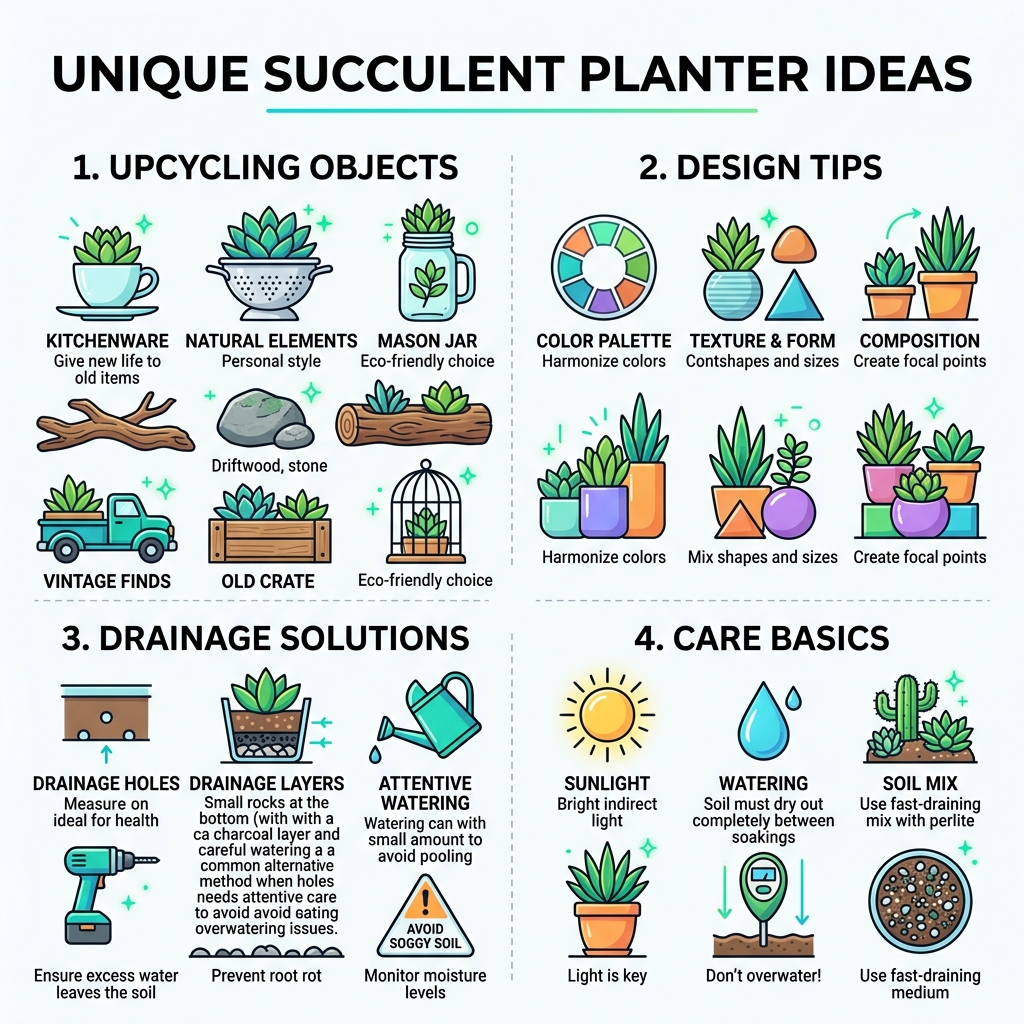
- Upcycled kitchenware – old teacups, mason jars, colanders, or cheese graters
- Natural materials – hollowed tree trunks, driftwood, birdbaths, or stones
- Novelty containers – toy dump trucks, birdcages, vintage soda crates, or ballet shoes
- Modern vessels – geometric bowls, concrete molds, or sleek resin pots
- Seasonal decor – pumpkins, wreaths, or wooden crates with candles and fairy lights
The appeal is simple: succulents are incredibly forgiving. They store water in their leaves, thrive on neglect, and adapt to almost any container you put them in. That makes them the perfect plant for busy people who want greenery without the upkeep.
And the cost? You don’t need to spend much. A high-end designer succulent planter can run $2,500 or more — but with a bit of creativity, you can achieve a nearly identical look for around 90% less.
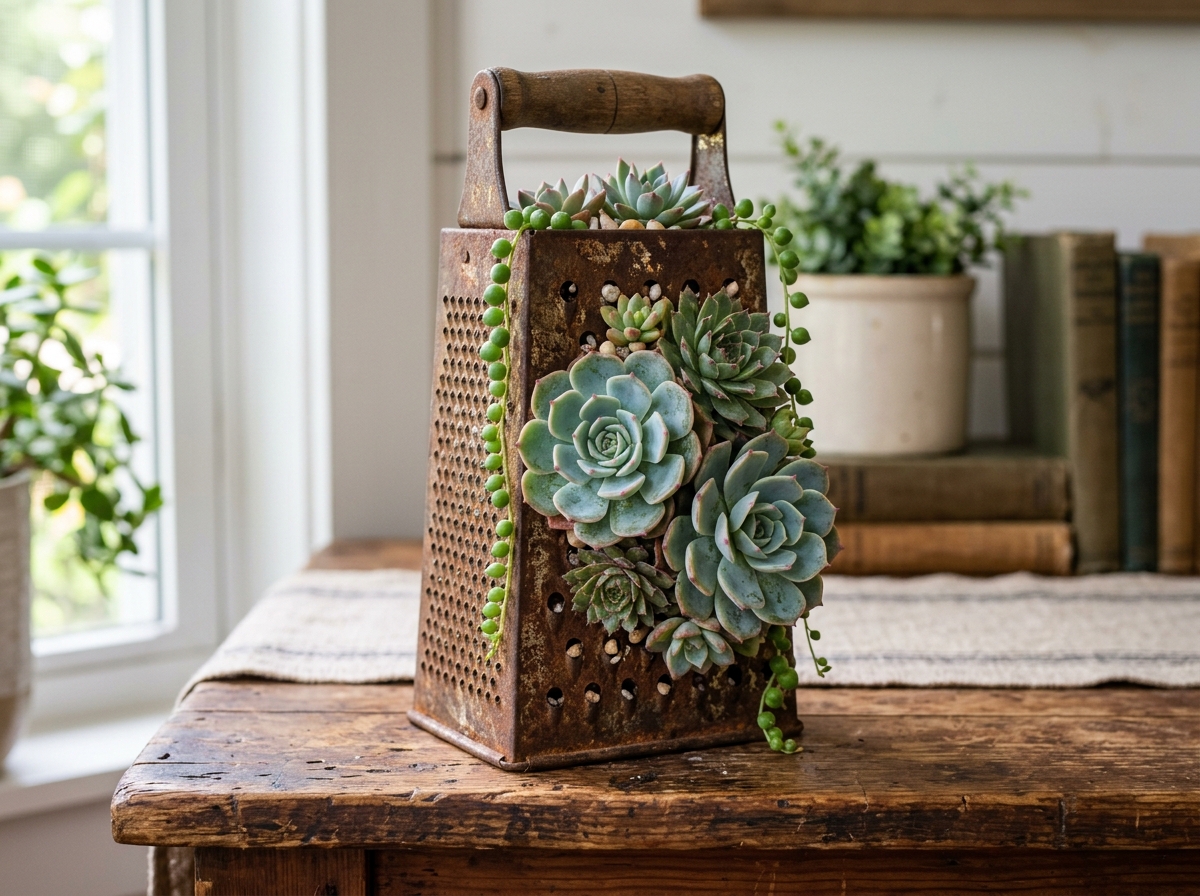
The real magic is that almost any object can become a planter. A cracked mug. A rusty grater. An old crate from your grandma’s garage. The only thing stopping most people is not knowing where to start.
That’s exactly what this list is here to fix.
Why Choose Unique Succulent Planter Ideas for Your Home?
Choosing unique succulent planter ideas isn’t just about being different; it’s about infusing your living space with your personal narrative. When we step away from the standard orange clay pot, we open a door to artistic expression that reflects who we are. Whether you are a vintage soul or a modern minimalist, your choice of container tells a story.
Beyond the aesthetics, succulents are functional powerhouses. Many people succ it up and clean your air with these plants because they are known to improve indoor air quality. In fact, when we look at can succulents purify air NASA’s surprising findings, which references the NASA Clean Air Study, we see that these tiny plants are more than just pretty faces—they are natural air filters. Using a unique vessel makes these biological workers a focal point of your decor.
Furthermore, these planters serve as incredible conversation starters. Guests are much more likely to comment on a succulent growing out of a vintage camera or a silver teapot than a plastic nursery pot. It’s also a step toward sustainable gardening, as we give a second life to objects that might otherwise end up in a landfill.
Defining the “Unique” Aesthetic
A “unique” aesthetic is defined by the use of non-traditional vessels. It’s the art of seeing a planter where others see “stuff.” This could mean looking at unique DIY indoor wall planter ideas to transform your space and realizing that an old wooden ladder or a set of hanging tins can house a vertical garden. It’s personality-driven decor that moves away from the mass-produced and toward the whimsical and curated.
Benefits of Creative Containers
The benefits go beyond looks. One of the biggest perks is cost savings. Research shows you can replicate a $2,500 high-end designer planter for about $250—a 90% savings—just by doing it yourself. Upcycling waste is another huge benefit; why buy new when you can reuse? Additionally, creative containers allow for space optimization. If you live in a tight area, finding small space solutions the best hanging plant ideas for apartments can help you clear floor space while still enjoying a lush indoor jungle.
Creative Upcycling: Transforming Everyday Objects into Unique Succulent Planters
Upcycling is the heart of the most interesting unique succulent planter ideas. It’s the process of taking something “discarded” and reimagining it as something special. When we look for recycled planters for houseplants, the possibilities are virtually endless.
Kitchen and Dining Room Treasures
The kitchen is a goldmine for planter inspiration.
- Tea Tins and Silver Teacups: These offer a vintage charm that is hard to beat. A silver teacup nestled on a saucer makes for a perfect “desk buddy” using a slow-growing Haworthia.
- Colanders and Graters: These are the “natural” planters of the kitchen world because they come with built-in drainage! A vintage metal grater can be lined with window screen to hold soil, creating a rustic, industrial look.
- Mason Jars and Wine Glasses: These are great for seeing the layers of soil and pebbles, though they require a careful hand with watering. You can even create seashell hanging baskets to give your plants a coastal home by using large shells found on your last vacation.
Natural and Rustic Elements
Bringing the outdoors in is a timeless trend.
- Tree Trunks and Driftwood: You can hollow out a section of a fallen branch or an old Christmas tree trunk to create a naturalistic home for your plants. Driftwood, with its weathered texture, is perfect for an “undersea” themed arrangement.
- Birdbaths and Hollowed Stones: A shallow birdbath can be transformed into a sprawling succulent landscape. If you’re feeling ambitious, creating your own vertical garden an indoor DIY project using a rustic wooden frame can turn a blank wall into a living piece of art.
Essential Design Principles for Unique Succulent Planter Ideas
Creating a beautiful arrangement is about more than just sticking a plant in dirt. We need to consider visual balance and color theory to make the most of our unique succulent planter ideas.
Selecting the Right Plants for Your Vessel
When choosing your plants, think about how they will interact with the container.
- Rosette Shapes: Echeverias and Sempervivums provide a symmetrical, flower-like look. They are great as centerpieces in round bowls.
- Trailing Varieties: Plants like String of Pearls or Burro’s Tail look stunning when they “spill” over the edges of a tall pot or a macrame hanging planter.
- Height and Texture: Use taller plants like Sansevieria in the back and shorter, textured ones like “Baby Toes” in the front. Mixing air cleaning succulents of different heights creates a dynamic, professional-looking display. If you want a modern vibe, try to get your plants in shape with these geometric hanging pots.
Adding Aesthetic Finishing Touches
The “pro” secret to a stunning planter is the topdressing.
- Ornamental Rocks and Sand: Covering the exposed soil with fine gravel, colored sand, or river stones gives the arrangement a finished look. It also keeps the soil in place when you water.
- Spanish Moss and Figurines: If you are mastering the art of a DIY terrarium, adding a tiny figurine or a bit of Spanish moss can create a miniature world. Following terrarium decoration tips like using color-coordinated sand can elevate a simple glass jar into a high-end decor piece.
Overcoming Challenges: Drainage and Soil in Unconventional Containers
The biggest challenge with unique succulent planter ideas is often the lack of drainage. Succulents hate “wet feet.” If their roots sit in water, they will rot. When selecting the best pots for indoor plants, drainage should be your top priority.
Mastering Drainage in Unique Succulent Planter Ideas
If your dream container doesn’t have a hole, you have two choices: make one or manage the water perfectly.
- Drilling Holes: You can use a diamond-tipped drill bit to carefully create a hole in ceramic, glass, or stone. Always wear safety glasses and go slowly to avoid cracking the material.
- The “No-Hole” Method: If you can’t drill (like in a vintage silver cup), use a layer of pebbles or charcoal at the bottom to create a small reservoir. However, this is not a perfect fix; you must water very sparingly.
- Liners: For wooden crates or porous baskets, use a plastic liner (like a heavy-duty drop cloth) to protect the container and your furniture. You can find best DIY hanging planter ideas for every room that incorporate these protection methods. Don’t forget to use the best ceiling hooks for plants and how to use them to ensure your heavy unique planters stay secure.
Choosing the Perfect Soil Mix
Succulents need a gritty, fast-draining soil. Never use standard potting soil alone; it holds too much moisture. We recommend a specialized cactus potting mix or creating your own homemade plant soil mixes by adding perlite, pumice, or coarse sand. This ensures that even if you’re using low water air purifying plants, the roots stay oxygenated. do succulents filter air? Shop the best natural purifiers and pair them with the right soil to keep them thriving for years.
Care and Maintenance for Succulents in Unique Vessels
Once your masterpiece is assembled, the real work (which is quite minimal!) begins.
- Light Requirements: Most succulents need at least 4 to 6 hours of bright, indirect light. If your plant starts “stretching” (etiolation), it’s begging for more sun.
- Watering Schedules: The “soak and dry” method is best. Wait until the soil is bone-dry, then water thoroughly until it runs out the bottom. For containers without holes, some enthusiasts use the “ice cube method”—placing a few cubes on the soil to allow for slow, controlled absorption.
- Placement: Use DIY plant stands for desks to give your plants the height they need to catch window light. If you have a large collection, DIY plant shelves for small spaces can help organize your unique finds.
- Seasonal Adjustments: Succulents grow more in the spring and summer. In the winter, they go dormant and need significantly less water. Keep them away from drafty windows or heaters. Explore clever and stylish DIY hanging planter ideas for indoor spaces to find the best year-round spots for your plants.
Frequently Asked Questions about Unique Succulent Planter Ideas
How do I water succulents in containers without drainage holes?
Watering in these containers requires precision. Use a measuring cup or a squeeze bottle to apply small amounts of water directly to the soil, avoiding the leaves. The “ice cube” method mentioned earlier can also prevent accidental flooding. Always check the soil depth with a chopstick or your finger before adding more water.
Can I use any household object as a succulent planter?
Almost! As long as the object can hold soil and you can either drill a hole or manage the moisture, it can work. However, avoid materials that might leach toxic chemicals (like certain old painted items not intended for use) or items that will disintegrate quickly when wet (like untreated cardboard).
How often should I refresh the soil in my unique planters?
Succulents are slow growers, but they do eventually exhaust the nutrients in their soil. Every 2 to 4 years, it’s a good idea to refresh the soil. This is also a great time to check for root health and see if the plant has outgrown its unique home.
Conclusion
At Financedora, we believe that your home should be a reflection of your creativity and a sanctuary for well-being. Embracing unique succulent planter ideas is a fantastic way to achieve both. From upcycling a rusty kitchen grater to creating a high-end designer look on a budget, the possibilities for sustainable, beautiful decor are endless. Whether you are a seasoned gardener or a beginner looking for low-maintenance greenery, these creative projects offer a rewarding way to bring life into your space. Ready to start your next project? Explore more DIY project ideas and transform your home today!
