
Why DIY Hanging Planters Are the Smartest Way to Add Greenery to Small Spaces
DIY hanging planter ideas are one of the easiest and most affordable ways to bring plants into your home without giving up precious floor or shelf space. Whether you have 30 minutes or a full afternoon, there’s a project that fits your schedule and budget.
Quick answer — here are popular DIY hanging planter ideas to try:
- Upcycled kitchen sifter planter — spray paint a sifter gold, add chains and a plastic liner, done for around €5
- Rope or macrame plant hanger — knot cotton rope or jute around any pot for a boho look
- Wooden box planter with rope handles — a simple 1×4 board build that looks high-end
- Teardrop wood planter — a beginner woodworking project for under $20
- 2-tier hanging planter — holds multiple pots and can be customized in length
- Halved wood circle wall planter — cut one wood circle in half to make two wall-mounted planters
- Fabric strip or t-shirt yarn hanger — no tools needed, great for recycled materials
- Hanging basket garden — a single structure that can hold up to 16 pots
The best part? Most of these projects cost less than $20, and some can be finished in under an hour. They’re also surprisingly beginner-friendly — no advanced tools required for many of them.
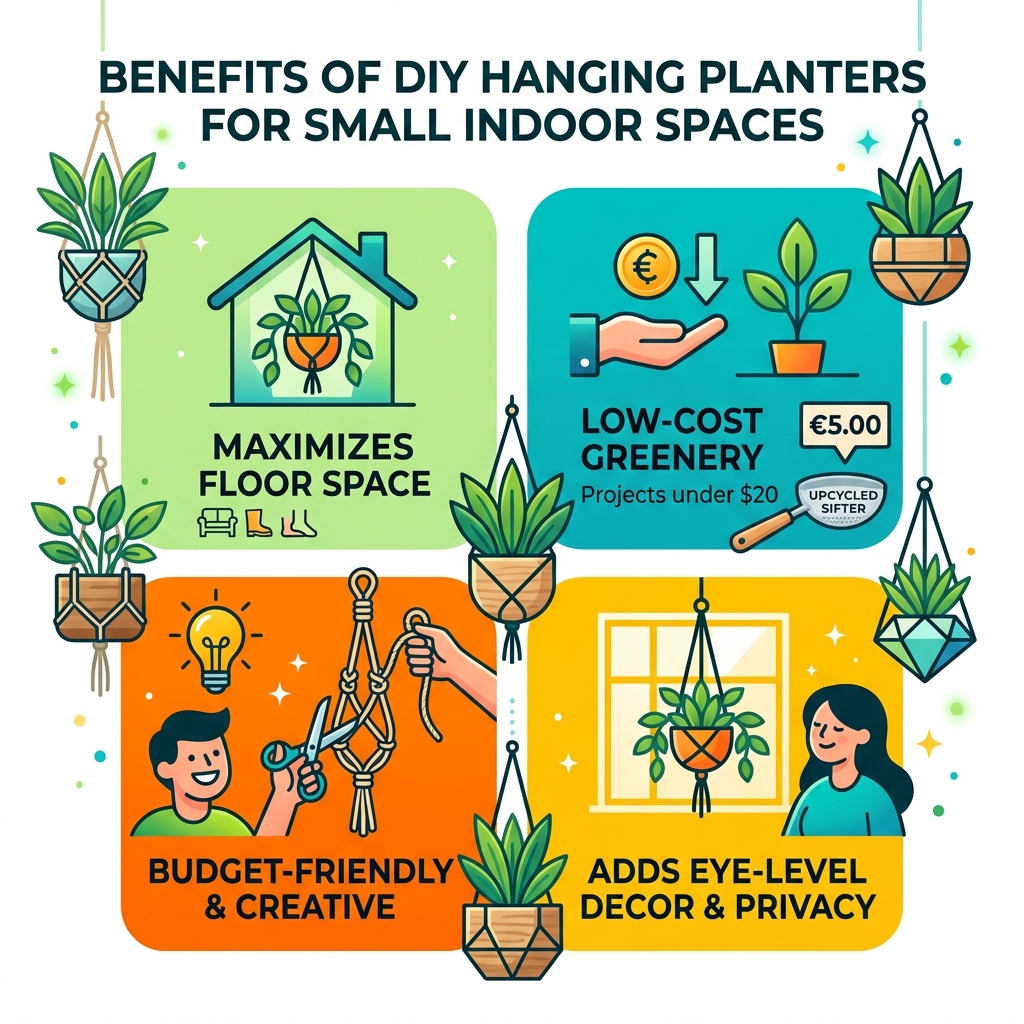
Hanging planters do more than just look good. They add greenery at eye level, can create privacy in front of windows, and make even a tiny studio feel more alive. Sometimes the simplest solution — a plant in a pretty hanger — is the best design move you can make.
Budget-Friendly DIY Hanging Planter Ideas for Every Room
When we look at our homes, we often see “dead zones”—corners that feel empty or windows that look a bit bare. The beauty of diy hanging planter ideas is that they don’t require a massive investment. In fact, some of the most stunning designs come from items already sitting in your pantry or recycling bin. Upcycling is not just environmentally friendly; it’s a budget-saver that allows for total creative freedom.
Statistics show that a basic indoor plant hanger can be made for less than $20, with some projects costing as little as €5.00. By choosing to build rather than buy, you aren’t just saving money; you’re creating a piece that fits your specific ceiling height and color palette. If you are looking for more ways to display your greenery, you might also enjoy exploring indoor hanging plant diy techniques that focus on maximizing vertical space.
Beyond kitchen items, consider using old mason jars or even tin cans. A simple coat of metallic spray paint can turn a discarded soup can into a chic, industrial-style vessel. These small-scale projects are perfect for beginners who want to dip their toes into DIY without committing to a full woodworking setup.
Upcycled Kitchen Sifter Planters
One of our favorite diy hanging planter ideas involves a trip to the kitchen. A plain metal sifter can be transformed into a high-end gold planter in about an hour. This project is a “game changer” because the mesh of the sifter provides a unique texture that catches the light beautifully.
To start, we recommend washing and drying the sifter thoroughly. If the surface is very smooth, a light sanding will help the paint adhere. Use light layers of gold spray paint, allowing it to dry between coats for a professional finish. To keep your home clean, always use a plastic liner inside the sifter before adding soil. This prevents water and dirt from falling through the mesh. For those who love simple crafts, check out these easy indoor plant crafts for more inspiration.
To hang it, measure the sifter rim and attach three small hoops at equal distances. Use pliers to secure three lengths of chain to these hoops, then gather the chains at the top with a larger ring. It’s a stylish, lightweight solution that looks far more expensive than its €5 price tag.
Creative DIY Hanging Planter Ideas Using Recycled Textiles
If you prefer a softer, more bohemian look, textiles are the way to go. You don’t need to be a master of macrame to create a beautiful home for your plants. Using cotton rope, jute, or even strips of old t-shirts (often called “t-shirt yarn”), you can knot together a sturdy and flexible hanger.
The “square knot” and “spiral knot” are the two most common techniques used in these projects. Even if you’ve never tried it before, a simple beaded plant hanger can be completed in just two hours. This method is incredibly versatile because the textile stretches to fit almost any pot size, from a small succulent jar to a large terracotta bowl. If you’re interested in more textile-based projects, you’ll find great tips in this guide on easy indoor plant crafts-2.
Using recycled fabric strips is also a fantastic way to add a pop of color to a room. You can braid different colors together or use a single bold hue to match your curtains or rugs. It’s a sustainable way to decorate that feels personal and cozy.
Essential Tools and Materials for Your DIY Projects
Before we dive into the construction, let’s talk about the gear. Having the right tools makes the difference between a fun afternoon and a frustrating one. For most diy hanging planter ideas, you’ll need a basic kit that includes a drill, measuring tape, and sandpaper.
If you’re moving into woodworking, a few specialized tools can elevate your work. For example, a Kreg pocket-hole jig is excellent for creating strong, hidden joints in wooden planter boxes. This ensures your planter looks “store-bought” without visible screws on the outside.
Rope and Hardware Comparison Table
| Material | Weight Capacity (Approx.) | Best Use |
|---|---|---|
| Cotton Clothesline | 15 – 20 lbs | Small indoor pots, lightweight macrame |
| Jute / Sisal Rope | 20 – 30 lbs | Rustic designs, medium-sized ceramic pots |
| Nylon Rope | 30 – 50 lbs | Heavy outdoor or large indoor wooden boxes |
| 1/4″ Braided Rope | 25 – 35 lbs | Standard wooden planters (like 1×8 builds) |
In addition to rope, you will need secure mounting hardware. A ceiling hook should be rated for at least 30 to 35 lbs to account for the weight of the pot, the plant, and the water in the soil.
Beginner-Friendly Woodworking for DIY Hanging Planter Ideas
Woodworking might sound intimidating, but many of the best diy hanging planter ideas use simple, straight cuts. You can build a beautiful hanging garden using just two 1×2 boards. Cedar is a popular choice for these projects because it is naturally rot-resistant and has a lovely aroma, though white oak is also fantastic for a sturdy, high-end look.
One of the easiest wood projects is the “wood round” planter. You can take a single plywood circle, drill four holes for rope, and have a modern floating shelf for your plants in minutes. If you are working with very limited square footage, you might want to look at diy plant shelves for small spaces to see how vertical wood elements can transform a room.
For a more structured look, a 2-tier hanging planter involves building two simple wooden boxes and connecting them with rope. This project typically takes about 3 hours but provides double the greenery in the same amount of ceiling space.
Customizing for Your Home Aesthetic
Your DIY projects should feel like an extension of your personality. If you love the “Scandinavian vibe,” keep your wood natural or use a light, clear sealant. For a mid-century modern look, try a dark walnut stain paired with leather accents.
You can also use “paint dipping” to add a modern touch. Tape off the bottom third of a wooden planter or a terracotta pot and dip it into a bold color like navy or forest green. Adding wooden beads to your hanging ropes is another quick way to customize the look. If you’re looking to coordinate your hanging plants with your workspace, these diy plant stands for desks offer great stylistic parallels.
How to Securely Hang and Customize Your Planters
Safety is the most important part of any hanging project. A falling planter can cause damage to your floors or, worse, result in an injury. When we talk about diy hanging planter ideas, we have to talk about weight. A 6-inch plastic pot with wet soil can weigh much more than you expect—often between 5 and 10 pounds.
The gold standard for hanging is to find a ceiling joist (a “stud”) and screw your hook directly into the wood. If a joist isn’t available where you want to hang your plant, you must use a heavy-duty toggle bolt or a drywall anchor rated for at least 30 to 35 lbs.
Secure Ceiling and Wall Mounting Methods
For wall-mounted planters, like the halved wood circle design, stability is key. Since these planters only have one flat side against the wall, they can sometimes tilt forward. We recommend using a small bracket or even heavy-duty double-sided tape at the base to keep the planter level.
Leveling is also crucial for multi-rope hangers. Always hang your planter temporarily to adjust the rope lengths before tying your final, permanent knots. An “Alpine Butterfly” bend or a simple, tight overhand knot works well for securing rope to eye hooks. For more tips on mounting in tight corners, see diy plant shelves for small spaces-2.
Visual Impact Through Grouping and Height
One of the best design secrets is to hang your plants at varying heights. This creates a “waterfall” effect of greenery that draws the eye up and makes the ceiling feel higher. You can use hanging planters to create a living privacy screen in front of a window, which is a beautiful alternative to traditional curtains.
Grouping plants in odd numbers (threes or fives) usually looks more natural and aesthetically pleasing than even pairings. If you want to go big, you can even build a hanging garden structure that holds up to 16 small pots in a grid. This is a fantastic way to create a vertical garden diy indoor that acts as a piece of living art.

Choosing the Best Plants and Ensuring Proper Care
Not every plant is a candidate for a hanging life. You want “spillers”—plants that naturally trail downward to hide the edges of the container and create a lush look.
Our top picks for hanging planters include:
- Golden Pothos: Practically indestructible and grows long, leafy vines.
- String of Pearls: A stunning succulent that looks like a beaded necklace.
- Spider Plants: Great for air purification and produces “babies” that dangle.
- Boston Ferns: Perfect for bathrooms as they love high humidity.
When choosing plants, consider the light levels in the spot where you plan to hang them. High-hanging plants often deal with warmer, drier air (since heat rises), so they may need more frequent watering than those on the floor. For a deeper dive into plant care for vertical setups, check out creating your own vertical garden an indoor diy project.
Drainage and Waterproofing Solutions
Proper drainage is the “make or break” factor for plant health. If a pot doesn’t have a hole, the roots can sit in water and rot. However, a hole in a hanging pot means water dripping onto your carpet.
To solve this, we recommend a “cachepot” system: keep the plant in a lightweight plastic nursery pot with drainage holes, and place that pot inside your decorative DIY hanger. This allows you to take the plant to the sink for watering. For outdoor wooden planters, always seal the wood with spar urethane and line the inside with landscape fabric to keep the soil in place. If you’re interested in contained ecosystems, you might also want to explore mastering the art of a diy terrarium.
Top Plants for DIY Hanging Planter Ideas
For those who want a low-maintenance option, air plants (Tillandsia) are fantastic for diy hanging planter ideas. They don’t require soil at all, meaning your hangers can be made of delicate materials like wire or light wood without the weight of dirt.
If you are looking for something functional, a hanging herb garden in a sunny kitchen window is a great choice. Cilantro, thyme, and oregano all grow well in smaller hanging containers. Learn more about starting your own indoor herb garden diy to bring fresh flavors to your cooking.
Frequently Asked Questions about DIY Hanging Planters
How do I prevent my hanging planter from leaking indoors?
The easiest way is to use a plastic liner or a saucer that fits snugly inside your DIY container. For wooden or porous materials, applying several coats of outdoor Mod Podge or a waterproof sealant to the interior can create a water-resistant barrier. You can find more waterproofing tips in our guide on mastering the art of a diy terrarium-2.
What is the best way to hang a heavy planter from the ceiling?
Always aim for a ceiling joist. Use a stud finder to locate the solid wood behind the drywall. Use a heavy-duty screw hook rated for 35 lbs or more. If you can’t find a stud, use a toggle bolt anchor, which “flips” open behind the drywall to distribute the weight across a larger area.
Can I make a hanging planter without power tools?
Absolutely! Macrame, fabric strip hangers, and upcycling projects (like using embroidery hoops or leather straps) require nothing more than scissors and your hands. You can also use strong adhesives like E-6000 to bond materials together without needing a drill.
Conclusion
At Financedora, we believe that creating a beautiful home shouldn’t break the bank. Exploring diy hanging planter ideas is a perfect example of how a little creativity and a few budget-friendly materials can completely transform your living space. From upcycled kitchen sifters to elegant wooden boxes, these projects allow you to bring nature indoors, improve your air quality, and express your personal style.
Whether you’re a seasoned woodworker or a complete beginner, there is a hanging planter project waiting for you. So, grab some rope, find a sunny window, and start building your own indoor oasis today! Explore more DIY projects to keep the inspiration flowing.
