
Why Every Room Deserves a DIY Hanging Planter Indoor
DIY hanging planter indoor projects are one of the easiest ways to add life, color, and fresh air to your home — without taking up any floor space.
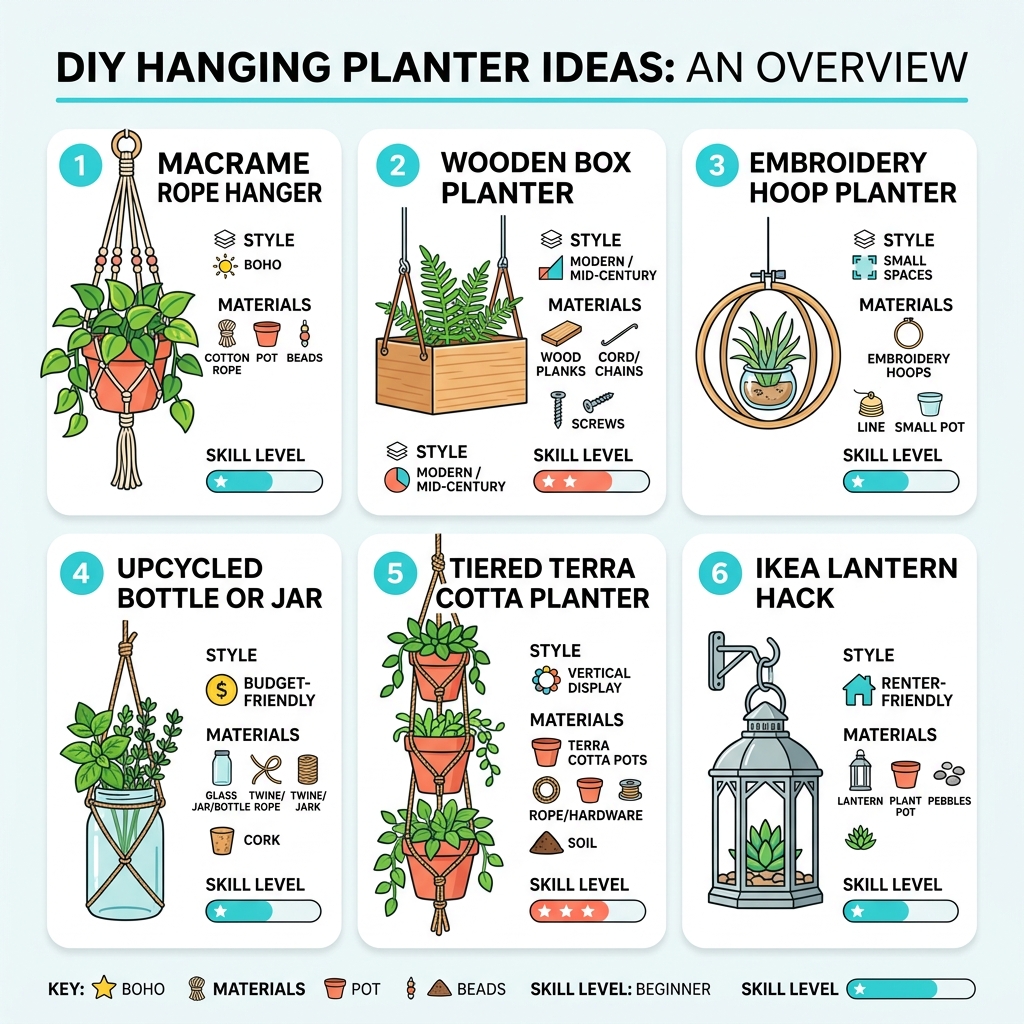
Here are the most popular DIY indoor hanging planter ideas to get you started:
| Style | Best For | Skill Level |
|---|---|---|
| Macrame rope hanger | Boho and casual spaces | Beginner |
| Wooden box planter | Modern and mid-century rooms | Intermediate |
| Embroidery hoop planter | Small plants, windows | Beginner |
| Upcycled bottle or jar | Budget-friendly, kitchen herbs | Beginner |
| Tiered terra cotta planter | Multiple plants, vertical display | Intermediate |
| IKEA lantern hack | Renters, no-drill spaces | Beginner |
We spend roughly 90% of our time indoors. Yet most of us decorate our walls with art and leave our plants stuck on the floor.
Hanging planters fix that. They use vertical space you’re already ignoring, and indoor plants genuinely improve air quality by reducing pollutants like benzene and nitrogen dioxide.
The best part? Most of these projects cost under $20 and can be finished in a single afternoon — no woodworking experience needed.
Whether you rent your apartment or own your home, there’s a hanging planter style and installation method that works for your space.
Why You Should Create a DIY Hanging Planter Indoor

Choosing to build a diy hanging planter indoor rather than buying one from a big-box store offers more than just a fun weekend activity. For starters, it is incredibly cost-effective. Many of the projects we love can be completed for less than $15 or $20, often using scrap materials you might already have in your garage.
Beyond the savings, there is the matter of health and well-being. Since city dwellers spend about 90% of their time indoors, the air quality in our homes is paramount. Houseplants act as natural humidifiers and air purifiers, reducing dust levels and carbon dioxide.
From a design perspective, hanging planters allow for “vertical layering.” This is a technique used by professional interior stylists to create an immersive green space. By placing plants at different heights—on the floor, on tabletops, and hanging from the ceiling—you create a dynamic, living gallery. This is especially vital for the 34% of Americans who rent their homes, where floor space is often at a premium and permanent wall art might be restricted.
Popular Styles for Your DIY Hanging Planter Indoor
When it comes to the “look” of your diy hanging planter indoor, the options are limited only by your imagination. We see three major trends dominating the indoor gardening scene right now:
- Boho-Chic Macrame: This uses ancient knot-tying techniques to create flexible cradles for your pots. It’s perfect for adding texture and a relaxed vibe.
- Mid-Century Modern (MCM): Think clean lines, warm wood tones like white oak, and geometric shapes.
- Industrial & Minimalist: Using copper tubing, brass rings, or simple metal hoops to create a sleek, “bare-bones” aesthetic that lets the plant be the star.
Modern Wood and Rope DIY Hanging Planter Indoor
For those who love the warmth of natural materials, a wooden planter is a fantastic choice. You can create a DIY Hanging Planter using high-quality lumber like white oak or even affordable poplar.
The process usually involves:
- Cutting: Sizing your boards to fit a standard 6-inch pot.
- Drilling: Creating holes in the corners for your rope to pass through.
- Sanding: Removing any splinters for a professional finish.
- Finishing: Applying a stain (like red oak or walnut) and a coat of polyurethane to protect the wood from moisture.
Using a sturdy jute or cotton rope adds a rustic touch while ensuring the structure is secure. If you’re feeling adventurous, you can even build a Mid-century inspired DIY plant hanger using a unique teardrop shape cut from a project panel.
Creative Upcycled and Boho DIY Hanging Planter Indoor
If you prefer a softer, more eclectic look, upcycling is the way to go. You can Make a Beautiful Indoor Hanging Planter by simply sawing a birch wood circle in half to create a shelf that sits flush against the wall.
Other creative ideas include:
- Embroidery Hoops: Connect two hoops at right angles to create a spherical “gyro” planter.
- Leather Straps: Use vegan leather or old belts to cradle a simple glass bowl or terra cotta pot.
- Glass Votives: These are perfect for small succulents or for displaying roots during water propagation.
- IKEA Hacks: Repurposing inexpensive lanterns or baskets into hanging vessels is a staple for budget decorators.
Essential Materials and Tools for Success
To ensure your diy hanging planter indoor is both beautiful and safe, you need the right gear. Here is a breakdown of the materials we recommend:
| Rope Type | Strength | Best For |
|---|---|---|
| Cotton | Moderate | Soft, boho macrame; easy to knot. |
| Jute | High | Rustic looks; very grippy for knots. |
| Nylon | Very High | Modern, colorful designs; very durable. |
| Leather Lace | Low-Moderate | Small, lightweight minimalist planters. |
Common Tools Checklist:
- Power Drill: Essential for making rope holes and drainage.
- Jigsaw: Needed if you are cutting circular holes in wood to “drop” a pot into.
- Sandpaper: Use 120-grit followed by 220-grit for a smooth-to-the-touch finish.
- Adhesives: Wood glue for assembly; E-6000 for attaching saucers to wood.
- Hardware: Ceiling hooks (rated for at least 25-35 lbs), S-hooks, and brass rings.
Renter-Friendly and Safe Installation Tips
With over 44 million households in the U.S. renting, “no-drill” solutions are a high priority. You can absolutely enjoy a diy hanging planter indoor without losing your security deposit.
1. Adhesive Hooks Brands like 3M Command™ make heavy-duty hooks rated for 5–10 lbs. The key is to clean the surface with isopropyl alcohol first and let the adhesive “set” for an hour before hanging the plant.
2. Tension Rods A sturdy shower curtain rod or a dedicated window tension rod can hold several lightweight macrame hangers. This is perfect for a “curtain of green” in a sunny window.
3. Existing Fixtures Look around! You can hang plants from curtain rod brackets, coat racks, or even the side of a tall bookshelf.
4. Finding Studs If you are allowed to drill, always use a stud finder to locate a ceiling joist. If you can’t find a stud, you must use toggle bolts or hollow wall anchors. Never hang a heavy plant (which can weigh 10+ lbs after watering) into plain drywall with a simple screw.
Best Plants and Maintenance for Hanging Displays
Not every plant is a candidate for a hanging life. You want “trailers” and “climbers” that will spill over the edges of your diy hanging planter indoor.
- Pothos & Philodendron: The “indestructibles.” They handle low light and forgive you if you forget to water them.
- Spider Plants: Great for air purification and producing “babies” that dangle down.
- String of Pearls/Hearts: Beautiful, delicate succulents that look like living jewelry.
- Boston Ferns: Perfect for bathrooms where humidity is high.
Maintenance Hacks:
- The Weight Factor: A 6-inch wooden planter might weigh 6 lbs, but once you add a wet plant, it can jump to 9 lbs. Always check your hook’s weight rating.
- Drainage: Most DIY planters don’t have holes. We recommend “double potting”—keep the plant in its plastic nursery pot (with holes) and place that inside your decorative DIY planter.
- Soil: Use a mix with perlite to keep the soil light and airy, which prevents the planter from becoming unnecessarily heavy.
Frequently Asked Questions about DIY Hanging Planters
How do I water hanging plants without making a mess?
This is the biggest hurdle for indoor gardening. We recommend the “sink method”: take the plants down once a week, give them a good soak in the sink, let them drip dry, and then hang them back up. If the planter is too high, use a long-spout watering can and ensure your DIY planter has a “drip catcher” or saucer glued to the bottom with E-6000. Some people use the “ice cube method” for succulents, placing a few cubes on the soil to melt slowly, though this isn’t ideal for all tropical plants.
What are the best low-light plants for hanging?
If your room doesn’t get much sun, stick with English Ivy, Heartleaf Philodendron, or Snake Plants. These species are incredibly hardy and will maintain their deep green color even in dim corners. You can find more inspiration for these styles at The Merrythought.
Can I hang heavy planters on drywall without a stud?
Technically, yes—but only if you use a toggle bolt. A toggle bolt has “wings” that expand behind the drywall to distribute the weight. However, for anything over 10 lbs, we always recommend finding a wooden ceiling joist for total peace of mind.
Conclusion
Creating a diy hanging planter indoor is about more than just decor; it’s about personal expression and bringing a piece of the outdoors inside. Whether you’re building a tiered DIY Hanging Planter or a simple rope hanger, these projects transform a house into a home.
At Financedora, we believe that a beautiful home shouldn’t break the bank. By using these creative styling tips and budget-friendly materials, you can create a lush, vertical garden in any room. Ready for your next project? Explore More DIY home projects and keep building the space you love!
