
The Best Reed Hanging Indoor Baskets to Buy Right Now
Reed hanging indoor baskets are one of the easiest ways to add natural texture and living greenery to your home — without taking up floor space.
Here are some of the top-rated options worth considering:
| Basket | Best For | Key Feature |
|---|---|---|
| Swirl Rope & Reed Round Basket | Trailing plants, mixed displays | Handwoven, ready to hang |
| Rope & Reed Cone Basket | Small spaces, minimalist decor | Natural rope detail, lightweight |
| Brushwood & Corn Leaf Basket | Rustic, boho interiors | Mixed natural fiber construction |
Most shoppers look for baskets that are sturdy, naturally made, and sized right for common trailing houseplants like pothos or spider plants.
Walk into any well-styled home these days and you’ll likely spot a woven basket dangling from the ceiling, spilling over with trailing greenery. It’s not just a trend — it’s a smart solution.
Reed baskets are woven from natural plant fibers, giving them a warm, organic look that plastic or metal baskets simply can’t match. They’re lightweight, breathable, and they blend easily into almost any room.
But not all reed baskets are created equal. The material quality, size, and construction all affect how long they last and how well your plants grow inside them.
This guide cuts through the noise. Below, you’ll find the best reed hanging indoor baskets available right now, plus everything you need to know to choose, plant, and care for them — even if you’re a complete beginner.
Why Choose Reed Hanging Indoor Baskets for Your Home?
When we think about vertical gardening, the first image that often comes to mind is a utilitarian wire basket or a cheap plastic pot. While those serve a purpose, reed hanging indoor baskets offer a level of natural aesthetic that synthetic materials simply cannot replicate.
The primary draw of reed is its texture. These baskets are often handwoven, showcasing artisanal craftsmanship that adds a “human touch” to your decor. Because they are made from natural plant fibers—like those found in Swirl Rope & Reed Round Hanging Baskets—they bring an organic warmth to a room, making even a minimalist space feel cozy.
Sustainability and Breathability
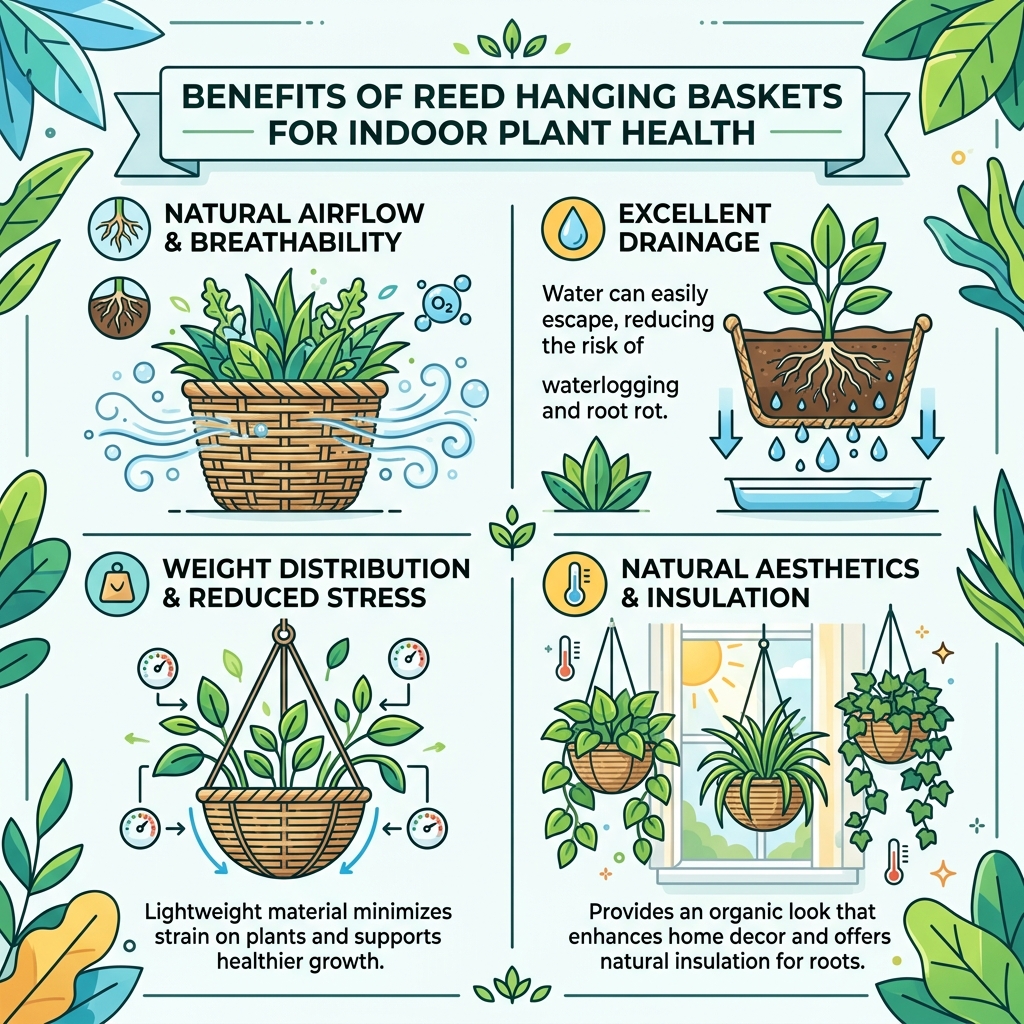
In an era where we are all trying to be more eco-conscious, reed is a winner. It is a renewable resource, often biodegradable, and far more sustainable than mass-produced plastics. Furthermore, reed is naturally breathable. Unlike plastic, which can trap heat and stagnant moisture against the roots, the weave of a reed basket allows for subtle air exchange. This helps prevent the dreaded “root rot” by ensuring the root ball isn’t sitting in a completely anaerobic environment.
Lightweight Design
If you’ve ever tried to hang a heavy ceramic pot from a standard drywall ceiling, you know the anxiety of wondering if the hook will hold. Reed baskets are incredibly lightweight. Even when filled with soil and a lush plant, they place significantly less stress on your mounting hardware compared to metal or clay alternatives. This makes them the best pots for indoor plants when you want to create a floating jungle without structural reinforcements.
Material Comparison Table
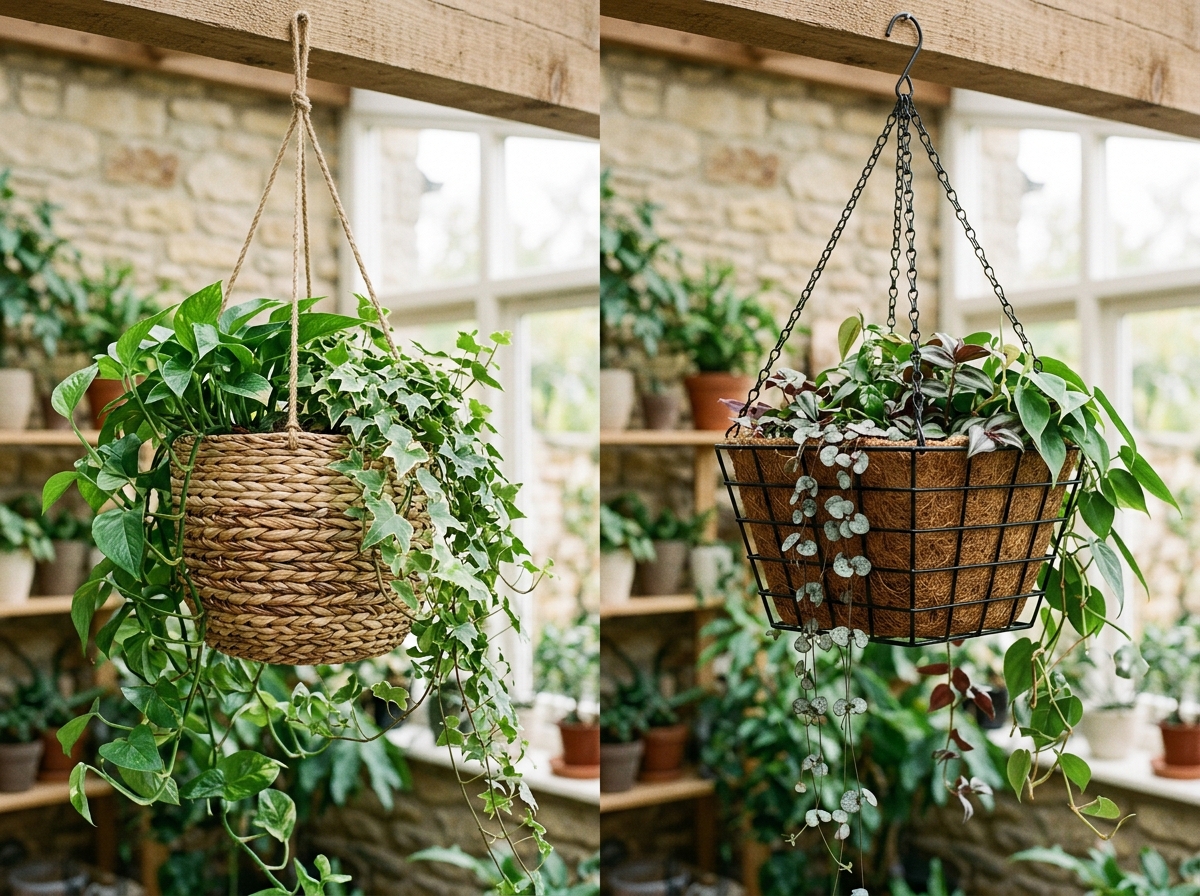
| Feature | Reed Baskets | Macrame Slings | Wire Baskets |
|---|---|---|---|
| Aesthetics | Natural, rustic, textured | Boho, artistic, retro | Industrial, traditional |
| Durability | High (indoors) | Medium (can fray/stain) | Very High (rust-resistant) |
| Plant Support | Built-in structure | Requires a separate pot | Requires a liner |
| Breathability | Excellent | Depends on the inner pot | High (with coir liner) |
Best Plants for Your Indoor Greenery Displays
Not every plant is a “hanger.” To make the most of your reed hanging indoor baskets, you want species that either trail elegantly over the sides or provide a lush, fountain-like explosion of foliage from the center.
When selecting your greenery, consider the light levels in your home. Retailers like Lowe’s often categorize hanging plants by light needs, noting that options are plentiful for low (13 options) and medium light (13 options), while bright light favorites are slightly more specialized (7 options). Matching your plant to your room’s orientation is the first step toward success.
Top Trailing Plants for Reed Hanging Indoor Baskets
If you are looking for low-maintenance indoor plants, trailing varieties are your best friend. They are forgiving and visually rewarding.
- Pothos (Devil’s Ivy): The undisputed king of hanging baskets. It is incredibly hardy and features heart-shaped leaves that can grow several feet long.
- Spider Plants: These are decorative air purifying plants that produce “babies” on long runners, creating a tiered look that perfectly complements the tiered texture of a reed weave.
- Tradescantia (Inch Plant): Known for its striking purple and silver stripes, this plant adds a pop of color to the natural tan of the reed.
- Heartleaf Philodendron: Similar to Pothos but with a softer, more delicate leaf shape. It thrives in the moderate light often found in living rooms.
- English Ivy: A classic choice for a formal or “cottagecore” look. It loves the air circulation provided by woven materials.
Many of these are recognized as indoor plants that clean the air, making your reed basket a functional health tool as well as a piece of decor.
Ferns and Orchids in Woven Displays
For those who want something a bit more sophisticated, ferns and orchids are excellent candidates for reed baskets.
Boston Ferns are the quintessential hanging plant. They love the high humidity that can be maintained within a lined reed basket. Their feathery fronds spill out in a 360-degree radius, completely hiding the basket for a “floating ball of green” effect.
Orchids, particularly Vandas and Phalaenopsis, can actually thrive in hanging environments. According to experts, planting orchids in hanging baskets is one of the best ways to mimic their natural epiphytic habitat.
- Vanda Orchids: These often prefer to have their roots exposed to the air, making a loosely woven reed or wire basket ideal.
- Cattleyas and Dendrobiums: These varieties tolerate the faster drying times associated with hanging displays.
If you’re ready to expand your collection, you can explore our plants to find the perfect match for your new woven home.
How to Plant and Style Your Indoor Reed Basket
Planting in a reed basket is slightly different from using a standard pot. Because reed is a porous, natural material, you need to take a few extra steps to ensure the basket doesn’t rot and your floors stay dry.
The Essential Planting Checklist
To get started with your indoor hanging plant DIY, gather these tools:
- Your reed basket and a secure hook (like the Reed Bunting Steel Bracket).
- Peat-free multi-purpose compost.
- Water-retaining granules (crucial for indoor baskets to prevent frequent drying).
- A plastic liner or coco coir insert.
- A small trowel.
- Tepid water for the initial soak.
Step-by-Step Instructions
- Stabilize the Basket: Place the basket on a large empty pot or a bucket while you work. This keeps it from rolling around while you’re trying to plant.
- Add the Liner: If your basket didn’t come with one, insert a plastic liner. Make sure to poke a few small drainage holes in the bottom—indoor plants need drainage just as much as outdoor ones!
- Mix the Soil: Combine your peat-free compost with water-retaining granules. This helps the soil hold onto moisture, which is vital since hanging baskets are exposed to more air and dry out faster.
- Position Your Plants: Use the “Thriller, Filler, Spiller” method. Place a taller “thriller” in the center, “filler” plants around it to add volume, and “spiller” trailing plants near the edges to cascade over the reed.
- The Initial Soak: Water the basket slowly with tepid water until it begins to drip from the bottom. Let it finish dripping in the sink or bathtub before hanging it up.
Selecting the Right Liner for Reed Hanging Indoor Baskets
Choosing the right liner is the secret to a long-lasting basket. While outdoor baskets often use moss, indoor reed hanging indoor baskets require more moisture control.
- Plastic Liners: These are the best for preventing drips on your carpet. They keep the water contained within the soil. However, you must be careful not to overwater, as there is less evaporation.
- Coco Coir: This is a more “natural” looking option that matches the reed aesthetic. It provides excellent drainage but may require a secondary plastic tray at the bottom to catch drips.
- Burlap Inserts: A great DIY option. Burlap is breathable and rustic, though it tends to dry out the fastest.
For more detailed tips on managing your first setup, check out our beginner indoor plant care guide.
Maintenance and Troubleshooting for Natural Fiber Baskets
Once your basket is hanging, the work isn’t quite over. Hanging baskets live in a “micro-climate” near the ceiling where the air is often warmer and drier.
Watering and Humidity
Check your baskets frequently. A simple “finger test” (sticking your finger an inch into the soil) will tell you if it’s time to water. Most indoor hanging plants need water once or twice a week. To avoid a mess, many plant parents use the “sink method”—take the basket down, water it thoroughly in the sink, let it drain for 20 minutes, and then re-hang it.
Cleaning the Reed
Because reed is textured, it can be a magnet for dust. Every few months, use a soft brush or a vacuum with a brush attachment to gently remove dust from the weave. This keeps the basket looking fresh and prevents pests from hiding in the fibers. You can find more plant care tips in our dedicated section.
Troubleshooting Common Issues
- Mold on the Basket: This usually happens if the reed stays damp for too long. Ensure there is a plastic liner between the wet soil and the reed material. If you see mold, wipe it with a weak vinegar solution and increase air circulation.
- Sagging: Over time, the weight of wet soil can cause natural fibers to stretch. Avoid over-planting; for a 12-inch basket, 3-4 small plants are usually plenty.
- Pests: Fungus gnats love damp hanging baskets. Using small apartment indoor plants that prefer drying out between waterings can help mitigate this.
Frequently Asked Questions about Reed Baskets
How do I prevent water from dripping on my floor?
This is the number one concern for indoor gardeners. The most effective method is using a solid plastic liner with a small “reservoir” or saucer tucked at the bottom inside the reed basket. Alternatively, you can explore easy indoor plant crafts like creating a custom drip tray that sits discreetly beneath the weave.
How long do reed hanging baskets last indoors?
When kept away from direct rain and harsh elements, a high-quality reed basket can last 2 to 3 years or more. Its lifespan depends on the quality of the reed and how well you protect it from constant moisture. Using recycled planters for houseplants as inner liners can significantly extend the life of the outer decorative reed.
Can I use reed baskets for low-light plants?
Absolutely! In fact, reed baskets are perfect for low-light corners because they add visual interest even if the plant isn’t blooming. Snake plants or ZZ plants are great low-light options that don’t mind the slightly drier conditions of a hanging basket. Just be sure to position them near a window where they can still receive indirect light.
Conclusion
At Financedora, we believe that bringing nature indoors shouldn’t be a chore—it should be a design statement. Reed hanging indoor baskets provide the perfect blend of sustainability, style, and functionality. By elevating your plants, you not only save floor space in smaller homes but also create a dynamic, layered look that breathes life into your living area.
Whether you’re looking for indoor plant decoration ideas to refresh your bedroom or you’re ready to dive into our DIY projects category to build your own hanging garden, reed is the natural choice. It’s time to stop looking at your floor and start looking at your ceiling—there’s a whole lot of green potential up there!
