
Do Spider Plants Really Clean Indoor Air? Here’s What the Science Says
Spider plant clean air benefits are real — but how well do they actually work in your home?
Here’s a quick answer before we dive deeper:
| Question | Quick Answer |
|---|---|
| Do spider plants purify air? | Yes, they absorb VOCs like formaldehyde, xylene, and carbon monoxide |
| How effective are they? | Up to 95% toxin removal in lab conditions (NASA study) |
| How many do you need? | 2–3 plants per 100 sq ft; 8–15 for a whole living space |
| Are they safe for pets? | Yes — non-toxic to cats and dogs |
| Better than an air purifier? | No, but they complement one well |
Millions of homeowners have heard the claim: houseplants can clean your indoor air. The buzz largely started with a famous NASA study from 1989, which found that certain plants — spider plants included — removed up to 95% of formaldehyde from a sealed chamber within 24 hours.
That sounds incredible. And it is — in a lab.
The real-world picture is a little more nuanced. Your home isn’t a sealed chamber. But that doesn’t mean spider plants are useless. Far from it.
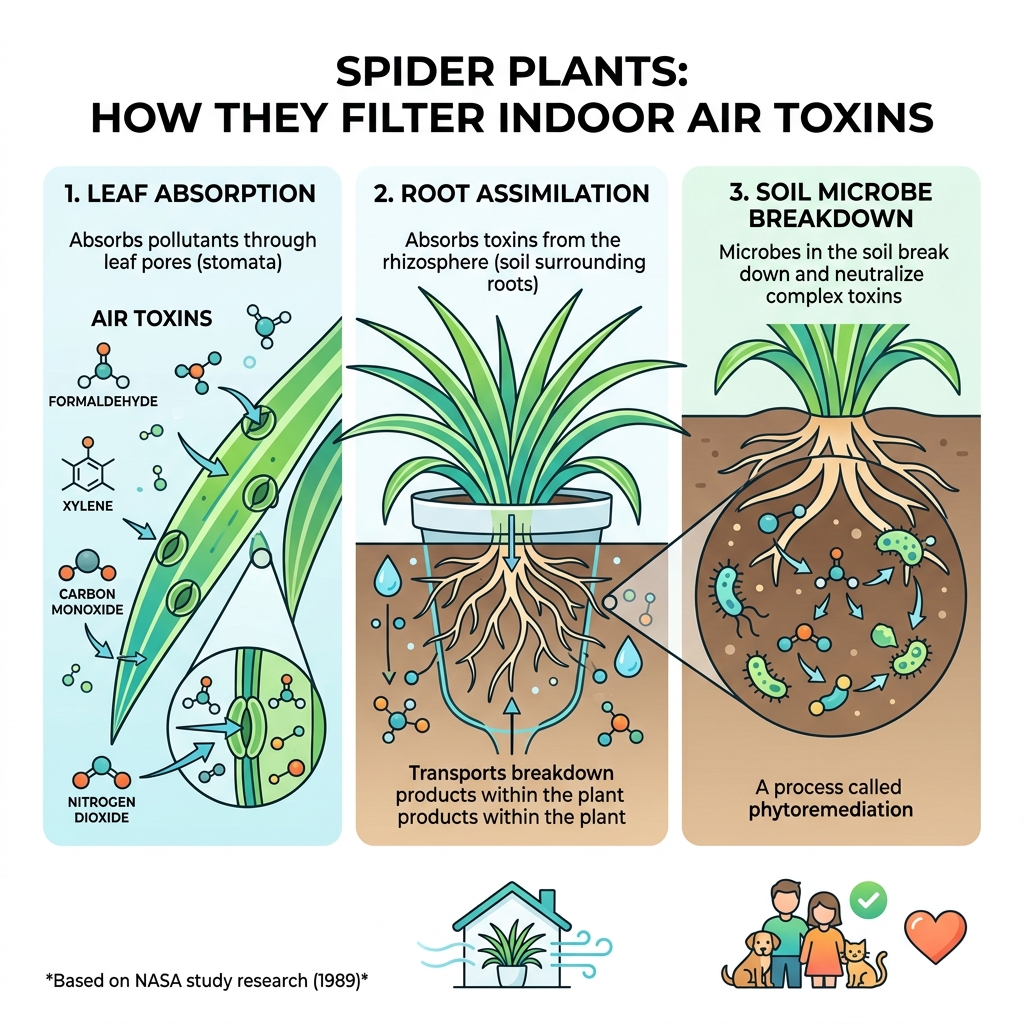
Spider plants (Chlorophytum comosum) are one of the most popular and low-maintenance houseplants around. They absorb harmful gases through their leaves and roots, and the microbes living in their soil help break those toxins down further — a process called phytoremediation.
They won’t replace your ventilation system. But as a low-effort, affordable, and pet-safe addition to your home, they offer real benefits that go well beyond decoration.
This guide breaks down exactly what spider plants can and can’t do for your indoor air — and how they stack up against other popular options.
The Science of Spider Plant Clean Air Capabilities
When we talk about spider plant clean air research, we have to look at the data. According to Spider Plant Air Purification Research – NASA Truth, the original 1989 study titled “Interior Landscape Plants for Indoor Air Pollution Abatement” put the humble spider plant on the map. In these tests, researchers placed plants in sealed Plexiglas chambers and injected them with Volatile Organic Compounds (VOCs).
The results were staggering: spider plants removed 95 percent of formaldehyde from the chamber in just 24 hours. They also proved effective at reducing levels of carbon monoxide and nitrogen dioxide. But how exactly does a plant “eat” pollution? It’s not just through the leaves.
How Spider Plants Remove Formaldehyde and Toxins
The process is a team effort between the plant and its environment. First, the plant breathes. Through tiny pores on their leaves called stomata, spider plants take in gases. While they are looking for carbon dioxide to fuel photosynthesis, they also inadvertently soak up toxins like xylene, toluene, and formaldehyde. These chemicals are common in modern homes, often off-gassing from synthetic carpets, particleboard furniture, and household cleaners.
Once absorbed, these pollutants are transported down to the roots. This is where the real magic happens. Microorganisms living in the soil—bacteria and fungi—break down these complex chemicals into food for the plant. This symbiotic relationship means that as the plant grows, its ability to clean the air can actually improve over time. We’ve discussed similar mechanisms in our guide on plants for reducing indoor toxins.
According to scientific research on indoor formaldehyde removal, the efficiency of this process depends on the plant’s health. A thriving spider plant with plenty of “babies” (spiderettes) has a higher surface area, allowing for more gas exchange and better filtration.
Spider Plant Clean Air vs. Mechanical HEPA Filters
It is important to manage expectations. If you compare a single spider plant to a high-end mechanical air purifier, the plant is going to lose on speed every time. Mechanical purifiers use fans to pull air through dense HEPA filters, which are designed to capture 99.9% of particulate matter (like dust and pollen) down to 0.3 microns.
Spider plants, on the other hand, are “passive” filters. They don’t have fans; they rely on the natural movement of air in the room. While HEPA filters excel at catching dust, they often struggle with gaseous pollutants like formaldehyde unless they have a thick activated carbon stage. This is where spider plants shine. They target the gases that many basic filters miss.
However, the Clean Air Delivery Rate (CADR) of a plant is much lower than a machine. To match the air-clearing power of a standard mechanical purifier, you would need a literal jungle in your living room—some estimates suggest up to 700 plants for a whole house! Instead of choosing one or the other, we recommend a hybrid approach. Use indoor plants that clean the air to handle VOCs and provide humidity, while letting a mechanical filter handle the heavy-duty dust and seasonal allergens.
Comparing Spider Plants to Other Air Purifiers
Not all green friends are created equal. When building your indoor “living filter,” it helps to know which plants target which toxins. Spider plants are the “all-rounders,” but they have some stiff competition.
| Plant Type | Best For Removing | Light Needs | Pet Safety |
|---|---|---|---|
| Spider Plant | Formaldehyde, Carbon Monoxide | Indirect | Safe |
| Snake Plant | Benzene, Trichloroethylene | Low | Toxic if eaten |
| Peace Lily | Ammonia, Mold Spores | Medium | Toxic if eaten |
| English Ivy | Airborne Fecal Matter, Mold | Bright | Toxic if eaten |
Spider plants have a high transpiration rate, meaning they move water through their system quickly. This “pumping” action helps pull air down toward the root zone more effectively than slower-growing succulents. If you are looking for a variety of houseplants that remove toxins, we suggest mixing spider plants with others to cover all your bases. For example, snake plants are famous for producing oxygen at night, making them great bedroom companions, while spider plants work hard during the day.
Resilience and Recovery After Pollutant Exposure
One of the most fascinating pieces of research regarding spider plant clean air capabilities involves their “stamina.” Can a plant get “clogged” by pollution?
Scientific abstracts have shown that spider plants are remarkably resilient. In one study, three species of spider plants were exposed to high levels of formaldehyde for seven days. While the plants showed some stress—monitored through physiological indexes like chlorophyll levels and MDA (malondialdehyde)—they mostly recovered within 15 days of being moved to clean air.
However, there is a catch. After recovering, the plants’ efficiency at removing toxins dropped by 35-50% during repeated exposure. This suggests that while they are hardy air-purifying plants, they do have limits. To keep their “filter” fresh, you need to ensure they have periods of good light and clean water so they can regenerate their internal systems.
Maximizing Your Spider Plant Clean Air Strategy
To get the most out of your spider plant clean air efforts, you can’t just “set it and forget it.” A dusty, thirsty plant is a poor air filter.
Best Practices for Spider Plant Clean Air Maintenance
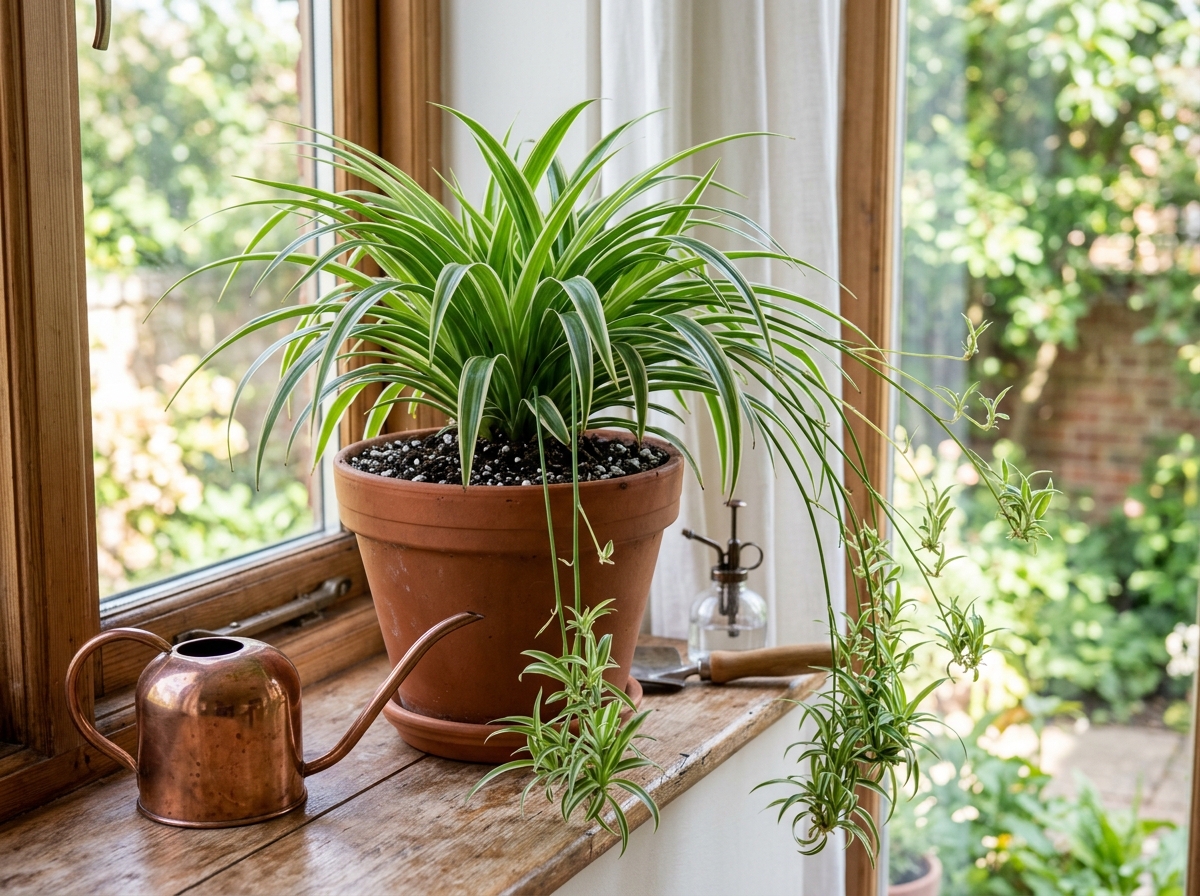
- Dust the Leaves: This is the most overlooked step. If the leaves are covered in dust, the stomata (pores) are blocked. We recommend wiping the leaves with a damp cloth once a month. This ensures maximum gas exchange.
- The Finger Test: Spider plants hate “wet feet.” Stick your finger into the soil up to the second knuckle. If it feels dry, it’s time to water. Consistent moisture helps the plant maintain a high transpiration rate, which keeps the air moving toward the roots.
- Light Matters: While they are often sold as low-maintenance indoor plants, they perform best in bright, indirect light. More light equals more photosynthesis, which means more toxin absorption.
- Use Porous Pots: Terracotta pots allow the soil to “breathe” better than plastic ones. This increases airflow to the root-soil zone, where those helpful microbes live.
- Water Quality: Spider plants are sensitive to fluoride and chlorine in tap water, which can cause brown tips. Using distilled water or rainwater keeps the leaf tips green and the plant healthy. Check out our tips on low-water air-purifying plants for more watering wisdom.
Scaling Up: How Many Plants Do You Need?
If you want to move beyond the “placebo effect” and actually change your air quality, numbers matter. Dr. Bill Wolverton, the lead scientist on the NASA study, originally recommended about 15 to 18 medium-sized plants for an 1,800-square-foot house.
A more practical rule for modern apartments is the “100 square feet rule”: aim for at least two or three healthy plants in 8- to 10-inch pots for every 100 square feet of floor space. If you are on a budget, spider plants are perfect because they are budget-friendly air-cleaning plants that are incredibly easy to propagate. One “mother” plant can produce dozens of “babies” in a single year, allowing you to scale up your air purification for free!
Focus on your “personal breathing zone”—the 6 to 8 cubic feet of air immediately surrounding you where you spend the most time (like your desk or bedside table). Placing a cluster of 3-5 spider plants in these areas provides the most direct benefit.
Frequently Asked Questions about Spider Plants
Even the most popular plants come with questions. Here are the most common things we hear about the spider plant clean air phenomenon.
Are spider plants safe for pets and children?
Yes! This is one of the biggest selling points for the spider plant. Unlike the peace lily or the snake plant, which can cause stomach upset or irritation if nibbled, the spider plant is non-toxic. It is officially listed as safe by the ASPCA for both cats and dogs.
In fact, some cats are strangely attracted to spider plants because they contain compounds that are mildly hallucinogenic to felines (similar to catnip). While it won’t hurt them, it might result in a very “happy” cat and a very chewed-up plant. If you want to keep your greenery intact, we suggest using hanging planters. You can find more non-toxic air-purifying plants in our dedicated guide.
Can spider plants remove mold and allergens?
Interestingly, yes. According to The popular houseplant is an air-purifying hero — and it can even tackle mold spores, spider plants have been shown to reduce airborne mold spores by up to 95% in controlled environments.
They also help with humidity. By releasing moisture into the air through transpiration, they can help prevent the air from becoming too dry during winter months, which often irritates the nasal passages. However, be careful not to overwater them, as soggy soil can actually create mold. As the National Wildlife Federation points out, covering the soil with a layer of gravel or Spanish moss can help prevent mold from growing on the soil surface.
Do spider plants help with asthma?
While a plant is not a substitute for medical treatment, many people with respiratory issues find relief by incorporating best plants for air quality into their homes. By removing irritants like formaldehyde and reducing dust levels (which stick to the leaves), spider plants can help create a cleaner “breathing zone.”
A 2025 study even suggested that spider plants could reduce indoor particulate matter by over 60% in certain settings by acting as a natural dust trap. For someone with asthma, reducing these triggers is a small but meaningful step toward better daily health.
Conclusion
At Financedora, we believe that creating a healthy home shouldn’t require a massive budget or a degree in engineering. The spider plant clean air solution is one of the most accessible ways to improve your indoor environment.
While they might not be the “magic bullet” that clears 100% of pollution in a drafty house, they are a vital part of a holistic air quality strategy. Beyond the chemical benefits, there is the “biophilia effect”—the proven psychological boost we get from being around living things. Having a lush, green spider plant on your desk can lower stress, improve your mood, and make your space feel more alive.
Whether you’re looking to tackle VOCs, add a bit of natural humidity, or just want a pet-safe hobby, the spider plant is a true indoor hero. Start with one, propagate the babies, and soon you’ll have a sustainable, air-cleaning workforce in every room of your home.
For more tips on how to improve your lifestyle and home environment, explore more info about indoor plant benefits on our main site. Happy planting!
