
The Safest Big House Plants for Cat Owners (And Where to Get Them)
Big house plants safe for cats do exist — and there are more beautiful options than most people realize. Here are the top picks, all confirmed non-toxic by the ASPCA:
| Plant | Mature Indoor Height | Key Benefit |
|---|---|---|
| Areca Palm | 6-12 ft | Air purifying, dramatic presence |
| Majesty Palm | 4+ ft | Bold tropical look |
| Kentia Palm | Up to 10 ft | Low light tolerant, elegant |
| Bamboo Palm | 6-12 ft | Air purifying, pet durable |
| Money Tree | 3-6 ft | Easy care, fast growing |
| Cast Iron Plant | 2-3 ft | Nearly indestructible |
| Parlor Palm | Up to 4 ft | Compact, low maintenance |
You love your cat. You also love the idea of a lush, green home. The problem? A huge number of popular houseplants — pothos, snake plants, peace lilies — are actually toxic to cats.
It’s a frustrating situation. You’re standing in a nursery, phone out, frantically Googling every plant label before putting anything in your cart.
The good news: you don’t have to choose between plants and your cat’s safety. Several large, striking houseplants are completely non-toxic, low-maintenance, and look incredible in any room.
This guide cuts straight to the best options and tells you exactly where to buy them today.
Top Big House Plants Safe for Cats to Transform Your Home
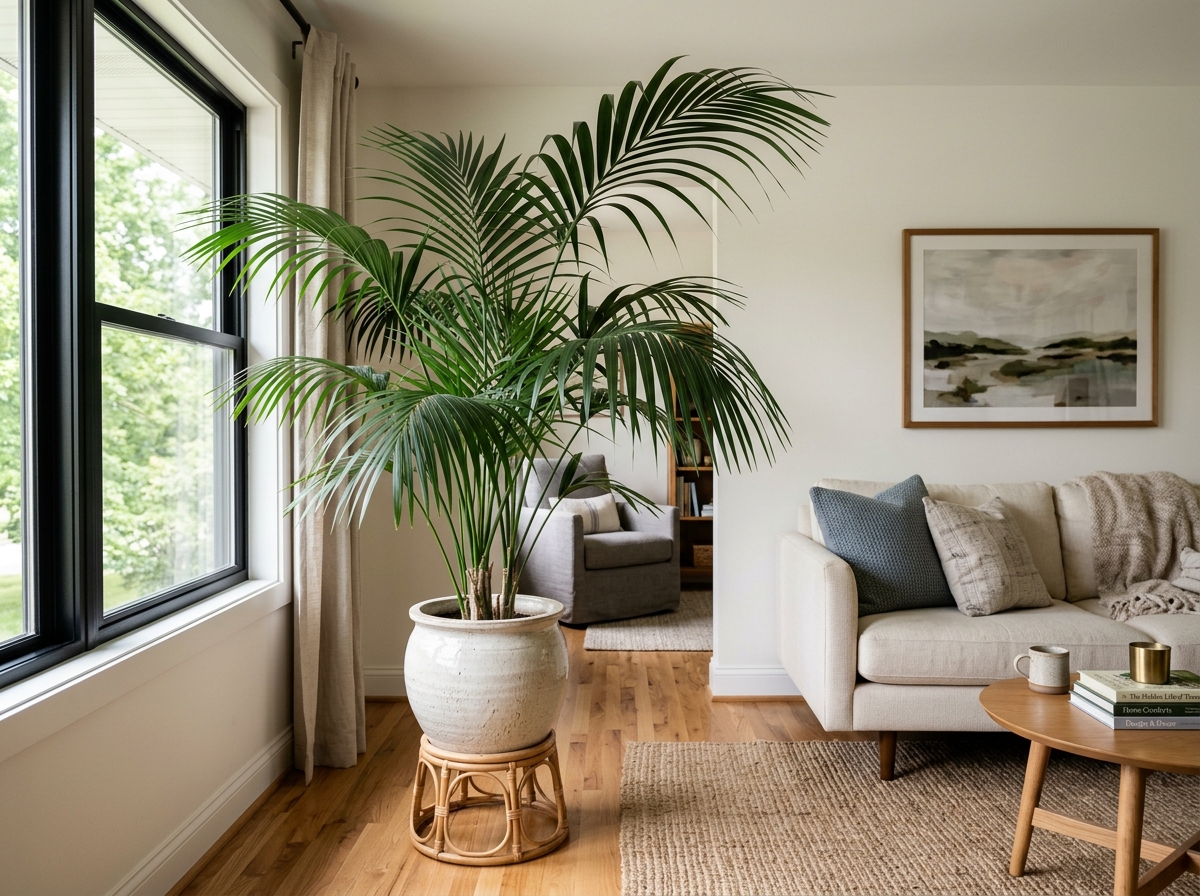
When we talk about big house plants safe for cats, we aren’t just talking about a small pot on a windowsill. We are talking about floor-to-ceiling greenery that anchors a room. Creating a “cat-friendly indoor jungle” requires specimens that offer height and volume without the hidden danger of calcium oxalate crystals or toxic alkaloids.
Areca Palm (Dypsis lutescens)
The Areca Palm is often considered the “undisputed champion” for cat households. It can reach heights of 6 to 12 feet indoors, providing a massive burst of feathery, tropical fronds. Not only is it entirely non-toxic, but it is also a powerhouse of air purification. We love it because even if your cat decides to swat at the dangling leaves, the plant is sturdy enough to handle a little play.
Majesty Palm (Ravenea rivularis)
If you want a bold, classic palm look, the Majesty Palm is a go-to. It typically grows upwards of 48 inches and thrives in humid environments. It’s a popular choice at big-box retailers and is explicitly labeled as safe for both cats and dogs.
Kentia Palm (Howea forsteriana)
For those with a bit more of a budget and a desire for elegance, the Kentia Palm is a Victorian-era classic. It can grow up to 10 feet tall and is famously tolerant of lower light conditions. It’s the “slow and steady” winner of the palm world, maintaining its sleek look for years.
Money Tree (Pachira aquatica)
The Money Tree is a fantastic alternative to the toxic Fiddle Leaf Fig. With its braided trunk and star-shaped leaves, it can reach 6 feet in height. It’s fast-growing and adds a unique structural element to your home decor. To learn more about how these beauties help your home breathe, check out the best air-purifying plants that won’t piss off your pets.
Bamboo Palm (Chamaedorea seifrizii)
Reaching 6 to 12 feet, the Bamboo Palm is excellent for filling empty corners. It is highly resistant to pests and is noted for its ability to filter indoor air pollutants like formaldehyde and benzene.
Cast Iron Plant (Aspidistra elatior)
While it grows more out than up (reaching about 2-3 feet), its broad, dark green leaves give it a “large plant” feel. It is called the Cast Iron Plant because it is nearly impossible to kill, making it perfect for beginners or those with mischievous cats.
Dwarf Banana Tree (Musa acuminata)
For a truly exotic vibe, the Dwarf Banana Tree offers massive, paddle-shaped leaves. It can reach 3 to 6 feet indoors. While it needs plenty of light and water, it is 100% safe for your feline friends to sniff and explore.
Why These Big House Plants Safe for Cats are Ideal
Choosing big house plants safe for cats isn’t just about avoiding a trip to the emergency vet; it’s about the practical benefits these specific species bring to a multi-pet household.
- Size Impact: Large plants provide immediate vertical interest. They can hide unsightly cords or fill awkward gaps in your floor plan, creating a professional “designer” look.
- Physical Durability: Many of the palms mentioned, like the Areca or Kentia, have thin, flexible fronds. Unlike the brittle leaves of a succulent or the soft stems of a flower, these palms can withstand a cat “flossing” its teeth on the leaves without the whole plant collapsing.
- Non-Toxicity: This is the core requirement. These plants do not contain the saponins, insoluble calcium oxalates, or essential oils that cause oral irritation or organ failure in felines.
- Air Purification: Many large cat-safe plants were featured in NASA’s Clean Air Study. They effectively remove toxins like xylene and carbon monoxide from your home. For more details on these benefits, see our non-toxic air-purifying guide.
Essential Care for Big House Plants Safe for Cats
To keep your large greenery looking its best, we need to respect their natural habitats. Most of these tropical giants share similar care requirements:
- Bright Indirect Light: Most palms and tropical trees prefer bright, filtered light. Direct afternoon sun can scorch their leaves, while too little light will stop their growth.
- Humidity Requirements: Tropical plants love moisture in the air. We recommend misting your ferns and palms daily or using a pebble tray. If you notice yellowing fronds on a Boston Fern, it’s likely a sign the air is too dry.
- Well-Draining Soil: Large pots can hold onto water for a long time, leading to root rot. Always use a potting mix with perlite or sand to ensure drainage.
- Watering Schedules: A good rule of thumb is to water when the top 1-2 inches of soil feel dry. Overwatering is the number one killer of indoor palms! For those who want a “set it and forget it” approach, explore our low-maintenance plant tips.
How to Verify and Protect Your Large Greenery
Even when a plant is labeled “pet-friendly,” it’s our responsibility to double-check. The most reliable resource is the ASPCA Toxic and Non-Toxic Plants database. Before buying, always look up the botanical name (e.g., Dypsis lutescens instead of just “Palm”) to ensure accuracy.
Protecting the plant is just as important as protecting the cat. Large plants are heavy, but a determined 12-pound tabby can still cause a disaster.
- Museum Putty: Use this under the base of your pots to secure them to the floor or a plant stand. It prevents “zoomie-induced” tip-overs.
- Heavy Ceramic Planters: Avoid lightweight plastic pots. Use heavy stoneware or ceramic to lower the center of gravity.
- Citrus Deterrents: Cats generally dislike the smell of citrus. Placing orange or lemon peels on the soil—or using a diluted citrus spray on the pot—can discourage them from getting too close.
- Strategic Placement: Use tall stands to lift the foliage out of easy reach. For more placement ideas, read about the best living room plants.
Where to Source Large Cat-Friendly Plants
Finding big house plants safe for cats used to mean hunting through local nurseries, but today, you can have a 5-foot palm delivered right to your door.
| Retailer Type | Pros | Cons |
|---|---|---|
| Online Nurseries | Huge variety, explicitly labeled “pet-safe” collections, door-to-door shipping. | Shipping costs for large specimens can be high. |
| Big-Box Stores | Affordable, Majesty Palms are often in stock, immediate pickup. | Labels are often vague; limited “rare” varieties. |
| Local Garden Centers | Expert advice, you can inspect the specific plant for pests. | You have to transport the large plant yourself. |
Online Nurseries
Retailers like The Sill, Lively Root, and Hey Rooted offer curated “Pet-Friendly” sections. They often sell plants in “Large” or “Extra Large” sizes (3-6 feet). This is the easiest way to ensure you are getting a plant that is truly safe, as these companies prioritize pet-owner education.
Big-Box Garden Centers
Stores like Home Depot often carry large Majesty Palms and Cat Palms at very competitive prices. Just be sure to bring your phone to verify the species on the ASPCA website before you head to the checkout.
Shipping Large Specimens
When ordering online, check the “mature size” versus the “shipping size.” Most online retailers ship plants in 10-inch to 12-inch grower pots, meaning the plant is already well-established. If you’re a first-time plant parent, our beginner plant guide can help you navigate your first purchase.
Frequently Asked Questions about Cat-Safe Plants
What are the symptoms of plant poisoning in cats?
Even if you only keep big house plants safe for cats, it’s vital to know the warning signs of ingestion. If your cat eats a toxic plant, you may notice:
- Vomiting and Diarrhea: The most common sign of gastrointestinal distress.
- Drooling: Excessive salivation often indicates oral irritation from calcium oxalate crystals.
- Lethargy: If your cat is unusually tired or hiding.
- Difficulty Breathing: A sign of a severe allergic or toxic reaction.
- Oral Irritation: Redness or swelling around the mouth.
What to do: Contact your veterinarian or the ASPCA Animal Poison Control at (888) 426-4435 immediately. Try to identify exactly which plant was eaten and how much.
Which large plants should I absolutely avoid?
To keep your home safe, steer clear of these common large (but toxic) plants:
- Sago Palm: Extremely toxic; even a small amount can cause liver failure.
- Lilies: All parts (including pollen and vase water) are fatal to cats.
- Monstera Deliciosa: Contains irritating crystals that cause intense mouth pain.
- Philodendron & Pothos: Common “jungle” plants that cause swelling and drooling.
- Snake Plant & ZZ Plant: Mildly to moderately toxic; cause nausea and vomiting.
How do I stop my cat from digging in large pots?
Large pots are basically giant litter boxes to a cat. To stop the digging:
- Pebbles or River Stones: Cover the exposed soil with a layer of large decorative stones. They are too heavy for cats to move.
- Mesh Covers: You can buy or DIY a plastic mesh screen that fits over the soil.
- Cat Grass Alternatives: Provide a “decoy” plant. Growing a small pot of cat grass or catnip gives them a safe place to nibble and dig, leaving your big palms alone. For more vertical safety ideas, see our hanging plant alternatives for curious cats.
Conclusion
At Financedora, we believe that a beautiful home shouldn’t come at the cost of your pet’s health. By choosing big house plants safe for cats, you can enjoy the serenity of an indoor jungle while keeping your furry roommates out of the emergency room.
Before you head out to buy your next green giant, remember our final checklist:
- Verify the botanical name on the ASPCA list.
- Choose a heavy, stable planter.
- Ensure you have a bright, indirect light spot ready.
- Provide a safe “nibble” alternative like cat grass.
For more tips on creating a stylish, pet-safe sanctuary, visit Financedora for more pet-safe home tips. Happy planting!
