
Why Indoor Hanging Plants Belong in Every Urban Home
The best indoor hanging plants are a simple, low-effort way to bring life into any space — whether you have a bright sunny window or a dim corner that needs some personality.
Here’s a quick look at the top picks:
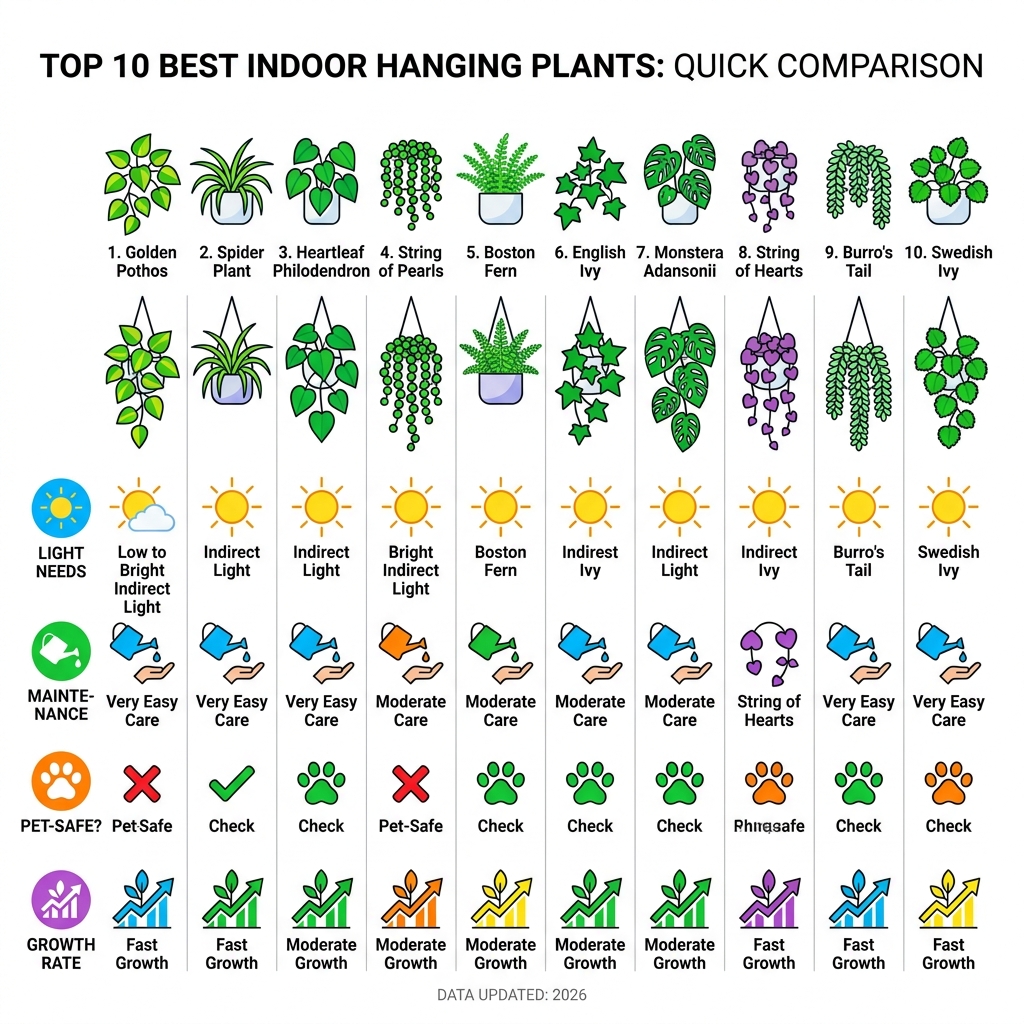
| Plant | Light Needs | Maintenance | Pet-Safe? |
|---|---|---|---|
| Golden Pothos | Low to bright indirect | Very easy | No |
| Spider Plant | Indirect light | Very easy | Yes |
| Heartleaf Philodendron | Low to indirect | Easy | No |
| String of Pearls | Bright indirect | Moderate | No |
| Boston Fern | Indirect light | Moderate | Yes |
| English Ivy | Low to indirect | Easy | No |
| Monstera Adansonii | Indirect light | Easy | No |
| String of Hearts | Bright indirect | Easy | No |
| Burro’s Tail | Bright indirect | Easy | Yes |
| Swedish Ivy | Indirect light | Easy | Yes |
Hanging plants are especially useful in urban homes. Floor and shelf space runs out fast. Going vertical is the obvious fix.
Beyond looks, many trailing plants — like Pothos and Spider Plant — actively help purify indoor air. And the trailing, cascading effect of vines spilling over a shelf or basket adds a natural, calming feel that’s hard to replicate with any other decor.
The best part? Most of these plants are genuinely low-maintenance. Many tolerate low light, forgive missed waterings, and grow fast enough to feel rewarding almost immediately.
Whether you’re a first-time plant parent or already running out of shelf space, there’s a hanging plant on this list that fits your home and your schedule.
Top 10 Best Indoor Hanging Plants for Every Home
When we talk about the best indoor hanging plants, we are looking for a combination of visual drama, resilience, and the ability to “trail”—that beautiful cascading effect where vines spill over the edges of a pot like a living waterfall.
1. Golden Pothos (Epipremnum aureum)
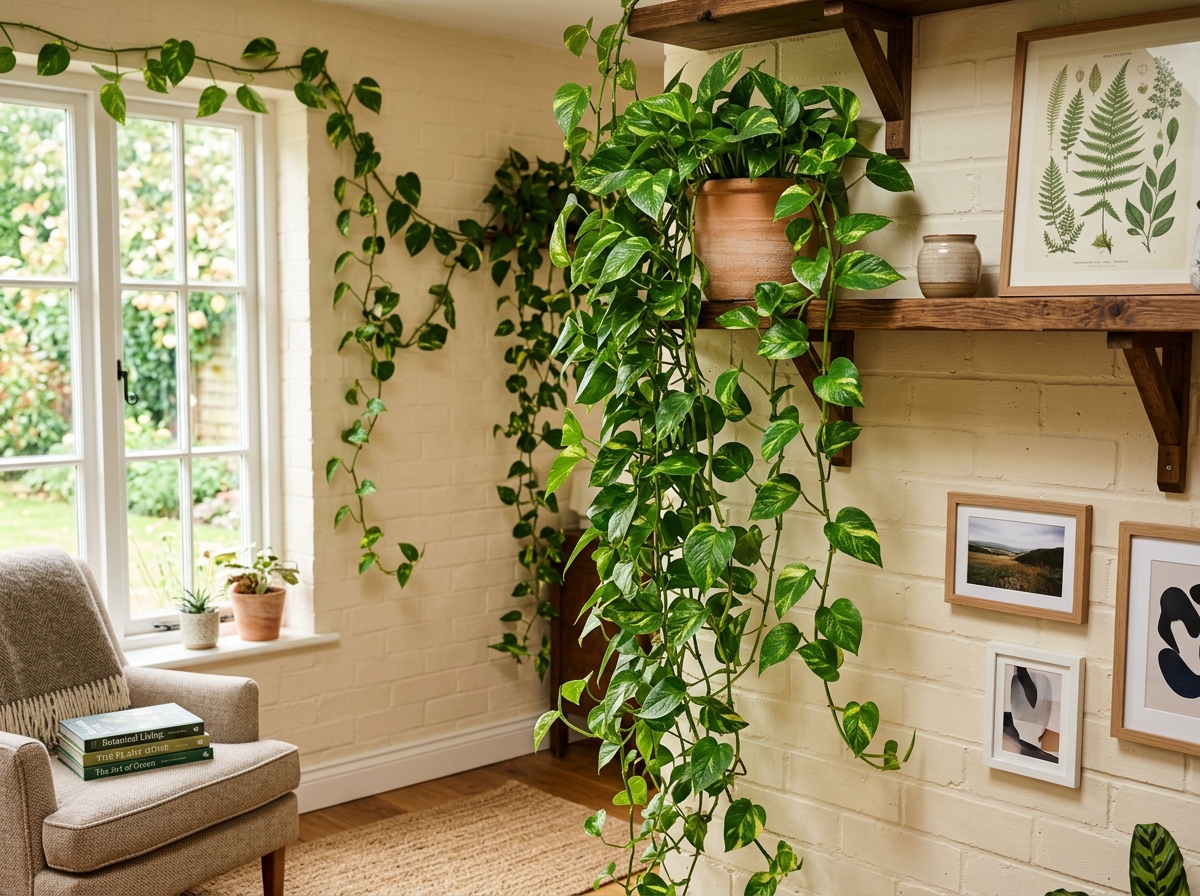
Often called the “MVP” of the plant world, the Golden Pothos is nearly indestructible. It is a fast-growing vine that can add 12 to 18 inches of length in a single month under the right conditions. In the wild, these vines reach massive lengths, but indoors, they comfortably trail 20 to 40 feet if left unpruned. They feature heart-shaped leaves with beautiful yellow or white variegation.
2. Spider Plant (Chlorophytum comosum)
The Spider Plant is a classic for a reason. It’s one of the best home air purifiers according to NASA studies and is incredibly easy to grow. Mature plants send out long stems with “spiderettes”—tiny baby plants that dangle like ornaments. These can be easily snipped off and replanted to grow your collection.
3. Heartleaf Philodendron (Philodendron hederaceum)
Adored for its glossy, heart-shaped leaves, this Philodendron is the ultimate “laid-back” plant. It thrives best with a 40% humidity level and is very forgiving if you forget to water it occasionally. It’s a great alternative to Pothos if you prefer a solid, deep green leaf.
4. String of Pearls (Senecio rowleyanus)
This Instagram favorite looks like a string of green beads. Each “pearl” is actually a leaf that stores water, making this plant quite drought-tolerant. It prefers bright indirect light and needs to dry out completely between waterings—usually about once a fortnight.
5. Boston Fern (Nephrolepis exaltata)
For a lush, prehistoric look, the Boston Fern is unbeatable. Its feathery fronds can reach up to 4 feet long. These plants love humidity, making them perfect for a bright bathroom. We recommend misting them frequently or keeping them near a humidifier.
6. English Ivy (Hedera helix)
English Ivy is a versatile climber and trailer that brings a traditional aesthetic to the home. It prefers cooler temperatures and consistent moisture. While it’s a great air purifier, keep it away from pets as it can be toxic if ingested.
7. Monstera Adansonii (Swiss Cheese Vine)
The “little brother” to the famous Monstera Deliciosa, the Adansonii is a vine-like plant with unique holes (fenestrations) in its leaves. Indoors, these vines typically grow between 3 to 8 feet long, creating a sophisticated, architectural look.
8. String of Hearts (Ceropegia woodii)
This plant features delicate, heart-shaped leaves with a mottled silver-gray pattern and purple undersides. It’s remarkably easy to care for and produces unusual flowers that look like tiny lanterns. It’s arguably one of the most adorable options for a small hanging basket.
9. Burro’s Tail (Sedum morganianum)
A stunning succulent with thick, fleshy stems that look like braided tails. These stems can reach up to 4 feet in length over several years. Because it’s a succulent, it requires very little water but does need a bright, sunny spot to thrive.
10. Pitcher Plant (Nepenthes)
For the adventurous grower, the Pitcher Plant is the “crown jewel” of carnivorous plants. It produces hanging “pitchers” that trap insects. These require high humidity and should never be watered with tap water (use rainwater or distilled water instead) and never fertilized, as they get their nutrients from their prey.
| Plant Name | Growth Rate | Light Requirement | Toxicity (Pets) |
|---|---|---|---|
| Golden Pothos | Fast | Low to Bright Indirect | Toxic |
| Spider Plant | Medium | Medium Indirect | Safe |
| String of Pearls | Slow/Medium | Bright Indirect | Toxic |
| Boston Fern | Medium | Medium Indirect | Safe |
| Burro’s Tail | Slow | Bright Direct/Indirect | Safe |
Low-Maintenance Best Indoor Hanging Plants for Beginners
If you are just starting your urban jungle, you want plants that are “hard to kill.” These varieties are known for their resilience and ability to bounce back from a bit of neglect.
Devil’s Ivy (Pothos) is the gold standard for beginners. It maintains its color even in low light and will visibly droop when it needs water, giving you a clear signal before it’s too late. If you are looking for other easy options, check out our guide on easy indoor plants for beginners.
Another excellent choice is the ZZ Plant, which, while usually upright, has a beautiful arching habit that looks great on a high shelf. It is famous for being able to survive in near-darkness and thrives on neglect. For more “set it and forget it” options, see our list of low-maintenance indoor plants.
Tradescantia Zebrina (Inch Plant) is also a winner for beginners. It has striking purple and silver striped leaves and grows incredibly fast. If it gets too “leggy,” you can simply snip the ends and stick them back into the soil to create a fuller plant. Finally, the Scindapsus Pictus (Satin Pothos) offers beautiful matte green leaves with silver splashes and is just as hardy as its cousin, the Golden Pothos.
Best Indoor Hanging Plants for Low-Light Corners
Not every home is blessed with giant, south-facing windows. Fortunately, many of the best indoor hanging plants evolved under the canopy of tropical rainforests and are perfectly happy in dim conditions.
The Bird’s Nest Fern is a fantastic choice for low-light areas like bathrooms or hallways. Unlike other ferns, it has wide, wavy fronds that don’t shed as much. It’s a great fit for a small apartment indoor plants collection where light might be limited.
Satin Pothos and Heartleaf Philodendron are also champions of the shade. They will grow slower in low light, but their foliage will remain lush and green. If you have a room with only fluorescent lighting—like an internal office—the Spider Plant is your best friend.
For a more artistic touch, consider the Staghorn Fern. These are epiphytic, meaning in nature they grow on trees. Indoors, they can be mounted on wooden boards and hung like living art. They do well in the medium light often found in a best indoor plants for living room setup.
Essential Care and Maintenance for Trailing Greenery
Hanging plants have unique needs because they are suspended in the air. This means they can dry out faster than floor plants, and watering them can sometimes be a messy affair.
Watering Techniques
The most common mistake with hanging plants is overwatering, which leads to root rot. We recommend the “Sink Method”: take the plant down once a week, place it in the sink, and water it thoroughly until water runs out of the drainage holes. Let it drip dry for 15 minutes before rehanging. This prevents messy drips on your floor or furniture.
Drainage and Pots
Never plant a hanging species in a pot without a drainage hole. If you love a decorative ceramic pot that doesn’t have drainage, keep the plant in its plastic nursery pot and “nestle” it inside the decorative one. For more tips on choosing the right container, see our guide on the best pots for indoor plants.
Humidity and Misting
Tropical hanging plants like ferns and Philodendrons love humidity. If your home is dry (especially in winter), mist your plants daily or group them together to create a microclimate. You can also try an indoor hanging plant diy project by creating a “humidity tray” for plants sitting on high shelves.
Pruning and Propagation
To keep your plants looking full rather than “leggy” (long stems with few leaves), don’t be afraid to prune. Cutting a stem just below a leaf node encourages the plant to branch out from the top.
You can then take those cuttings and propagate them! Most trailing plants like Pothos and Philodendron root easily in water. Simply place the cutting in a glass of water, wait for roots to grow a few inches, and then pot them up in fresh soil.
Creative Ways to Display and Hang Your Plants Safely
The beauty of hanging plants is their versatility. You aren’t limited to just hooks in the ceiling.
Hooks and Hardware
When hanging from the ceiling, always try to find a ceiling joist or wall stud. Use sturdy J-hooks or hook screws. If you can’t find a stud, make sure to use a toggle bolt or a heavy-duty drywall anchor to ensure the weight of the wet soil doesn’t pull the hook out.
Alternative Displays
If you rent and can’t drill holes, don’t worry! You can use tension rods in window frames to hang multiple small pots. Another great option is using diy plant shelves for small spaces to give your trailing plants a high vantage point to cascade down from.
For a more modern look, consider a vertical garden diy indoor using a wall-mounted trellis or a grid. You can also explore Kokedama, a Japanese art form where the plant’s root ball is wrapped in moss and string, allowing it to be hung without a traditional pot. If you’re feeling ambitious, creating your own vertical garden an indoor diy project can turn an entire wall into a lush green masterpiece. Always remember to check best pots for indoor plants 2 for lightweight options that are safer for hanging.
Pet-Friendly Options and Safety Considerations
For those of us with curious cats or dogs, safety is a top priority. Many popular trailing plants, like Pothos and English Ivy, contain calcium oxalate crystals which can cause irritation or illness if chewed.
Safe, Non-Toxic Species
- Spider Plant: Completely safe for cats and dogs. Interestingly, cats are often attracted to them because they have a mild hallucinogenic effect (similar to catnip), so you might still want to hang them high!
- Boston Fern: A safe way to add a lot of green volume to a room.
- Burro’s Tail: This succulent is non-toxic and safe for curious pets.
- Swedish Ivy: Unlike English Ivy, Swedish Ivy is non-toxic and very easy to grow.
- Hoya Pubicalyx: Most Hoya varieties are pet-safe and produce beautiful, waxy flowers.
High Placement Strategy
If you absolutely love a plant that is “pet-caution” (like a Philodendron), the best strategy is to use the “hanging” part of hanging plants to your advantage. By using high ceiling hooks or wall-mounted planters, you can keep these beauties well out of reach of your furry friends. Always consult the ASPCA guidelines if you are unsure about a specific plant’s toxicity.
Frequently Asked Questions about Hanging Plants
How do you water hanging plants without making a mess?
The best way is to take them down and water them in a sink or bathtub. If the plant is too large or difficult to remove, you can use a long-necked watering can and place a temporary “drip bucket” or towel underneath it. Alternatively, look for self-watering pots with built-in reservoirs that prevent overflow.
Which hanging plants are the fastest growing?
Golden Pothos and Tradescantia Zebrina are the speed demons of the hanging plant world. Under ideal conditions (bright indirect light and regular feeding), they can grow several inches a week. The Spider Plant is also a fast grower, especially when it starts producing “babies.”
Can hanging plants survive in a windowless bathroom?
No plant can survive in total darkness. However, plants like the ZZ Plant or Spider Plant can survive in a windowless bathroom if you leave the light on for several hours a day or use a dedicated LED grow light. The high humidity of a bathroom is a bonus for ferns and tropicals.
Conclusion
At Financedora, we believe that a home isn’t just a place to live; it’s a sanctuary. Integrating the best indoor hanging plants into your decor is more than just a trend—it’s an investment in your well-being. From the air-purifying power of the Spider Plant to the calming, lush vines of the Heartleaf Philodendron, these plants offer immense aesthetic value and mental health benefits.
Whether you are working with a tiny studio apartment or a large family home, going vertical with your greenery allows you to maximize your space and create a truly biophilic environment. Ready to start your next home transformation? Discover more DIY and home improvement projects on our blog and start building your urban jungle today!
