
Your Floor Space Deserves Better Than More Plant Pots
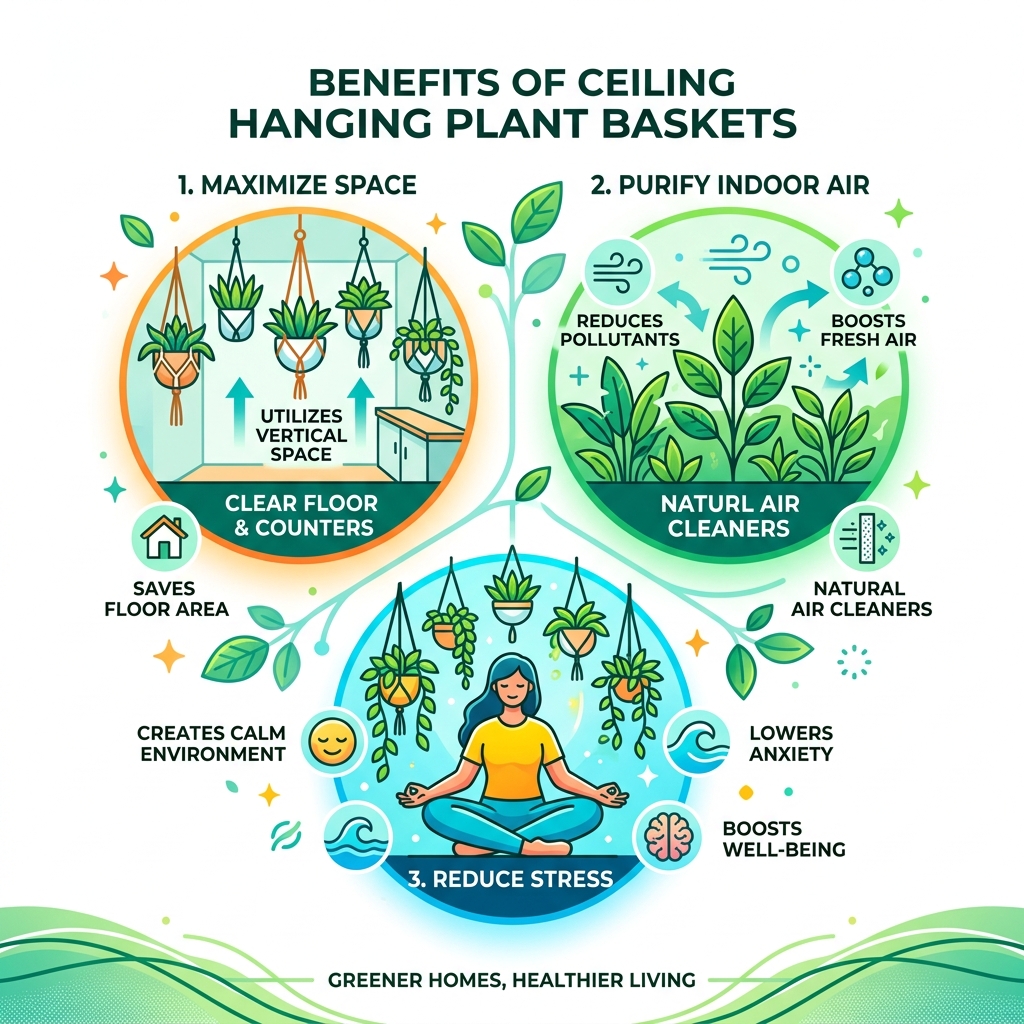
Ceiling hanging plant baskets are one of the simplest ways to add greenery to your home without giving up a single inch of floor or counter space.
Quick picks for ceiling hanging plant baskets:
| Type | Best For | Style |
|---|---|---|
| Macrame rope hangers | Boho, rustic interiors | Soft, textured |
| Metal chain hangers | Modern, industrial spaces | Sleek, minimal |
| Self-watering hanging planters | Busy owners, travel-prone | Practical, low-fuss |
| Basket-style wire planters | Outdoor porches, patios | Classic, airy |
| Adhesive/no-drill hangers | Renters, apartments | Flexible, damage-free |
Indoor plants have been shown to reduce stress and boost creativity. But most people run out of surfaces before they run out of plants.
Hanging plants from the ceiling solves that problem instantly.
It also keeps your greenery out of reach of pets and small children — a bonus that’s easy to overlook until it isn’t.
The catch? There’s a lot to choose from. Macrame, metal, self-watering, renter-friendly, heavy-duty — the options multiply fast. And picking the wrong hook or hanger can mean a plant (and pot) on your floor for the wrong reasons.
This guide cuts through the noise. Below, you’ll find the top-rated options, what to look for in materials and sizing, how to install safely, and how to keep your plants actually thriving up there.
Top-Rated Ceiling Hanging Plant Baskets and Hangers
When we look at the sheer volume of options available on the market, it’s easy to get overwhelmed. However, we’ve found that the best ceiling hanging plant baskets usually fall into two distinct camps: the bohemian, textured look of macrame and the sleek, functional appeal of modern metal or self-watering systems.

Choosing the right style isn’t just about looks; it’s about how the hanger interacts with your plants. For instance, if you’ve already invested in the best-pots-for-indoor-plants, you’ll want a hanger that shows them off rather than hiding them.
Boho-Chic Macrame Ceiling Hanging Plant Baskets
Macrame has made a massive comeback, and for good reason. It’s versatile, lightweight, and adds a soft, organic touch to any room.
- Mkono Macrame Plant Hangers: These are the heavyweights of the industry. With a staggering 22,256 ratings and a 4.7-star average, they are the gold standard for many indoor gardeners. They typically feature hand-woven cotton rope and elegant wood beads.
- SFENNGPET Macrame Plant Hangers: If you are looking to create a “floating jungle” effect, this 6-pack is a favorite. Over 800 units were bought just in the past month! They also boast a 4.7-star rating and offer incredible value for covering multiple corners of a room.
- RIFNY Macrame Plant Hanger: For those who want the highest possible customer satisfaction, RIFNY holds a 4.8-star rating. These are often praised for their durability and the quality of the hand-woven cord.
Most of these macrame options are designed to fit a variety of pot shapes, from standard terracotta to decorative ceramic. They are particularly effective for “trailing” plants that can weave through the ropes as they grow.
Modern Metal and Self-Watering Ceiling Hanging Plant Baskets
If your home leans more toward industrial or minimalist design, macrame might feel a bit too “shaggy.” This is where metal and self-watering options shine.
- Koalaime Hanging Planter: This is a top-tier choice for those of us who occasionally forget a watering session. It features a self-watering reservoir system that helps prevent root rot by keeping the plant’s roots away from standing water while providing consistent moisture. Over 1,000 of these were purchased in the last month alone!
- Industrial Metal Baskets: These often use chains instead of rope. They are incredibly sturdy and provide a clean, sharp look that pairs well with modern hardware.
When choosing these, the pot is often built-in. If you prefer to use your own decorative pots, you might want to check out best-pots-for-indoor-plants-2 to ensure they are compatible with a chain-style suspension.
Choosing the Right Materials and Sizes for Your Space
Size matters—and so does weight. A ceramic pot filled with wet soil is significantly heavier than you might think. Before we start drilling holes, we need to consider the material of both the basket and the pot.
Material Comparison
| Material | Weight | Durability | Best Use |
|---|---|---|---|
| Cotton Macrame | Very Light | High (Indoor) | Boho decor, small to medium pots |
| Metal/Chain | Medium | Very High | Industrial look, heavy plants |
| Plastic/Resin | Light | High | High ceilings (easier to hang), self-watering |
| Ceramic | Heavy | Medium | Statement pieces, low-hanging spots |
| Wood | Medium | Medium | Natural, rustic vibes |
Sizing Your Greenery
Most ceiling hanging plant baskets are designed to hold pots between 4 and 10 inches in diameter.
- 4-6 inch pots: Perfect for “String of Pearls” or small succulents. These are light enough for almost any ceiling hook.
- 8-10 inch pots: Ideal for lush Boston Ferns or large Pothos. These require more robust mounting hardware.
According to experts at The Spruce, a 12-inch basket typically needs 3-4 plants to look “full,” while a 16-inch basket might need up to 8. Always account for the weight of the water! A plant can double in weight immediately after a deep soak.
Indoor vs. Outdoor Hanging Considerations
We can’t just take an indoor macrame hanger and put it on the front porch. Outdoor environments require weatherproofing.
- UV Resistance: Plastic and resin pots for outdoor use should be UV-stabilized so they don’t become brittle and crack in the sun.
- Rust-Proofing: If you’re using metal, ensure the chains are galvanized or coated to prevent rust streaks on your patio floor.
- Drainage: Outdoor baskets often face heavy rain. They must have adequate drainage holes to prevent the soil from becoming a swamp.
- Plant Choice: For outdoors, consider seasonal annuals like petunias for a “blooming ball” effect, or hardy perennials that can handle a bit of wind.
Safe Installation: How to Hang Plants from the Ceiling
Safety is the most important part of this project. No one wants a 15-pound ceramic pot falling on their head during dinner.
The Homeowner’s Guide to Drilling
If you own your home, the most secure method is to find a ceiling joist.
- Find the Joist: Use a stud finder to locate the wooden beams behind your drywall. Joists can typically support 20 to 50 pounds.
- Drill a Pilot Hole: Use a drill bit slightly smaller than the screw of your hook. This prevents the wood from splitting.
- Install the Hook: Screw a heavy-duty swag hook or eye bolt directly into the joist.
- The Knock Test: Tap the ceiling. A solid “thud” usually indicates a joist, while a hollow “echo” means you’re just hitting drywall.
If you cannot find a joist, you must use a toggle bolt. Standard plastic drywall anchors are designed for lateral (wall) tension and can pull straight out of a ceiling. A toggle bolt has “wings” that expand inside the ceiling to distribute the weight. Even then, drywall usually has a limit of about 10–15 pounds.
For a deeper dive into the technical side, check out HGTV’s guide or our own indoor-hanging-plant-diy tutorial.
Renter-Friendly and No-Drill Options
We know that many of our readers are renters who want to keep their security deposits. You can still enjoy ceiling hanging plant baskets without a power drill!
- Tension Rods: If you have a window alcove or a sturdy doorway, a heavy-duty tension rod can hold several lightweight plants.
- Adhesive Hooks: High-strength adhesive hooks (like Command strips) can work for very light plants, such as air plants or small macrame hangers with plastic pots. However, we recommend staying under 2-3 pounds to be safe.
- Magnetic Hooks: If you have exposed metal beams or ductwork (common in industrial-style lofts), magnetic hooks are incredibly strong and leave zero marks.
- Freestanding Frames: If the ceiling is totally off-limits, a tall, thin plant stand can mimic the “hanging” look without touching the ceiling at all.
Essential Care Tips for Suspended Greenery
Caring for a hanging plant is different than caring for one on a table. Heat rises, meaning the air near your ceiling is likely warmer and drier than the air at floor level.
Watering Without the Mess
The #1 complaint about hanging plants is water dripping on the carpet. We have a few tricks to solve this:
- The Double-Potting Method: Keep your plant in its plastic nursery pot (with drainage holes) and place that inside a decorative “cachepot” (without holes). When it’s time to water, take the nursery pot to the sink, let it drain completely, and then put it back.
- Long-Spout Watering Cans: These allow you to reach high plants without a ladder.
- Pulley Systems: You can install a small pulley that allows you to lower the plant to chest height for maintenance and then zip it back up.
For more expert advice on planting techniques, the RHS guide is a fantastic resource. If you’re tight on space, you might also consider diy-plant-shelves-for-small-spaces as a complementary styling option.
Preventing Overwatering and Root Rot
Because we can’t always see the top of the soil, overwatering is a common killer.
- Self-Watering Reservoirs: As mentioned with brands like Koalaime, these take the guesswork out of the process.
- Moisture-Wicking: Some hangers use a cotton wick to pull water from a reservoir into the soil as needed.
- Light Rotation: Hanging plants often get light from only one side (the nearest window). We recommend giving your basket a quarter-turn every week to ensure even growth and prevent “leaning.”
- Pruning: Trailing plants like Pothos can become “leggy.” Don’t be afraid to trim them! This encourages the plant to grow fuller at the top, filling out the basket.
Frequently Asked Questions about Ceiling Hanging Plant Baskets
How much weight can a typical ceiling hook support?
This depends entirely on what the hook is screwed into.
- Into a Wood Joist: A standard swag hook can typically support 20–50 pounds. This is the safest way to hang large, heavy pots.
- Into Drywall (with Toggle Bolt): Generally 10–15 pounds max.
- Into Concrete: With the right masonry plug, these can hold 10–15kg (about 22–33 lbs).
We always recommend weighing your plant after watering it to find its “max weight” before choosing your hardware.
Do hanging plant hangers come with pots included?
Usually, no. Most macrame and chain hangers are sold as the “suspension system” only. This allows you to customize the look with your own pots. However, “hanging planters” (like the self-watering versions) usually come as a complete kit with the pot and the hanger included.
If you’re looking to build your own setup, check out diy-plant-shelves-for-small-spaces-2 for inspiration on how to mix and match different containers.
What are the best low-maintenance plants for high ceilings?
If you don’t want to be on a ladder every three days, choose “set it and forget it” varieties:
- Pothos: The king of hanging plants. It handles low light and irregular watering like a champ.
- Spider Plants: These produce “babies” that dangle down, creating a beautiful tiered effect.
- Heart-leaf Philodendron: Similar to Pothos but with a slightly softer, heart-shaped leaf.
- String of Pearls: A stunning succulent that looks like a bead necklace. Just remember it needs bright light!
- Air Plants: These don’t even need soil—just a misting every now and then.
For more ideas on where to put your plants once the ceiling is full, see our guide on diy-plant-stands-for-desks.
Conclusion
At Financedora, we believe that your home should be a sanctuary, and nothing creates that “urban jungle” vibe quite like ceiling hanging plant baskets. By moving your greenery to the vertical plane, you open up your floor space, keep your pets safe, and create a dynamic, living environment that breathes life into every corner.
Whether you choose the hand-woven charm of a macrame hanger or the high-tech convenience of a self-watering metal pot, the key is to start with a solid foundation. Find your joists, weigh your plants, and don’t be afraid to get creative with heights and textures.
Ready to take your indoor gardening to the next level? Check out our diy-plant-stands-for-desks-2 for more styling tips, or browse our More DIY home improvement ideas to keep the transformation going. Happy hanging!
