
Why the Benefits of Spider Plants Make Them the Ultimate Houseplant
The benefits of spider plants are hard to beat — especially if you want a low-effort plant that actually does something useful in your home.
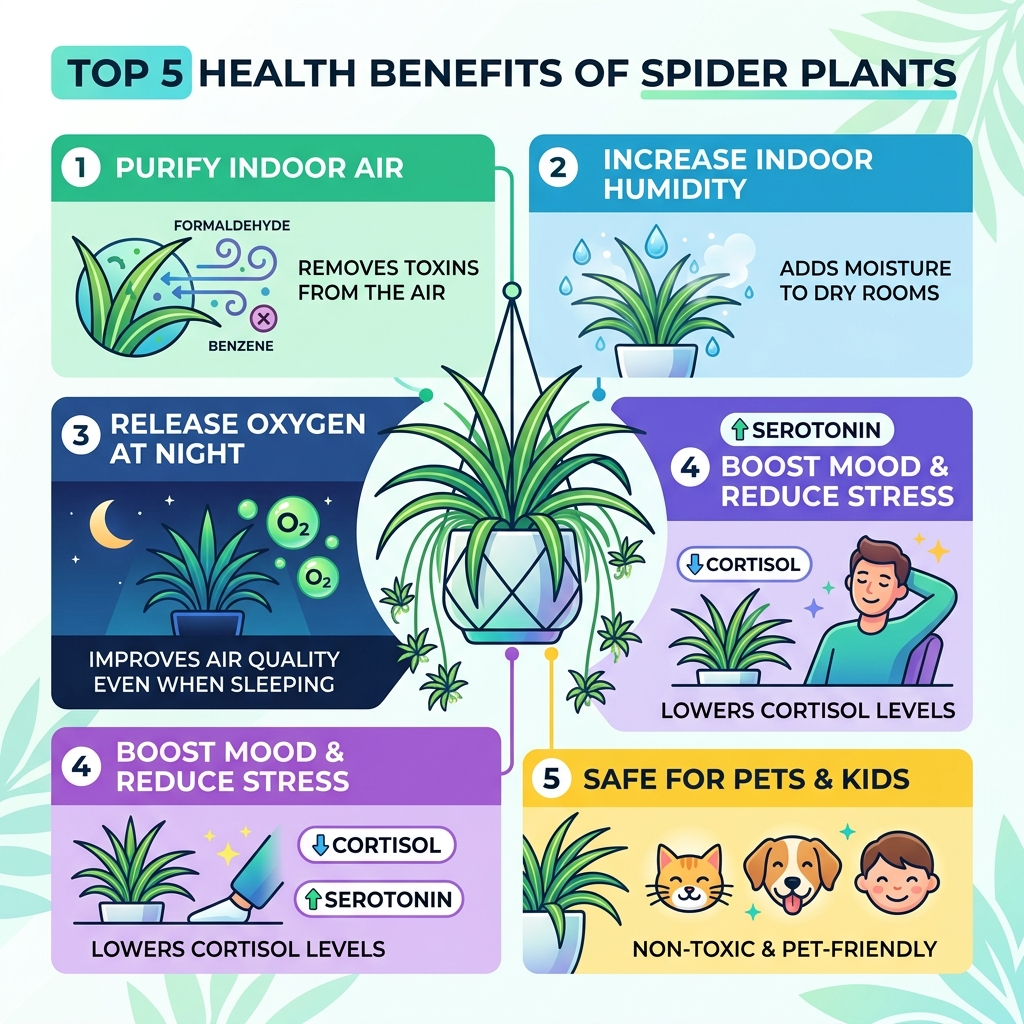
Here’s a quick summary of what spider plants can do for you:
- Purify indoor air — absorb toxins like formaldehyde, benzene, and carbon monoxide
- Boost your mood and reduce stress — exposure to indoor greenery lowers cortisol and supports serotonin production
- Increase indoor humidity — release moisture through their leaves, helping with dry skin and respiratory comfort
- Release oxygen at night — unlike most plants, they use CAM photosynthesis to keep producing oxygen after dark
- Safe for pets and kids — rated non-toxic by the ASPCA for cats and dogs
- Incredibly easy to grow — tolerate low light, irregular watering, and neglect
- Easy to propagate — produce “baby” plants (called spiderettes or pups) you can pot and share for free
Your grandma probably had one on the windowsill for good reason. Spider plants have been a household staple since Victorian times — and modern research is finally catching up to explain why they’ve stuck around so long.
They look great, they’re practically indestructible, and they quietly improve the air you breathe every day.
The Air-Purifying Powerhouse: Scientific Benefits of Spider Plants
When we talk about the benefits of spider plants, the conversation almost always starts with their incredible ability to clean the air. This isn’t just anecdotal “plant parent” talk; there is real science backing up these claims. Most famously, NASA’s 1989 Clean Air Study highlighted the Chlorophytum comosum (the scientific name for our spider friend) as a top performer in removing indoor toxins.
In sealed test chambers, researchers found that spider plants could remove up to 95% of toxic agents from the air within just 24 hours. They are particularly effective at targeting Volatile Organic Compounds (VOCs) that off-gas from everyday household items like carpets, furniture glue, and cleaning supplies.
Key toxins that spider plants help eliminate include:
- Formaldehyde: Found in plywood, particleboard, and some fabrics. Spider plants can remove up to 88%–90% of this carcinogen in a single day.
- Benzene: Often present in paints, plastics, and detergents.
- Xylene and Toluene: Common solvents found in printing, rubber, and leather industries that often find their way into our homes.
- Carbon Monoxide: If you have a gas stove or a fireplace, spider plants can help pull this odorless, dangerous gas out of your breathing zone.
While some modern critics point out that a single plant won’t replace a high-tech HEPA filter, integrating houseplants that remove toxins into your decor is a proven way to purify indoor air naturally. According to 11 Amazing Spider Plant Benefits for Your Home and Health – Houseplant Authority, these plants work around the clock to break down these pollutants into harmless byproducts, which they then store in their roots or use for fuel.
Boosting Mental Health and Productivity
Beyond the physical air we breathe, the benefits of spider plants extend deep into our psychological well-being. Have you ever noticed how a room feels instantly more “alive” and relaxing once you add a bit of greenery? We aren’t just imagining it.
Studies have shown that interacting with indoor plants can significantly lower cortisol levels—the hormone responsible for stress. Simply having a spider plant in your line of sight while working can improve focus and productivity. In fact, research cited by the University of Georgia and other institutions suggests that students and office workers perform better and have higher concentration levels when plants are present.
There is also a fascinating “recovery” aspect to these plants. In hospital settings, patients with plants in their rooms have been observed to have lower blood pressure, lower heart rates, and lower ratings of pain, anxiety, and fatigue compared to patients in rooms without greenery. Some patients even reported reduced “pre-surgery jitters” after just 30 minutes of observing a spider plant.
This boost in mental wellness is partly due to the release of phytoncides—essential oils that plants emit to protect themselves from insects, which in turn can alter our brain chemistry to promote a sense of peace. For more on this, check out our guides on indoor plants for mental health and how indoor plants reduce stress.
How the Benefits of Spider Plants Improve Sleep Quality
Many people wonder if they should keep plants in the bedroom. With spider plants, the answer is a resounding “yes.”
Most plants undergo photosynthesis during the day and “breathe” like we do at night—taking in oxygen and releasing carbon dioxide. However, spider plants are part of a special group that can perform Crassulacean Acid Metabolism (CAM) photosynthesis. This means they can keep their “pores” (stomata) closed during the day to prevent water loss and open them at night to take in CO2 and release fresh oxygen.
This nighttime oxygen production makes them excellent plants for clean bedroom air. By keeping the oxygen levels higher while you sleep, they can help you achieve a deeper, more restorative rest. Furthermore, spider plants are champions at increasing indoor humidity. Through a process called transpiration, they release moisture into the air. This can be a lifesaver for those suffering from:
- Dry skin or “winter itch”
- Irritated sinuses
- Sore throats or dry coughs
- Asthma symptoms exacerbated by dry, “muggy” air
Adding a few of these to your nightstand makes them some of the top air-purifying plants for bedroom use.
A Beginner’s Dream: Low Maintenance and Easy Propagation
If you’ve ever felt like a “plant assassin,” the spider plant is here to redeem you. One of the best benefits of spider plants is their sheer resilience. They are the ultimate “set it and forget it” greenery.
Spider plants are incredibly drought-tolerant thanks to their thick, tuberous roots that store water like tiny underground reservoirs. If you forget to water them for a week (or two), they might look a little pale, but they’ll usually perk right back up after a good soak. They are also very flexible with light, thriving in bright indirect sunlight but tolerating lower light conditions—even surviving in basements or windowless offices with enough fluorescent light.
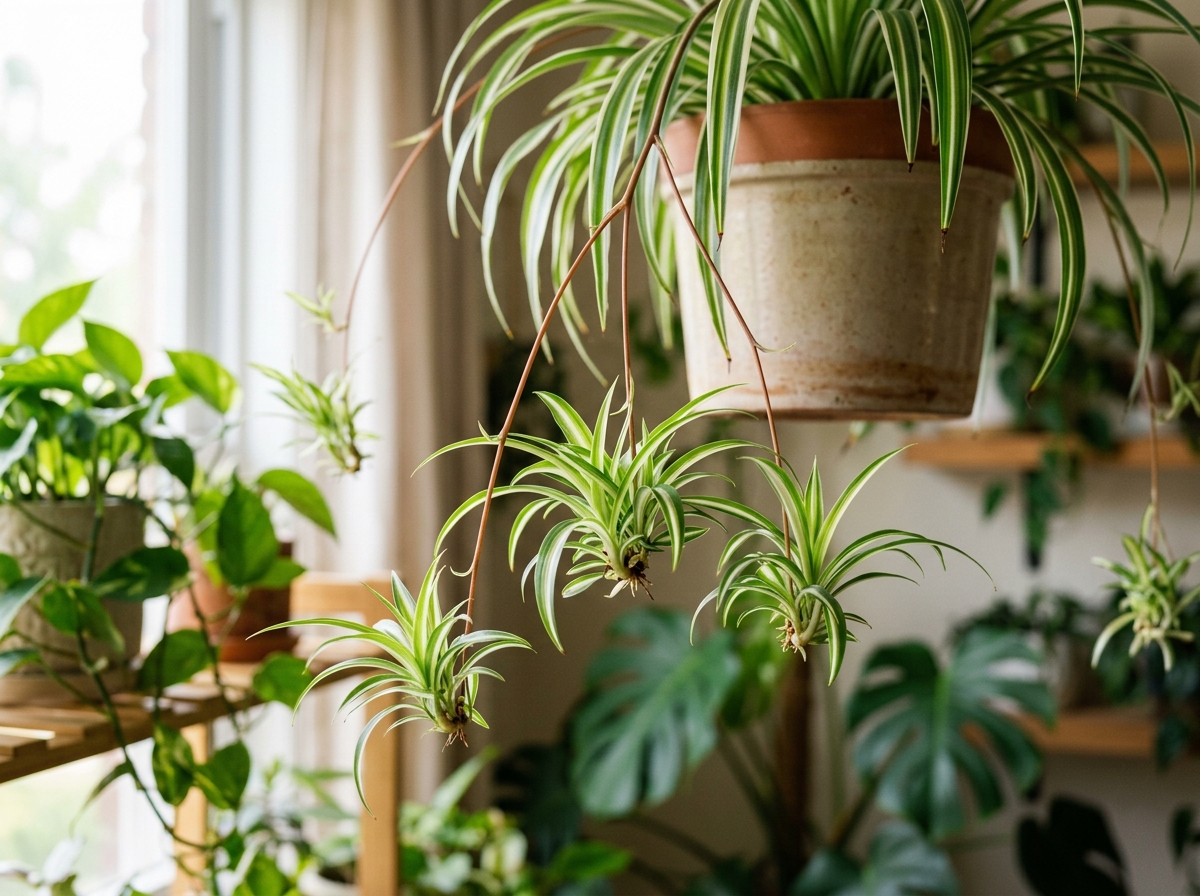
Perhaps the most “fun” benefit is how they reproduce. As a spider plant matures, it sends out long, wiry stems. At the end of these stems, tiny white flowers bloom, eventually turning into “spiderettes” or pups. These look like miniature versions of the parent plant dangling in the air.
Propagation is incredibly easy:
- Water Propagation: Snip a pup off the stem and place its bottom in a glass of water. In a few weeks, you’ll see white roots growing. Once the roots are an inch or two long, you can pot it in soil.
- Soil Division: For a large, overgrown plant, you can literally take a kitchen knife and cut the root ball into sections, then repot each section as a new plant.
For more tips on getting started, see our beginner indoor plant care guide or our list of easy indoor plants for beginners.
Maximizing the Benefits of Spider Plants Through Simple Care
While they are hardy, a little extra love goes a long way in maximizing the benefits of spider plants. To keep your plant a lush, air-purifying machine, follow these simple rules:
- The Right Soil: Use a standard, well-draining potting mix. They don’t like to sit in “wet feet,” so ensure your pot has drainage holes.
- Watering Wisely: Water when the top inch of soil feels dry. If the leaves start to look limp or turn a grayish-green, it’s time for a drink.
- The “Brown Tip” Mystery: Spider plants are sensitive to fluoride and chlorine found in city tap water. If you notice the tips of the leaves turning brown, try using distilled water, rainwater, or let your tap water sit out overnight before using it.
- Occasional Feeding: A diluted liquid fertilizer once a month during the spring and summer will encourage more of those beautiful “babies” to grow.
You can find more advice on keeping your greenery happy in our guide to low-maintenance indoor plants and hardy air-purifying plants.
Safety and Versatility in Home Decor
When decorating with plants, safety is a major concern for parents and pet owners. Many popular houseplants, like Lilies or Philodendrons, can be toxic if nibbled. Thankfully, the spider plant is rated non-toxic by the ASPCA. This makes it a perfect choice for non-toxic air-purifying plants that you can place on low tables without worry.
In terms of aesthetics, spider plants are incredibly versatile. Their arching, grass-like leaves come in several varieties:
- Solid Green: The classic, deep-green look.
- Vittatum: Green leaves with a broad white stripe down the center.
- Variegatum: White margins with a green center.
- Bonnie: A “curly” variety where the leaves swirl and spiral.
They look stunning in decorative air-purifying plants arrangements, especially in hanging baskets where their pups can cascade down like a living chandelier. In Feng Shui, spider plants are associated with the wood element, representing growth, vitality, and new beginnings. Many believe they bring “good luck” and positive vibes to a home.
As noted in 10 Spider Plant Benefits You Likely Didn’t Know About – Plant America, they fit almost any decor style, from bohemian to mid-century modern.
Comparison Table: Spider Plants vs. Other Popular Purifiers
| Feature | Spider Plant | Pothos | Snake Plant |
|---|---|---|---|
| Pet Safety | Non-Toxic (Safe) | Toxic if ingested | Toxic if ingested |
| Light Needs | Bright to Low | Low to Medium | Very Low to Bright |
| Water Needs | Weekly | Every 1-2 weeks | Every 2-4 weeks |
| Air Purifying | High (Formaldehyde) | High (VOCs) | High (CO2 at night) |
| Difficulty | Very Easy | Very Easy | Hard to Kill |
Frequently Asked Questions about Spider Plants
How many spider plants do I need to clean a room?
While one plant is better than none, the general rule of thumb for noticeable air quality improvement is one medium-sized plant (in a 6-to-8-inch pot) per 100 square feet of space. If you are specifically looking to increase humidity, research suggests you might need about three large plants in 10-inch pots to significantly shift the moisture levels in a standard-sized room. For more on this, read about indoor plants that clean the air.
Are spider plants safe for cats and dogs?
Yes! They are officially non-toxic. However, a funny quirk of the benefits of spider plants is that they are slightly hallucinogenic to cats—similar to catnip. You might find your feline friend obsessively nibbling the leaves. While it won’t kill them, eating too much can cause a mild stomach upset or vomiting, so it’s still best to hang them out of reach if your cat is a “salad lover.”
Why are the tips of my spider plant turning brown?
As mentioned earlier, the most common cause is the chemicals in tap water. Fluoride and chlorine can build up in the leaf tips, causing them to “burn.” Other causes include very low humidity or salt buildup from over-fertilizing. According to Spider plant, Chlorophytum comosum – Wisconsin Horticulture, flushing the soil with distilled water and misting the leaves can help resolve this.
Conclusion
The benefits of spider plants make them much more than just a pretty face on your bookshelf. From their scientifically proven air-purifying “superpowers” to their ability to boost our mood and help us sleep better, they truly are the heroes of the living room. Whether you are a seasoned gardener or a total beginner, adding a spider plant to your home is a simple, budget-friendly step toward a more sustainable and healthy lifestyle.
At Financedora, we believe that your home environment is an investment in your health. By choosing resilient, beneficial plants, you’re creating a space that works for you—improving your air, your mind, and your overall well-being.
Discover more ways to enhance your home environment and start your indoor jungle journey today!
