
Why Indoor Air Quality Makes the Areca Palm Air Cleaner Worth Your Attention
The areca palm air cleaner is one of the most effective natural ways to improve the air inside your home — removing harmful toxins like formaldehyde, xylene, and toluene while also boosting humidity and oxygen levels.
Here’s a quick summary of what makes it stand out:
- Toxins removed: Formaldehyde, benzene, xylene, toluene, carbon monoxide
- NASA-backed: Identified in NASA’s Clean Air Study as a top-performing air-purifying plant
- Humidification: A mature plant releases up to 1 liter of water vapor every 24 hours
- Coverage: Roughly 2 good-sized plants per 100 square feet for meaningful air quality improvement
- Pet safety: Non-toxic to cats and dogs (ASPCA confirmed)
- Maintenance level: Low — forgiving for busy homeowners
Most people don’t realize that indoor air is often more polluted than outdoor air. Everyday items — furniture, paint, cleaning products — quietly release volatile organic compounds (VOCs) into the spaces where you live and work.
Research shows houseplants can remove as much as 87% of airborne toxins in as little as 24 hours. Among all the plants studied, the areca palm consistently ranks as one of the best performers.
And unlike mechanical air purifiers, it also looks beautiful doing it.
Why the Areca Palm Air Cleaner is a Top Choice for Indoor Spaces
When we think of a tropical paradise, we often picture the arching, feathery fronds of a palm tree swaying in a warm breeze. The Areca Palm (Dypsis lutescens), also known as the Golden Cane Palm or Butterfly Palm, brings that exact “island vibe” right into our living rooms. But beyond its aesthetic appeal, it functions as a high-performance areca palm air cleaner.
In the late 1980s, the NASA Clean Air Study revolutionized how we view indoor greenery. Researchers were looking for ways to keep the air clean in space stations, and they discovered that certain plants were exceptionally good at filtering out chemicals. The Areca Palm didn’t just pass the test; it excelled. In fact, it is ranked as the 8th best plant overall for removing formaldehyde from the air.
According to Areca Palms: 14 Ways They Transform Your Space and Air Quality – Petal Republic, these plants are more than just decor; they are active participants in our household health. We often recommend them in Our Top Picks for Indoor Plants for Clean Air because they combine beauty with a heavy-duty filtration capacity.
Toxin Removal and the Areca Palm Air Cleaner
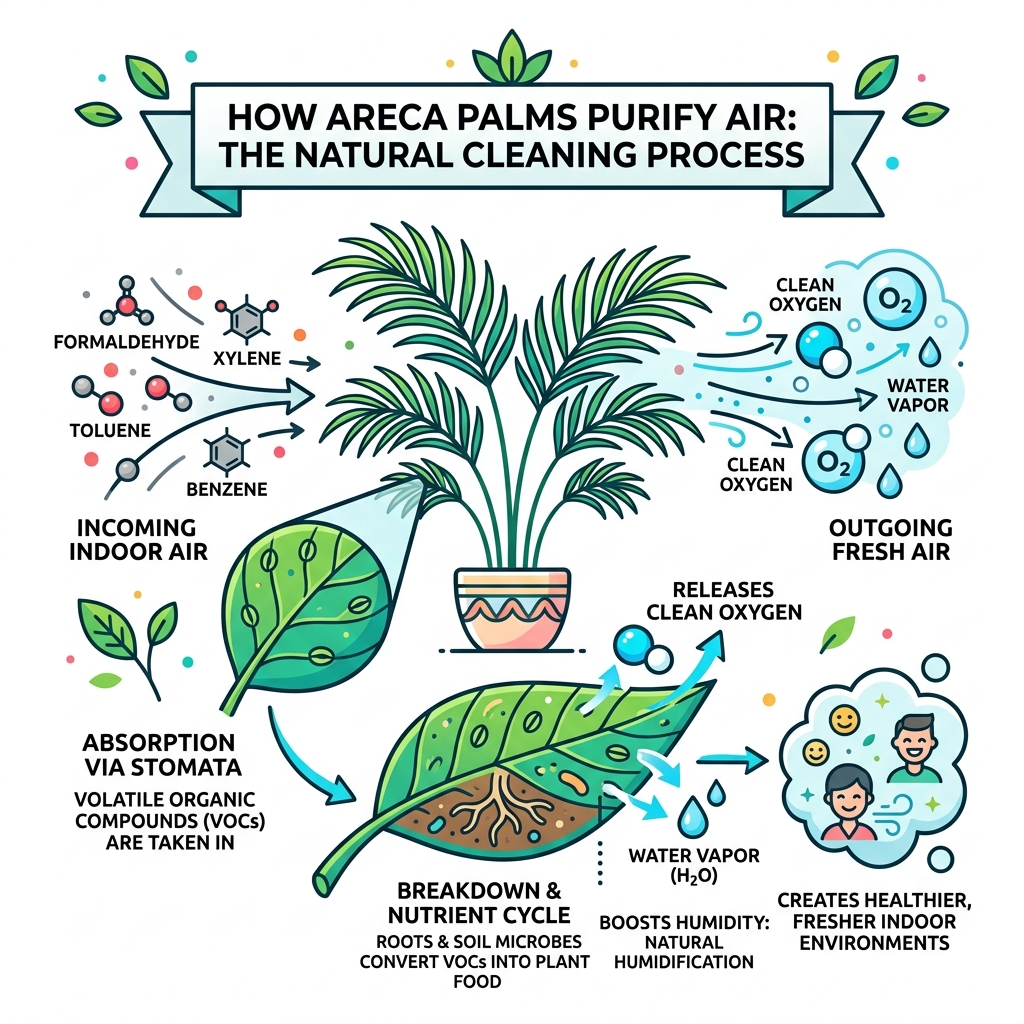
What exactly is an areca palm air cleaner scrubbing from your atmosphere? The list of villains it tackles is impressive. We are talking about Volatile Organic Compounds (VOCs) that originate from common household items:
- Formaldehyde: Found in carpets, upholstery, and plywood.
- Benzene: Often present in plastics, synthetic fibers, and detergents.
- Xylene and Toluene: Common in paints, lacquers, and adhesives.
- Carbon Monoxide: A byproduct of gas stoves or fireplaces.
A fascinating study published in Mitigation of indoor air pollutants using Areca palm potted plants in real-life settings | Environmental Science and Pollution Research | Springer Nature Link demonstrated that in real-world settings like labs and libraries, Areca Palms could reduce Total Volatile Organic Compounds (TVOCs) by up to 88%. This isn’t just laboratory theory; it’s a practical, living solution for the air we breathe every day.
Natural Humidification and Oxygen Production
If you’ve ever woken up with a scratchy throat or dry skin during the winter, you know how brutal indoor heating can be. The areca palm air cleaner doubles as a natural humidifier. Through a process called transpiration, the plant pulls water from the soil and releases it through its leaves as a fine mist. A large, healthy Areca Palm can release about 1 liter of water vapor every 24 hours!
Furthermore, these palms are prolific oxygen producers. While most plants rest at night, some research suggests that through specialized metabolic pathways (like Crassulacean Acid Metabolism), palms can continue to improve air quality around the clock. They also produce negative ions. These ions attach themselves to positively charged particles like dust and mold spores, causing them to drop out of the air. It’s like having a silent, green vacuum cleaner running 24/7. You can learn more about these secondary perks in our guide on the Air Purification Benefits of Houseplants.
The Science of Phytoremediation: How Palms Clean the Air
The term “phytoremediation” sounds like something out of a sci-fi novel, but it’s actually a very grounded biological process. When we use an areca palm air cleaner, we are leveraging three distinct cleaning mechanisms:
- Stomata Absorption: The tiny pores on the palm’s leaves (stomata) breathe in air to get carbon dioxide. Along with that CO2, they “inhale” airborne toxins.
- Transpiration Pull: As the plant releases moisture, it creates a gentle current that pulls air down toward the root zone.
- Soil Microbiome: This is the secret weapon. The roots of the Areca Palm host a community of beneficial microbes. These tiny organisms actually break down the toxins pulled from the air, turning harmful chemicals into food for the plant.
As we’ve noted in our article on Indoor Plants That Clean the Air, this combination allows houseplants to remove as much as 87 percent of airborne toxins in as little as 24 hours. It is a self-sustaining, solar-powered filtration system that never needs a filter replacement—just a little water and light.
Comparing the Areca Palm to Other Indoor Palms
Not all palms are created equal when it comes to the “air cleaner” job description. While the Majesty Palm and Kentia Palm are popular, the Areca usually wins on the efficiency-to-care ratio.
| Feature | Areca Palm | Majesty Palm | Kentia Palm |
|---|---|---|---|
| Light Needs | Bright, Indirect | Very Bright | Low to Medium |
| Air Cleaning Power | Exceptional (Top 10) | Moderate | High |
| Pet Safety | Non-toxic | Non-toxic | Non-toxic |
| Growth Rate | Fast (6-10″ per year) | Slow | Very Slow |
| Humidification | High | High | Moderate |
While the Majesty Palm is stunning, it is notoriously finicky indoors. The Kentia is nearly indestructible but grows so slowly that it can be very expensive. The Areca Palm hits the “sweet spot”—it’s affordable, grows quickly enough to feel rewarding, and is a powerhouse for air quality.
Essential Care for Your Areca Palm Air Cleaner
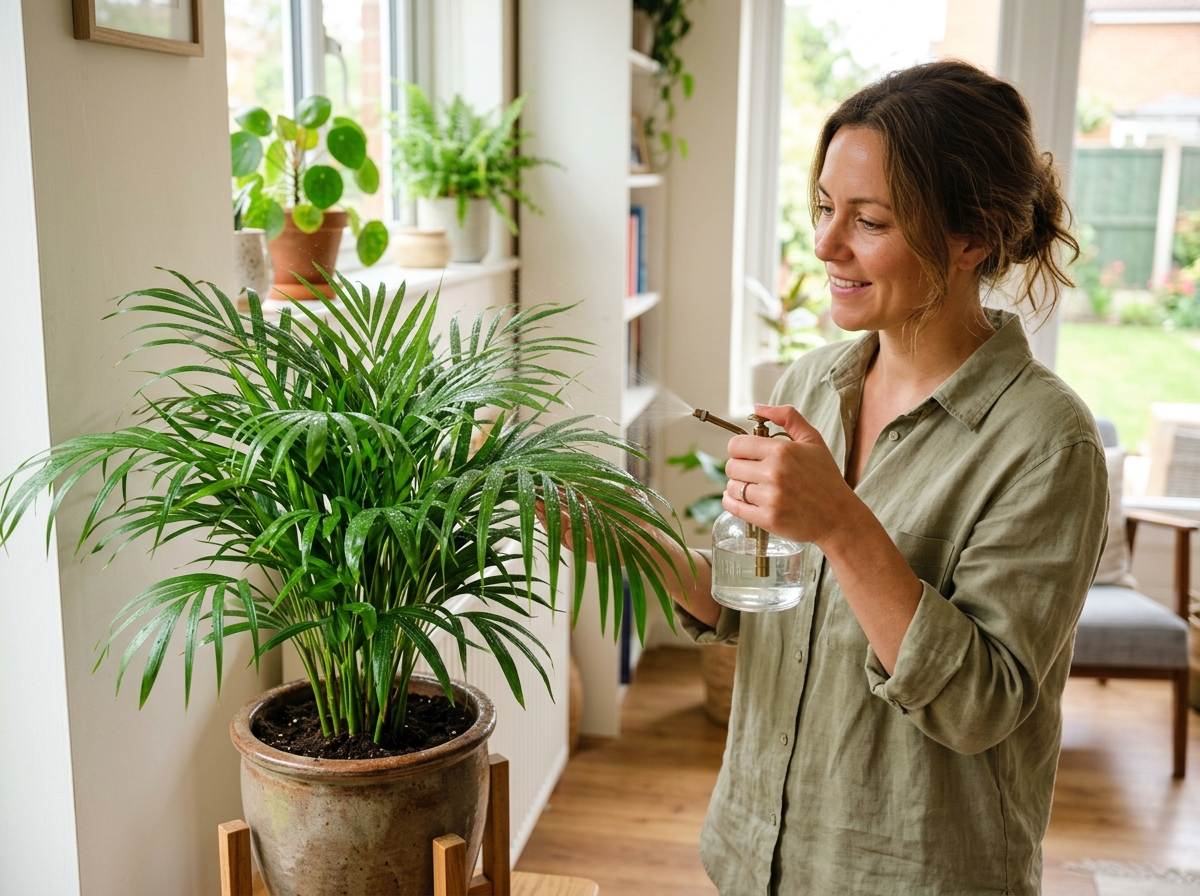
To keep your areca palm air cleaner working at peak efficiency, you have to keep the “machinery” (the leaves) healthy. A dusty plant can’t breathe, and a thirsty plant can’t transpire.
Optimal Light and Nutrient Requirements
The Areca Palm loves light, but it’s not a fan of getting a sunburn. In its native Madagascar, it grows in the understory of the rainforest, filtered by larger trees.
- Placement: An east-facing window is usually the “Goldilocks” spot—just right. North-facing windows can work, but the growth might be slower.
- Watering: These are thirsty palms. We recommend keeping the soil consistently moist but never soggy. If you’re unsure, check out our tips on Watering Frequency for Houseplants. Using soft water or rainwater is best, as they are sensitive to the fluoride and salts in tap water.
- Feeding: During the spring and summer growing season, use a balanced liquid fertilizer diluted to half-strength every 4-6 weeks. You can find more details in our guide on the Best Fertilizers for Indoor Plants.
Troubleshooting Common Palm Problems
Even the best plant parents run into trouble occasionally. Because the areca palm air cleaner is so active, it shows signs of stress quickly.
- Browning Tips: This is usually a sign of low humidity or salt buildup from tap water. Try increasing the humidity with a pebble tray or a humidifier. We have a full list of Humidity Tips for Indoor Plants to help.
- Yellowing Fronds: Often a sign of overwatering or a lack of nutrients. Ensure your pot has excellent drainage.
- Pests: Spider mites love dry palms. If you see tiny webs, wipe the leaves down with a damp cloth and treat with neem oil.
- Maintenance: Shower your palm! Once a month, put it in the shower and give the leaves a gentle rinse. This removes dust so the stomata can work their magic. If your plant is looking a bit sad, don’t give up—see our guide on How to Revive Dying Indoor Plants.
Strategic Placement and Quantity for Maximum Efficiency
Where you put your areca palm air cleaner matters as much as how you care for it. For the best health results, consider these locations:
- The Bedroom: Because they release oxygen and moisture, they are fantastic sleep aids. They help keep your nasal passages from drying out and ensure the air you breathe while sleeping is pure.
- The Home Office: Research suggests that being around plants can boost productivity and concentration by up to 15%. Plus, the palm filters out the chemicals often found in office printers and carpets.
- The Entryway: In Feng Shui, palms are used to attract positive energy and prosperity. Placing a pair of palms near the front door creates a “living filter” for the energy (and the air) entering your home.
How many do you need? To truly see a difference in air quality, one small pot won’t cut it for a whole house. NASA suggests at least one good-sized plant (in a 6-8 inch pot) for every 100 square feet. For someone living in a space with poor ventilation, some experts recommend four shoulder-height palms per person to provide a significant boost in fresh air. Check out our list of the Best Plants for Air Quality to see how to mix and match for the best results.
Frequently Asked Questions about Areca Palms
Is the Areca Palm safe for households with pets?
Yes! This is one of the biggest “pros” for the areca palm air cleaner. According to the ASPCA, the Areca Palm is non-toxic to dogs, cats, and even horses. While we don’t recommend letting Mr. Whiskers use the fronds as a chew toy (it’s not great for the plant!), you don’t have to worry about emergency vet visits if a leaf gets nibbled. It is a truly pet-safe piece of greenery.
How many Areca Palms do I need to clean a standard room?
For a standard 10×10 bedroom (100 square feet), two well-maintained, medium-sized Areca Palms are ideal. If you are dealing with a larger open-plan living area, you might want to group three or four palms together. This not only increases their toxin-fighting power but also creates a beautiful “mini-jungle” effect that boosts humidity more effectively than a single isolated plant.
Can Areca Palms survive in low-light offices?
They can survive, but they won’t thrive. In low light, the Areca Palm will grow very slowly and may lose its vibrant green color. If your office doesn’t have windows, you can use high-quality LED grow lights. Position them about 2-3 feet above the plant and keep them on for 8-10 hours a day to mimic natural sunlight.
Conclusion
At Financedora, we believe that your home should be a sanctuary. Investing in an areca palm air cleaner is a sustainable, low-cost way to protect your family’s health while adding a touch of tropical elegance to your decor. From its NASA-backed ability to scrub formaldehyde to its role as a natural humidifier, this palm is a “green superhero” in every sense.
By following a simple care routine and placing your palms strategically, you can reduce stress, improve your sleep, and breathe easier. If you’re ready to start your journey toward a cleaner home, why not Purify Indoor Air Naturally today? Your lungs (and your pets) will thank you.
