
The Best Fishbone Cactus Hanging Plants to Buy Right Now
Fishbone cactus hanging displays are one of the easiest ways to add a dramatic, tropical feel to any room — with almost no effort.
Here are the top 5 options worth buying:
- Epiphyllum ‘Ric Rac’ — the most popular cultivar, bred for bold zig-zag foliage and reliable blooming
- Disocactus anguliger (standard fishbone cactus) — classic trailing stems, widely available, great for beginners
- Selenicereus anthonyanus — a close relative with deeper lobed stems, equally striking in a hanging pot
- Mature trailing specimen (7.5″ nursery pot) — ready to cascade immediately, no waiting for stems to lengthen
- Propagated cutting in a small hanging planter — budget-friendly starter option that grows quickly in bright indirect light
Not many houseplants look this unusual while being this easy to care for.
The fishbone cactus (Disocactus anguliger, also sold as Epiphyllum anguliger) is an epiphytic cactus native to the tropical rainforests of Mexico. Unlike desert cacti, it grows on trees — not in dry sand. That means it thrives in the kind of indirect light and moderate humidity you already have in your home.
Its flat, zig-zagging stems can trail up to 3 feet long indoors. In a hanging basket, those stems cascade downward in a way that looks striking on a shelf, near a window, or in a bright corner.
And if you’re lucky — or patient — it rewards you with large, sweetly fragrant white flowers that bloom at night.
It’s low-maintenance, non-toxic to pets, and grows well even in less-than-perfect conditions. For a busy homeowner who wants a statement plant without the drama, it’s hard to beat.

Why the Fishbone Cactus Hanging Display is a Must-Have
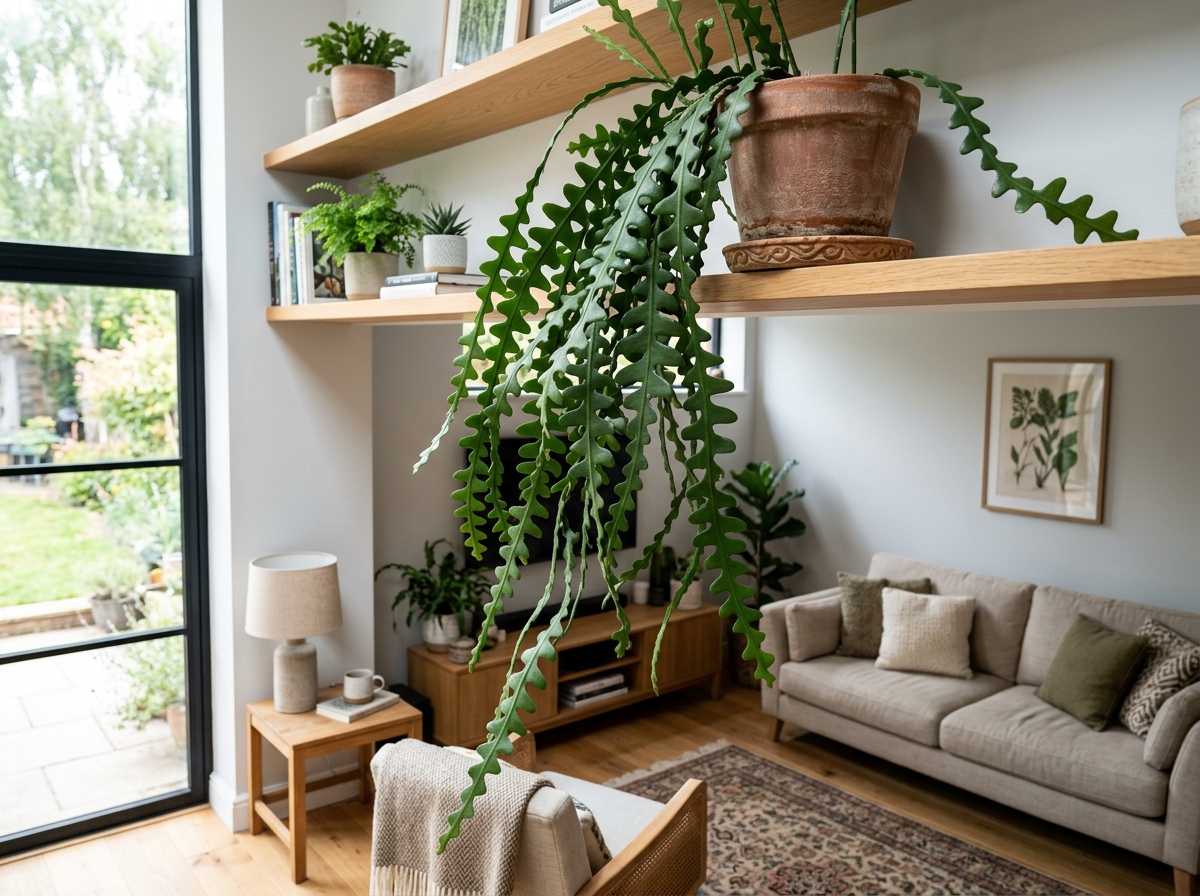
If you’ve ever wanted a plant that looks like a piece of living modern art, the fishbone cactus hanging in your living room is the answer. We often call it the “statement necklace” of the plant world. Its architectural, zig-zagging stems create a funky, serrated silhouette that immediately draws the eye.
Native to the humid rainforests of Mexico, this plant is an epiphyte, meaning it naturally grows tucked into the crooks of trees rather than in the ground. In a home setting, this makes it the perfect candidate for a hanging display. Instead of growing tall and stiff, its stems eventually succumb to gravity, cascading over the edges of their pots in a lush, green waterfall.
Beyond its looks, the fishbone cactus is incredibly forgiving. It’s not a “diva” plant that wilts if you miss a watering by one day. It’s also one of the few tropical plants that is officially non-toxic to cats and dogs, making it a safe choice for pet-loving households. According to How to Grow and Care for Fishbone (Zig Zag) Cactus, its unique appearance is matched only by its resilience.
Distinguishing the Ric Rac from Desert Cacti
One of the biggest mistakes we see new plant parents make is treating a fishbone cactus hanging in their home like a standard desert cactus. While they share the “cactus” name, their lifestyles are worlds apart.
Desert cacti love scorching sun and bone-dry soil. The fishbone cactus, however, evolved under the canopy of rainforests. Its “leaves” are actually flattened stems called cladodes, which evolved to catch filtered sunlight in the dappled shade of the jungle.
| Feature | Desert Cactus | Fishbone (Jungle) Cactus |
|---|---|---|
| Native Habitat | Arid deserts | Tropical rainforests |
| Light | Direct, intense sun | Bright, indirect light |
| Water | Very infrequent | Keep soil slightly moist |
| Soil | Sandy, fast-draining | Rich, airy, organic-rich mix |
| Growth Habit | Upright/Globular | Trailing/Epiphytic |
Because it isn’t a desert dweller, it has a much higher tolerance for lower light levels and requires more frequent watering than its prickly cousins.
Mature Size and Growth Expectations
When you first bring home a young fishbone cactus, it might look a bit upright and sparse. Don’t worry — we promise it gets better! As the plant matures, the stems (which can grow 8 to 12 inches long in a single season) will begin to droop and trail.
Indoors, you can expect the stems to reach about 3 feet in length over several years. In their native habitat, these stems can reach a staggering 8 to 12 feet, but in a hanging basket in your home, 3 feet is the standard “wow factor” size. According to the Fishbone Cactus: Complete Plant Care & Growing Guide, the plant usually reaches a height of about 6 inches before the stems start their long descent. It’s a medium-fast grower, meaning you’ll see noticeable progress every spring and summer.
Top 5 Varieties and Displays for Your Home
Choosing the right variety for your fishbone cactus hanging setup depends on how much space you have and how “toothed” you want the foliage to look.
- Epiphyllum ‘Ric Rac’: This is the gold standard. It has been selectively bred for its dramatic, deep zig-zags and is generally more reliable when it comes to producing those famous night-blooming flowers.
- Disocactus anguliger: The botanical classic. It features slightly smoother, more rounded lobes compared to the Ric Rac but offers the same beautiful trailing habit.
- Selenicereus anthonyanus: Often confused with the standard fishbone, this relative has even deeper, more angular lobes. It’s often called the “St. Anthony’s Rik Rak.”
- The Mature Cascade: If you’re impatient, look for specimens already sold in 7.5-inch nursery pots. These usually have stems that are already 12-18 inches long, giving you that “indoor jungle” look the moment you hang it up.
- The Starter Cutting: For those who love the journey, a small 2-inch pot with a few rooted cuttings is a great way to watch the plant develop its architectural shape from scratch.
Choosing the Best Fishbone Cactus Hanging Pot and Soil
Since this plant is an epiphyte, drainage is everything. We recommend using a pot with plenty of drainage holes. While terracotta is beautiful and helps prevent overwatering, it can dry out very quickly in a hanging setup where air circulates around the entire pot. If you use plastic or ceramic, just be extra careful not to let the plant sit in soggy soil.
For the soil, skip the “standard” cactus mix. It’s often too sandy and doesn’t hold enough nutrients or moisture for a jungle plant. Instead, we suggest a “chunky” mix. A great recipe is:
- 1 part commercial succulent soil
- 1 part perlite or pumice (for aeration)
- 1 part orchid bark (to mimic its natural tree-growing environment)
- A handful of peat moss or coco coir (for slight moisture retention)
The goal is a soil pH between 6.0 and 7.0 that feels light and airy.
How to Encourage Blooms on Your Fishbone Cactus Hanging Plant
The flowers of the fishbone cactus are legendary: they are large (up to 6 inches wide), white or pale yellow, and incredibly fragrant. However, they only bloom at night and often last for just one day. Getting them to bloom indoors is the ultimate achievement for a plant parent.
To trigger blooming, we recommend a “tough love” period in late winter. Move your fishbone cactus hanging basket to a cooler room (around 52-57°F) and cut back on watering significantly for about a month. This mimics the natural dry season in Mexico. Once spring arrives, move it back to a warmer spot and start feeding it with a potassium-rich fertilizer — believe it or not, many experts swear by using “tomato feed” to encourage those flower buds to form!
Essential Care and Maintenance for Trailing Stems
Keeping your fishbone cactus hanging healthy is all about balance. Think of it as a tropical plant that happens to look like a cactus.
- Light: Bright, indirect light is the sweet spot. An East-facing window that provides gentle morning sun is perfect. If the stems start to look “leggy” or stretched out, it’s telling you it needs more light. If the stems take on a reddish tinge, it might be getting too much direct sun (sunburn!).
- Water: Use tepid water. Cold water straight from the tap can shock the tropical roots. If you have hard water, let it sit out for 24 hours to allow chemicals to dissipate before watering.
- Foliage Cleaning: Because the stems are flat and wide, they tend to collect dust. Periodically wipe them down with a damp cloth or give the whole plant a gentle “shower” in the sink to keep the pores (stomata) clear.
Watering and Feeding in a Hanging Setup
The “top-inch rule” is your best friend here. Stick your finger into the soil; if the top 1 to 2 inches feel dry, it’s time to water. In a hanging basket, the soil tends to dry out faster than in a floor pot, so check it every 7 to 10 days during the summer.
For feeding, use a balanced liquid houseplant fertilizer diluted to half-strength. We recommend feeding once a month from early spring through late summer. Avoid fertilizing in the winter when the plant goes into a natural dormancy period.
Temperature and Humidity Requirements
Since these plants hail from USDA Zones 10-12, they love warmth. The ideal temperature range is between 60°F and 78°F. They are not frost-tolerant, so keep them away from drafty windows or air conditioning vents in the winter.
While they are surprisingly adaptable to average home humidity, they will truly thrive if you can keep the humidity above 60%. If your home is dry, try grouping it with other plants, placing it in a bright bathroom, or using a pebble tray nearby.
Troubleshooting and Propagation Tips
Even the hardiest plants run into trouble sometimes. Here’s how we handle common issues:
- Mealybugs: These look like tiny bits of white cotton in the “nooks” of the zig-zag stems. Wipe them away with a cotton swab dipped in rubbing alcohol.
- Root Rot: If the base of the stems turns brown and mushy, you’ve likely overwatered. You’ll need to cut away the rot and potentially repot in fresh, dry soil.
- Aerial Roots: You might see thin, hair-like roots growing out of the stems in mid-air. Don’t panic! This is perfectly normal for epiphytes. They are just looking for something to cling to or extra moisture in the air.
How to Propagate for More Hanging Plants
Propagation is the best part of owning a fishbone cactus. It’s so easy, you’ll soon have enough to give away to all your friends.
- Snip: Cut a healthy stem section (about 4-6 inches long) using sterile scissors.
- Callus: This is the “game changer” step. Let the cutting sit on a dry tray for 5 to 10 days. The cut end needs to form a hard, dry “scab” (callus) to prevent rot.
- Plant: Stick the callused end into a small pot of gritty soil mix.
- Wait: Keep it in bright indirect light and mist the soil occasionally. Roots usually form within a few weeks.
Repotting a Mature Hanging Specimen
Unlike many plants that need a bigger pot every year, the fishbone cactus actually prefers to be a bit rootbound. We suggest repotting only every 2 to 3 years.
When you do repot, only go up one pot size (e.g., from a 6-inch to an 8-inch pot). To reduce transplant shock, water the plant a day or two before you plan to move it. This ensures the roots are hydrated and flexible.
Frequently Asked Questions about Fishbone Cacti
Is the fishbone cactus safe for cats and dogs?
Yes! We love this plant because it is non-toxic. While we don’t recommend letting your cat use it as a chew toy, you don’t have to worry if they take a curious nibble.
Why are my fishbone cactus stems turning brown or mushy?
This is almost always a sign of overwatering or poor drainage. Ensure your pot has holes and that you are letting the top layer of soil dry out between waterings.
How much light does a hanging fishbone cactus really need?
It needs bright, filtered light. Think “bright enough to read a book comfortably.” Avoid direct, mid-day sun which can bleach or burn the unique zig-zag stems.
Conclusion
At Financedora, we believe that your home should be your sanctuary, and nothing brings a space to life quite like a lush, fishbone cactus hanging from the ceiling. It’s the perfect blend of exotic beauty and low-maintenance ease. Whether you’re a seasoned collector or a beginner looking for your first “cool” plant, the Ric Rac cactus is a rewarding choice that will grow with you for years to come.
Ready to start your indoor jungle? With a little indirect light and the right chunky soil mix, you’ll be enjoying those cascading zig-zag stems in no time. For more tips on elevating your home and lifestyle, More info about Financedora services is always available to help you grow.
