
Why Every Container Gardener Needs a Self Watering Bucket
A self watering bucket is one of the simplest upgrades you can make to your container garden. Here are the top options to buy right now:
| Product | Type | Reservoir | Best For |
|---|---|---|---|
| GroBucket Insert (3-Pack) | Commercial insert | 1 gallon | Beginners, small spaces |
| GroBucket GroTech (10-Pack) | Commercial insert | 1 gallon | Schools, community gardens |
| Real Buckets System | Commercial system | 10 gallons | 2-4 plants, larger setups |
| DIY Double-Bucket | DIY build | 1.75 gallons | Budget gardeners, customizers |
Most container plants die from one simple mistake: inconsistent watering.
Too much water drowns the roots. Too little and the plant dries out before you notice. For busy homeowners, hitting that sweet spot every single day is genuinely hard.
That’s exactly the problem a self watering bucket solves.
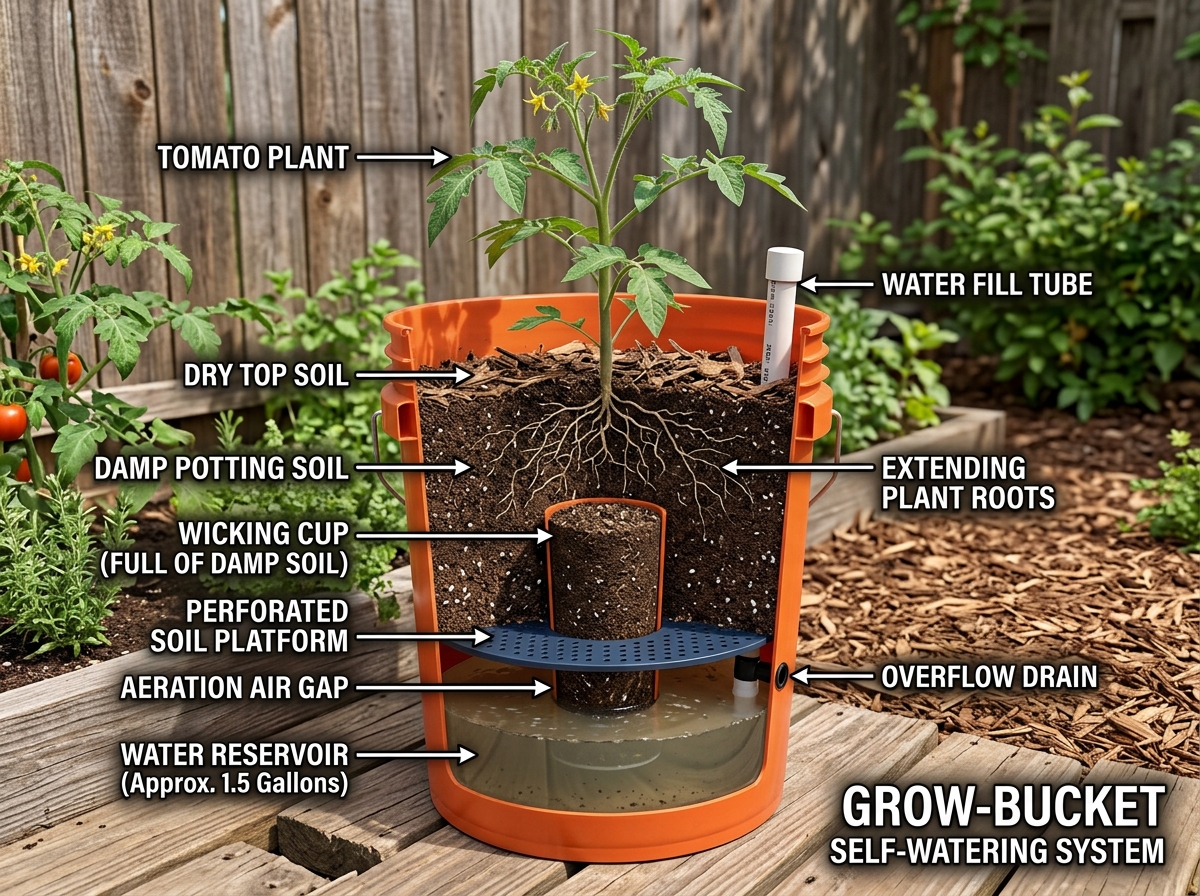
The idea is simple. A water reservoir sits at the bottom of the bucket. The growing medium sits above it on a perforated platform. As the soil dries out, it draws water upward through capillary action — automatically, without any pumps or electricity.
Roots get a steady, consistent supply of moisture. You refill the reservoir every few days instead of watering daily.
It’s a hybrid between hydroponic growing and traditional container gardening. And it works surprisingly well, even for larger crops like tomatoes. A thriving tomato plant grown in a 5-gallon self-watering bucket is a regular sight at the University of Maryland’s Master Gardener Learning Garden — proof that this low-tech approach genuinely delivers.
What is a Self Watering Bucket and How Does It Work?
To understand a self watering bucket, we first have to look at how a standard pot works. In a traditional container, you pour water on top, it saturates the soil, and the excess drains out the bottom. If you forget to water, the soil turns into a brick. If you water too much, the roots sit in a swamp and rot.
A self-watering system, often called a sub-irrigated planter (SIP), flips this logic on its head.
The Anatomy of the Reservoir
Inside a self watering bucket, there are three main zones:
- The Water Reservoir: This is the bottom section of the bucket. Depending on the design, it can hold between 1 and 3 gallons of water.
- The Aeration Gap: This is a small space of air between the water level and the soil platform. It is vital because roots need oxygen just as much as they need water. Without this gap, you’re just making mud.
- The Wicking Chamber: This is the “bridge” that connects the soil to the water. It’s usually a small cup or a piece of fabric that stays submerged in the reservoir.
Capillary Action: Nature’s Pump
The magic happens through capillary action. Think of how a paper towel draws up a spill. The growing medium in the wicking chamber acts like that towel, pulling moisture up into the main root zone. This ensures the soil stays consistently moist but never soggy.
Because the water is delivered from the bottom, the top layer of soil often stays dry. This is actually a huge benefit! It prevents many fungal issues and discourages fungus gnats, who love damp surface soil. If you are struggling with watering-frequency-for-houseplants/, this system takes the guesswork out of the equation.
According to the University of Maryland Extension, these containers are essentially a hybrid between hydroponics and conventional gardening. The roots eventually grow down through the soil platform and directly into the water reservoir, allowing the plant to drink exactly what it needs.
Benefits of Using a Self Watering Bucket for Container Gardening
We often hear from people who want to grow their own food but feel they are too busy or don’t have enough space. We believe the self watering bucket is the ultimate solution for plant-care-for-busy-people/.
1. Massive Water Conservation
In a standard pot, a lot of water is lost to evaporation from the surface or simply runs out the drainage holes. In a self-watering system, the water is enclosed. The University of Maryland design even includes an overflow system that collects excess water in a separate milk jug, which you can then pour back into the reservoir. This recycles both water and nutrients that would otherwise be wasted.
2. Healthier, Faster Growth
Plants hate “stress cycles”—the constant swing between being bone-dry and soaking wet. By providing a steady stream of hydration, the plant can focus all its energy on growth and fruit production. It’s not uncommon to see “massive harvests” from these buckets, as the roots have constant access to oxygen and moisture.
3. Portability and Space Efficiency
Each 5-gallon bucket takes up exactly 1 square foot of space. This makes them perfect for balconies, patios, or even sunny spots in a driveway. Because they are contained, they are also low-maintenance-indoor-plants/ options if you have a very bright sunroom. Plus, if a storm is coming or a frost is predicted, you can just pick up the bucket and move it inside.
4. Weed Elimination
Since you aren’t watering the surface soil and the buckets are raised off the ground, weeds find it almost impossible to take hold. You can spend your time harvesting rather than pulling weeds.
Best Plants for Your Self Watering Bucket
Not every plant is a perfect fit, but most garden favorites thrive in this setup:
- Tomatoes: One indeterminate tomato plant per bucket is the gold standard. They love the deep 15-inch root zone.
- Peppers: You can often fit two pepper plants in a single 5-gallon bucket.
- Leafy Greens: Lettuce, spinach, and kale grow exceptionally well because they never “bolt” prematurely due to water stress.
- Herbs: Basil, parsley, and cilantro love the consistent moisture.
- Vining Crops: Cucumbers and zucchini can work, though they may need a trellis attached to the bucket for support.
If you are moving plants from smaller pots into these buckets, check out our guide on repotting-air-purifying-plants/ to ensure a smooth transition.
How to Build a DIY Self Watering Bucket: Step-by-Step
If you’re a fan of weekend projects, building your own self watering bucket is incredibly rewarding. It’s also very affordable—often costing less than $10 per unit if you source your buckets wisely.
Step 1: Gather Materials for Your Self Watering Bucket
Before you start drilling, make sure you have everything ready. According to the Learn & Grow Educational Series, you will need:
- Two 5-Gallon Buckets: Use food-grade plastic (look for the #2 recycling symbol).
- A Wicking Cup: A small plastic nursery pot or a sour cream container with holes drilled in it.
- PVC Pipe: About 2 feet of 1-inch diameter pipe (this is your fill tube).
- Drill and Hole Saw: To create the overflow and wicking holes.
- Growing Medium: You need a specific homemade-plant-soil-mixes/ for wicking to work (more on this below).
Step 2: Prepare the Reservoir (Bottom Bucket)
Identify which bucket will be your reservoir. Drill a 1/2-inch “overflow hole” on the side. A common measurement is about 2.75 to 3.5 inches from the bottom. This hole is critical—it ensures that if it rains, the water level won’t rise into the soil zone and drown your plants.
Step 3: Prepare the Planting Chamber (Top Bucket)
The second bucket sits inside the first one. You need to drill a large hole in the center of the bottom of this bucket that fits your wicking cup perfectly. You should also drill several smaller 1/8-inch aeration holes around the bottom to allow for air exchange.
Step 4: Install the Fill Tube
Cut a hole in the bottom of the top bucket just large enough for your PVC pipe. Cut the bottom of the PVC pipe at a 45-degree angle so water can flow out easily even if the pipe is resting on the bottom of the reservoir.
Step 5: Assembly
- Place the wicking cup into the center hole of the top bucket.
- Nest the top bucket into the reservoir bucket.
- Slide the PVC fill tube through its hole.
- Pack the wicking cup tightly with your potting mix. This is the most important part! If the soil in the cup isn’t packed tight, it won’t “wick” the water up.
Construction and Assembly Tips
- The Weep Hole: Always place your overflow hole (weep hole) about 1/4 inch below where the top bucket’s bottom sits. This maintains that vital air gap.
- Reservoir Capacity: A standard DIY double-bucket system usually provides a 1.75-gallon reservoir. In the heat of July, a large tomato plant might drink 1-2 quarts a day, so this capacity gives you a few days of “buffer” time.
- The Dearthbox Design: Some designs, like the Dearthbox, use a single bucket with a platform supported by recycled materials like perforated drain tile. This maximizes soil space but can be trickier to assemble.
Commercial Inserts vs. DIY Self Watering Bucket Designs
While we love a good DIY project, sometimes you just want to get planting. Commercial inserts like the GroBucket have become very popular because they turn any standard bucket into a high-performance SIP in seconds.
Comparison Table: DIY vs. Commercial
| Feature | DIY Double-Bucket | Commercial Insert (GroBucket) | Real Buckets System |
|---|---|---|---|
| Setup Time | 45-60 minutes | 2 minutes | 10 minutes |
| Reservoir Size | ~1.75 Gallons | 1 Gallon | 10 Gallons (Shared) |
| Durability | High (if built well) | Very High | Professional Grade |
| Water Indicator | Visual (Look down tube) | Float Stick Included | Visible Reservoir |
| Cost | ~$10 | ~$13-$15 per unit | ~$100+ for system |
Why Choose a Commercial Self Watering Bucket Insert?
If you aren’t comfortable with power tools or you want a cleaner look, a commercial insert is the way to go.
- Float Indicators: Most commercial kits come with a little float stick. When the stick goes down, you add water. No more guessing or peering down a dark PVC pipe!
- Space Saving: A DIY double-bucket system uses two buckets for one plant. A commercial insert fits inside a single bucket, meaning you only need half as many buckets for the same number of plants.
- Reliability: These are designed to provide the perfect aeration gap every time. If you’re a new gardener, this is a great way to follow a beginner-indoor-plant-care-guide/ with guaranteed results.
Maintenance and Troubleshooting for Healthy Roots
Even the best self watering bucket needs a little TLC to keep your plants happy.
Priming the System
When you first plant your bucket, the wicking action hasn’t started yet. You must “prime” the system by watering the soil from the top for the first week. This settles the soil and establishes the capillary connection. Once the plant is established, you only water through the fill tube.
Feeding Your Plants
Because you aren’t watering from the top, you can’t just sprinkle granular fertilizer on the surface—it won’t reach the roots! Instead, we recommend:
- The Fertilizer Strip: Mix a circle of organic granular fertilizer into the top 2 inches of soil at planting time.
- Liquid Feeding: Add water-soluble fertilizer directly into the reservoir through the fill tube. This is basically “fertigation,” and plants love it.
Preventing Issues
- Algae: If your fill tube is clear or white, light can get in and cause algae to grow in the reservoir. Use black PVC or paint your fill tube to keep the water dark.
- Root Rot: If you notice a “rotten egg” smell, your aeration gap might be gone. Check that your overflow hole isn’t clogged.
- Mosquitoes: A few drops of vegetable oil or a “mosquito dunk” in the reservoir will prevent pests from breeding in the water.
Refilling and monitoring should be part of your regular indoor-plant-care-schedule/ to ensure your garden stays lush through the hottest months.
Frequently Asked Questions about Bucket Gardening
How often do I need to refill the water reservoir?
In the spring or early summer, you might only need to refill once a week. However, during the “dog days” of August, a large, thirsty tomato plant in full sun can require 1-2 quarts of water daily. We recommend checking the reservoir every 2-3 days to be safe.
What is the best soil mix for wicking systems?
You cannot use regular garden soil—it is too heavy and will compact, killing the wicking action. You need a “soilless” potting mix. A great DIY recipe is 3 parts peat-based potting soil to 1 part perlite. Some gardeners also add vermiculite to help with moisture retention.
Where can I find safe, food-grade 5-gallon buckets?
Don’t buy buckets that previously held chemicals or paint! Instead, visit your local bakery or sandwich shop. They often receive pickles, frosting, or oil in 5-gallon food-grade buckets and are usually happy to give them away for free or a couple of dollars. Just give them a good scrub with soap and water before using.
Conclusion
At Financedora, we believe that gardening should be accessible, sustainable, and—most importantly—fun. The self watering bucket is a testament to how a little bit of ingenuity can solve one of the biggest hurdles in home food production. Whether you choose to build your own using the University of Maryland’s recycled design or opt for the convenience of a commercial insert, you are setting yourself up for success.
By automating the most tedious part of plant care, you can spend more time enjoying the harvest and less time tethered to a garden hose. So grab a few buckets, some high-quality potting mix, and start your urban farm today. Happy growing!
For more tips on sustainable living and home management, visit us at Financedora.
