
What You Need to Know About Spider Plants Care
Spider plants care is surprisingly simple, making this one of the best houseplants for busy people who want greenery without the fuss.
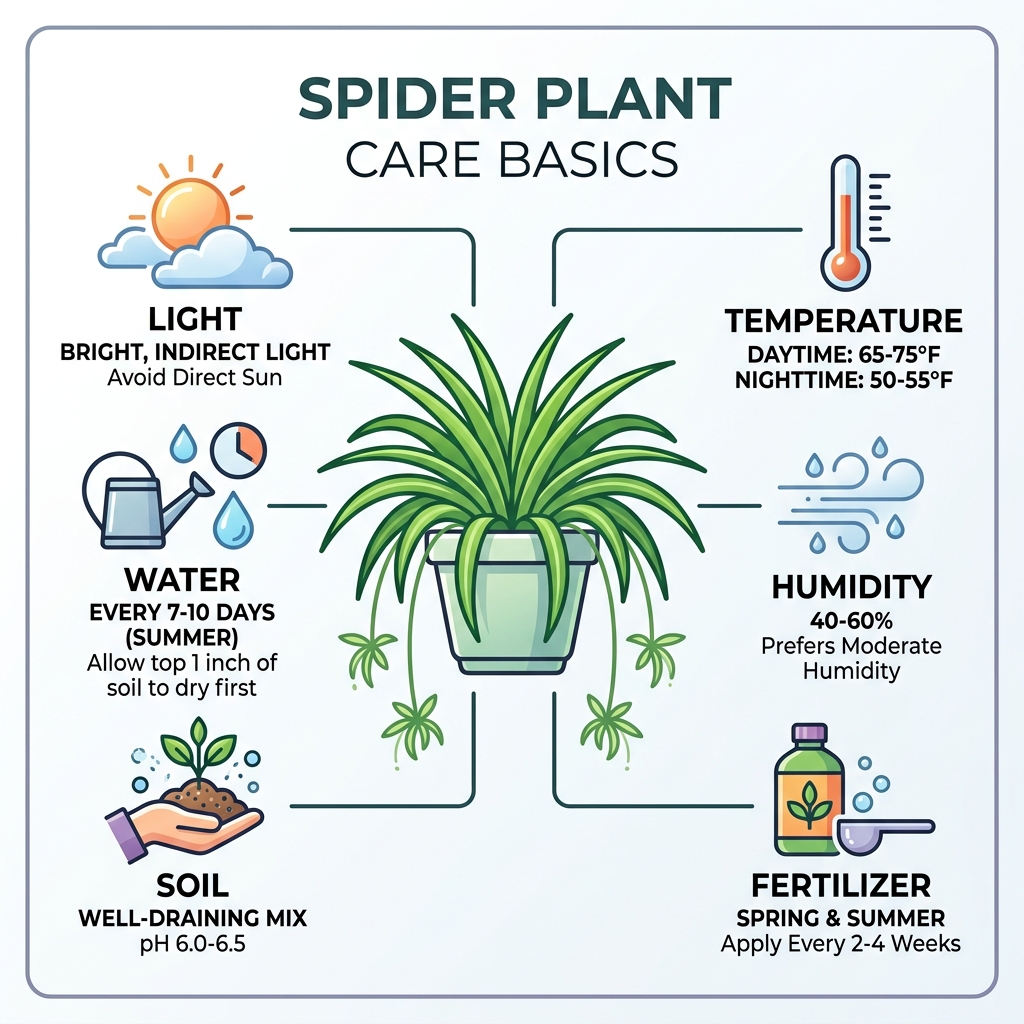
Here’s a quick overview of what your spider plant needs:
| Care Factor | What to Do |
|---|---|
| Light | Bright, indirect light — avoid direct sun |
| Water | Every 7-10 days in summer; let the top inch of soil dry first |
| Soil | Well-draining potting mix, pH 6.0-6.5 |
| Temperature | 65-75°F daytime, 50-55°F nighttime |
| Humidity | 40-60% |
| Fertilizer | Every 2-4 weeks in spring and summer |
| Repotting | Every 2-3 years |
Now, a little background on why this plant is worth your attention.
The spider plant (Chlorophytum comosum) originally comes from the jungles of South and West Africa. It belongs to the Asparagaceae family and gets its name from the small plantlets — called spiderettes — that dangle from long stems like tiny spiders on silk threads.
It’s one of the most popular houseplants in the world, and for good reason:
- It’s nearly indestructible. It tolerates neglect, low light, and irregular watering better than most plants.
- It grows fast. Expect 6-12 inches of new growth per year, with leaves reaching up to 12 inches long.
- It purifies the air. NASA research has linked spider plants to the removal of indoor pollutants like formaldehyde, benzene, and xylene.
- It’s pet-safe. The ASPCA confirms spider plants are non-toxic to cats and dogs — though cats may chew on the leaves for a mild hallucinogenic effect, so keep that in mind.
There are also several popular varieties to choose from — ‘Vittatum’ (green leaves with a white center stripe), ‘Variegatum’ (white-edged leaves), the curly ‘Bonnie’, and ‘Ocean’, which stays more compact.
With proper care, a spider plant can live for 20 years or more. This guide covers everything you need to keep yours thriving.
Essential Spider Plants Care: Light, Water, and Soil
To keep our spider plants looking their best, we need to mimic the warm, dappled light of their native African forest floors. While they are famous for being “hard to kill,” they won’t reach their full “fountain of foliage” potential if we stick them in a dark closet or under the blistering midday sun.
Ideal Lighting for Spider Plants Care
The golden rule for spider plants care is bright, indirect light. Think of it as “sunglasses light”—bright enough to read a book comfortably, but not so bright that the sun is hitting the leaves directly.
- South and West-facing windows: These are great spots, but we should place the plant about 3 to 5 feet away from the glass or use a sheer curtain. Direct afternoon sun is the leading cause of leaf scorch, which leaves ugly bleached or brown patches on the foliage.
- North and East-facing windows: These offer milder morning sun or consistent indirect light, which spider plants adore.
- Artificial Light: If your apartment feels more like a cave, don’t worry. Spider plants do surprisingly well under office fluorescent lights or dedicated LED grow lights.
Keep an eye on the leaves for clues. If a variegated plant starts turning solid green, it’s likely telling us it needs more light to maintain its stripes. Conversely, if the leaves look dull and washed out, it might be getting too much sun.

Mastering Watering and Humidity
Watering is where most indoor gardeners get a little nervous, but we can simplify it: just use your finger! We recommend checking the soil every week. If the top inch feels dry to the touch, it’s time for a drink.
During the active growing season (spring and summer), you’ll likely find yourself adjusting your watering frequency to every 7-10 days. However, in the winter, the plant enters a semi-dormant state. During this time, we should let the soil dry out about an inch or even halfway down the pot before watering again.
The Water Quality Secret Spider plants are a bit like picky tea drinkers—they are very sensitive to what’s in their water. Tap water often contains fluoride, chlorine, and salts that build up in the fleshy roots and cause those dreaded brown tips. To keep the leaves pristine:
- Use distilled water or collected rainwater.
- If you must use tap water, let it sit in an open container for 24 hours. This allows the chlorine to dissipate.
Humidity and Temperature Spider plants prefer a moderate humidity level between 40% and 60%. If your home is very dry (especially during winter when the heater is blasting), the leaf tips may turn crisp. We can fix this by:
- Placing the pot on a pebble tray filled with water (ensure the pot sits on the pebbles, not in the water).
- Misting the leaves occasionally.
- Grouping plants together to create a humid microclimate.
Temperature-wise, they thrive between 65-75°F during the day and prefer a slightly cooler 50-55°F at night. Just keep them away from drafty windows or direct heat vents!
Choosing the Right Soil and Pot
We want a soil that holds some moisture but lets the excess drain away quickly. A loamy, well-draining potting mix with a pH between 6.0 and 7.0 is ideal. Many experts suggest a peat-free multi-purpose or houseplant compost.
When it comes to the pot, drainage holes are non-negotiable. Without them, water sits at the bottom, leading to root rot. Interestingly, spider plant roots grow horizontally and are quite thick and fleshy (they actually evolved to store water!). Because of this, a wider pot is often better than a deep, narrow one.
While they like to be slightly root-bound to produce those adorable “babies,” be careful—their powerful roots have been known to literally crack plastic pots if left too long!
Growth, Maintenance, and Propagation
Watching a spider plant grow is one of the most rewarding parts of spider plants care. These plants are fast movers, often growing 6 to 12 inches per year. A mature plant can easily reach 2 feet in height and width, creating a spectacular display in a hanging basket.
Feeding and Pruning
To fuel all that growth, we should fertilize our spider plants every 2 to 4 weeks during the spring and summer. Use a balanced, water-soluble houseplant fertilizer diluted to half-strength. Over-fertilizing is a common mistake that leads to salt buildup and leaf browning, so less is often more. In the winter, we stop feeding entirely to let the plant rest.
Maintenance is mostly about “housekeeping.” If you see dead leaves at the base, simply pull them out or snip them off with clean scissors. If the tips have turned brown, you can trim them off following the natural pointed shape of the leaf. Just remember to use sterilized tools to prevent any chance of infection.
How to Propagate Spider Plant “Babies”
One of the coolest things about the spider plant is that it gives you free gifts! Once a plant is about a year old, it starts producing long, wiry stems (up to 2 feet long) with small white flowers that eventually turn into “spiderettes” or pups.
We can propagate these babies using three main methods:
- Water Rooting: Snip a spiderette (ideally one that is at least 2 inches in diameter) and place its base in a small jar of water. Once the roots are about an inch long, pot it in soil.
- Soil Rooting (Attached): Place a small pot of soil next to the mother plant. Pin the baby onto the soil surface while it’s still attached to the stem. Once it develops strong roots, snip the “umbilical cord.”
- Direct Potting: If the baby already has small brown nubs (aerial roots) at the bottom, you can snip it and plant it directly into moist potting mix.
When to Repot Your Spider Plant
On average, we need to repot every 2 to 3 years. The best time to do this is in the spring, just as the growing season begins.
Signs it’s time to repot:
- Roots are growing out of the drainage holes.
- Water sits on top of the soil and takes a long time to soak in.
- The plant looks “sparse” or has stopped growing despite good care.
When repotting, choose a container that is only 1-2 inches larger than the current one. If the pot is too big, the soil stays wet too long, which can lead to rot. When placing the plant, ensure the top of the root ball is about ¾ of an inch below the rim to allow space for watering.
Troubleshooting Common Problems and Pests
Even with the best spider plants care, problems can pop up. The key is to act fast!
Brown Tips vs. Yellow Leaves
| Symptom | Likely Cause | Solution |
|---|---|---|
| Brown Tips | Fluoride/Chlorine in water | Switch to distilled or rainwater |
| Brown Tips | Low Humidity | Use a pebble tray or mister |
| Yellow Leaves | Light Deficiency | Move to a brighter spot |
| Yellow Leaves | Overwatering | Let soil dry out; check for root rot |
| Limp/Drooping | Underwatering | Give the plant a thorough soak |
If your plant is looking particularly sad, don’t give up! We have a guide on how to revive dying indoor plants that can help you bring your green friend back from the brink.
Common Pests
Spider plants are generally hardy, but they can occasionally attract unwanted guests like mealybugs (which look like tiny bits of white cotton), scale insects, aphids, or spider mites.
If you spot pests:
- Isolate the plant so the bugs don’t spread to your other greenery.
- Wipe them away using a cotton swab dipped in rubbing alcohol.
- Apply Neem Oil or insecticidal soap for larger infestations. For more detailed help, check out our pest control for indoor plants resources.
Why Isn’t My Plant Producing Babies?
It can be frustrating when your plant refuses to produce pups. Usually, this is down to three things:
- Age: Most plants won’t produce babies until they are at least one year old.
- Pot Size: Spider plants often wait until they are slightly root-bound before they start “reproducing.” If the pot is too large, the plant focuses on root growth instead of babies.
- Light: They need bright light to trigger flowering. In the wild, they respond to short days and long, uninterrupted nights.
Frequently Asked Questions about Spider Plants
Are spider plants safe for pets?
Yes! We love spider plants because they are ASPCA-verified as non-toxic to cats and dogs. However, be warned: spider plants contain compounds related to opium that can give cats a mild “hallucinogenic buzz.” While not toxic, if your cat eats too much, they might get an upset stomach or act a little strange. Also, those dangling babies can be a choking hazard for curious kittens, so hanging them up high is usually the best bet.
Why are the tips of my spider plant turning brown?
This is the #1 question in spider plants care. As we mentioned earlier, it’s usually caused by fluoride or chlorine in tap water. It can also be a sign of salt accumulation from over-fertilizing. If you suspect salt buildup, you can “leach” the soil by watering the plant thoroughly until water runs freely out the bottom, waiting 20 minutes, and repeating the process a few times to wash the salts away.
Do spider plants really purify the air?
They do! According to the famous NASA Clean Air Study, spider plants are excellent at absorbing formaldehyde, xylene, and carbon monoxide. While you would technically need a lot of plants (about 70 for an average-sized home) to completely scrub the air, having a few in your bedroom or office certainly helps you breathe easier.
Conclusion
Mastering spider plants care is a journey that pays off with years of beautiful, cascading greenery. Whether you are a beginner looking for your first “un-killable” plant or an experienced gardener wanting to expand your indoor jungle, the spider plant is a classic choice. Its resilience, air-purifying qualities, and “gift-giving” nature make it a true hero of the living room.
The key to a happy plant is consistency. Keep an eye on the light, don’t overwater, and maybe treat them to some rainwater every now and then. With a little love, your spider plant could be part of your family for the next 20 years!
For more expert tips on keeping your home green and healthy, check out more info about plant care at Financedora. Happy planting!
