
The ZZ Plant Air Purifying Succulent: What You Need to Know Before You Buy
The zz plant air purifying succulent is one of the hardiest, lowest-maintenance houseplants you can own — and it actively cleans the air in your home or office.
Quick answer for busy plant shoppers:
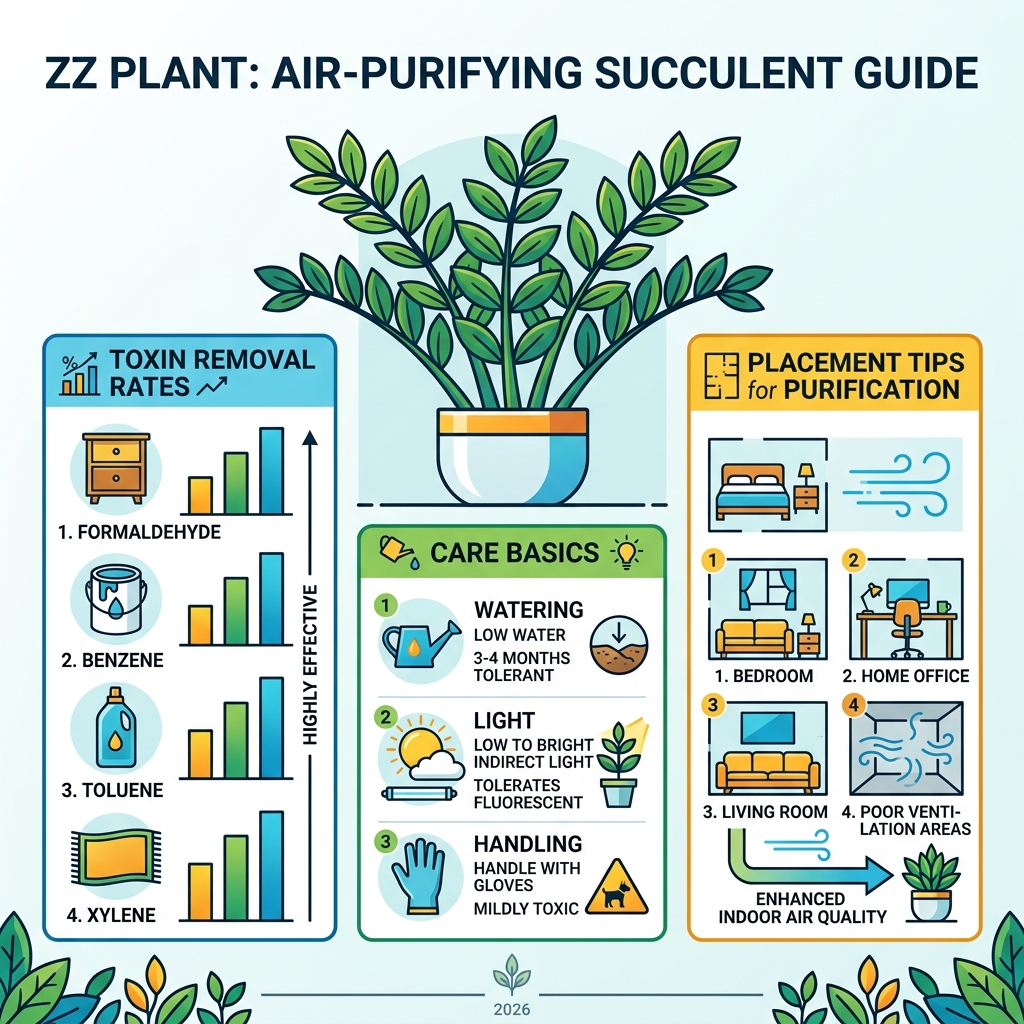
- What it does: Removes indoor toxins including formaldehyde, benzene, toluene, and xylene from the air
- How hard is it to care for: Extremely easy — it can survive 3-4 months without water
- Light needs: Low to bright indirect light; tolerates fluorescent office lighting
- Best placement: Bedroom, home office, living room, or anywhere with poor ventilation
- Safe for pets? No — mildly toxic to pets and humans if ingested; handle with gloves
The ZZ plant (Zamioculcas zamiifolia), also called the Zanzibar Gem, originally comes from the dry, rocky regions of East Africa. It stores water in thick underground rhizomes — almost like potatoes — which is why it survives serious neglect.
That drought-proof design is also why it’s often grouped with succulents, even though it’s technically a tropical aroid.
But here’s what makes it stand out beyond just being tropical: it quietly filters your indoor air while you go about your day. NASA research identified it as effective at removing some of the most common household pollutants. And you don’t need a green thumb to keep it alive.
If you’ve been searching for a plant that looks great, doesn’t demand much, and actually does something useful — this is it.
Why the ZZ Plant Air Purifying Succulent is a Must-Have
We often think of air pollution as an “outdoor” problem, but indoor air can actually be more congested with toxins than the air outside. This is where the zz plant air purifying succulent shines. While many people choose it for its glossy, “polished” green leaves, its true value lies in its ability to act as a living filter.
Scientific research, including the famous NASA Clean Air Study, has highlighted the ZZ plant’s ability to scrub the air of harmful Volatile Organic Compounds (VOCs). These are chemicals found in everyday household items like carpets, detergents, and paint. Specifically, the ZZ plant is a powerhouse at removing:
- Formaldehyde: Often found in pressed-wood products and cigarette smoke.
- Benzene: A common component of plastics, resins, and synthetic fibers.
- Xylene and Toluene: Chemicals frequently found in printing inks, rubber, and leather.
According to research on ZZ plant benefits, a single medium-sized plant per 100 square feet can make a measurable difference. In fact, statistics show that in standard room conditions, a ZZ plant can reduce formaldehyde by 15%, benzene by 18%, and xylene by a staggering 27% within just 24 hours.
Beyond chemical filtration, these plants are excellent air-cleaning-succulents because they contribute to a healthier respiratory environment. Through a process called transpiration, they release moisture into the air, acting as a natural humidifier. This is a lifesaver during dry winter months when indoor heating can wreak havoc on your skin and sinuses. You can learn more about how these natural wonders work in our guide on can-succulents-purify-air-nasas-surprising-findings.
Comparing the ZZ Plant to Other Natural Purifiers
When choosing a natural air filter, it helps to see how the ZZ plant stacks up against other heavy hitters like the Snake Plant or Pothos. While all are great, the ZZ plant offers a unique “set it and forget it” appeal that is hard to beat.
| Feature | ZZ Plant | Snake Plant | Pothos |
|---|---|---|---|
| Toxin Filtration | High (Xylene/Toluene) | High (CO2 at night) | Medium (Formaldehyde) |
| Light Needs | Low to Bright Indirect | Low to Bright Indirect | Low to Medium |
| Water Frequency | Every 3-4 weeks | Every 2-4 weeks | Every 1-2 weeks |
| Growth Habit | Upright/Architectural | Vertical/Structural | Vining/Trailing |
| Humidity Needs | Low/Average | Low | Moderate |
If you are looking for the absolute easiest entry point into indoor gardening, the ZZ plant is often the winner. It doesn’t drop leaves when stressed like a Ficus, and it doesn’t require the frequent trimming that a Pothos might. For those wanting to compare more options, check out our list of do-succulents-filter-air-shop-the-best-natural-purifiers or see how to succ-it-up-and-clean-your-air-with-these-plants.
Maximizing the Health of Your ZZ Plant
To get the most out of your zz plant air purifying succulent, you need to understand what makes it tick. Even though it’s “indestructible,” it still has preferences. The secret to its survival lies beneath the soil.

The ZZ plant grows from thick, bulbous structures called rhizomes. These act as the plant’s personal water reservoir. This is why the most important rule of ZZ care is: do not overwater.
- Soil: Use a well-draining potting mix. A blend of two parts all-purpose soil, one part perlite, and one part sand is ideal to ensure the rhizomes don’t sit in soggy mud.
- Potting: We recommend using unglazed terracotta pots. These are porous and allow the soil to “breathe,” which helps prevent the dreaded root rot.
- Humidity: While it tolerates dry air, it prefers a humidity level between 40-50%. In very dry offices, an occasional misting can help, though it isn’t strictly necessary.
For a deeper dive into the botanical history and specific care nuances, Everything You Need to Know About ZZ Plants – Gardenista is a fantastic resource. If you’re a busy professional, you might also enjoy our curated list of low-maintenance-indoor-plants.
Watering and Lighting for Your ZZ Plant Air Purifying Succulent
Watering is where most “brown thumbs” go wrong. Because of that rhizome storage system, the ZZ plant can survive 3-4 months without a drop of water. However, for optimal growth and air purification, we suggest watering every 2-3 weeks during the growing season and once a month in winter. Always wait until the soil is completely dry to the touch before adding more.
When it comes to light, the ZZ plant is incredibly versatile. It thrives in bright, indirect light but is one of the few plants that can truly handle low-light corners. It is a favorite for windowless offices because it grows impressively under fluorescent lighting.
Pro Tip: Avoid direct afternoon sun. The leaves are waxy but can still suffer from “leaf scorch,” which leaves permanent brown marks. If you’re looking for other plants that don’t need a lot of H2O, check out our guide on low-water-air-purifying-plants.
Placement Strategies for Better Air Quality
Where you put your zz plant air purifying succulent matters just as much as how you care for it. To maximize the health benefits, we recommend strategic placement based on your daily routine.
- The Bedroom: Placing a ZZ plant on your nightstand is a game-changer. A study indicated that bedroom placement of ZZ plants correlates with an 11% improvement in sleep quality. This is likely due to the plant’s consistent oxygen production and its ability to clear the air of irritants that might cause nighttime stuffiness.
- The Living Room: Grouping plants can actually boost their effectiveness. Research suggests that grouping a ZZ plant with 1 or 2 complementary purifiers (like a Spider Plant) can increase toxin removal by up to 40%.
- The Kitchen: Kitchens are often hubs for VOCs from cleaning supplies. A ZZ plant placed at least 2 feet away from heat sources can help neutralize these chemicals.
For more ideas on how to purify-indoor-air-naturally, or to find the best-plants-for-air-quality, we have plenty of resources to help you design a “breathable” home.
Creating a Healthy Workspace with a ZZ Plant Air Purifying Succulent
If you spend your 9-to-5 in an office, the ZZ plant is your best friend. In a 2023 workplace study, employees in spaces with ZZ plants showed 6% higher concentration levels during cognitive tasks. Furthermore, research from the University of Technology Sydney found that office workers with these plants reported 15% lower cortisol levels—the hormone associated with stress.
However, there is a catch: Dust is the enemy of air purification.
Dust buildup on the glossy leaves can reduce the plant’s air-purifying effectiveness by up to 30%. To keep your office “secret weapon” in top shape, we recommend wiping the leaves with a damp cloth once a month. This not only keeps the plant healthy but also ensures it looks its “Instagram-ready” best. For more tips on office greenery, see our article on indoor-plants-that-clean-the-air.
Propagation and Varieties of the Zanzibar Gem
One of the coolest things about the zz plant air purifying succulent is that you can easily make more of them for free! While they are slow growers, they are generous with their offspring.
- Rhizome Division: The easiest way to propagate is during repotting. Simply pull the plant apart at the “bulbs” and pot them separately.
- Leaf Cuttings: This is a test of patience but very rewarding. You can take a single leaf, stick it in soil or water, and eventually, it will grow its own rhizome. It can take several months, so don’t give up!
- Stem Cuttings: Cutting a whole stalk and placing it in water is often faster than leaf cuttings.
There are also several exciting varieties to look for:
- Raven ZZ: This variety features stunning purple-black foliage. The new growth starts bright lime green before darkening, making it a dramatic addition to any room.
- Zenzi: A dwarf variety that stays compact (under 15 inches), perfect for crowded desks.
- Chameleon: A newer variety with variegated leaves that change color as they mature.
For a narrative look at how these plants adapt and grow, the ZZ Plant: A Narrative Guide – Brooklyn Botanic Garden offers a wonderful perspective on their natural history.
Frequently Asked Questions about ZZ Plants
Is the ZZ plant toxic to pets and humans?
Yes, safety first! The ZZ plant contains calcium oxalate crystals. If a leaf is chewed or ingested, it can cause immediate irritation to the mouth and digestive tract. While it isn’t “deadly” in the way some lilies are for cats, it will definitely cause discomfort, drooling, or vomiting. We always recommend wearing gloves when pruning or repotting, as the sap can cause skin irritation for some people. Keep them on high shelves away from curious cats or toddlers.
How often should I water my ZZ plant to avoid root rot?
The golden rule is: when in doubt, don’t. In a typical home environment, watering every 2 to 3 weeks is plenty. In the winter, you can easily go 4 to 6 weeks. Always stick your finger an inch or two into the soil; if it feels even slightly damp, wait another few days. Good drainage is non-negotiable—never let your ZZ plant sit in a saucer full of water.
Can a ZZ plant survive in a windowless office?
Surprisingly, yes! While no plant can live in total darkness (they aren’t mushrooms, after all!), the ZZ plant is famous for thriving under standard office fluorescent lights. It will grow much slower in these conditions, but it will maintain its deep green color and continue to filter the air. If you notice it starting to “stretch” or lean heavily, it might be asking for a little more light.
Conclusion
At Financedora, we believe that your home should be a sanctuary. The zz plant air purifying succulent is more than just a piece of sustainable decor; it’s an investment in your long-term health and mental well-being. Whether you’re looking to reduce stress, boost your productivity, or simply breathe a little easier, this “indestructible” gem is the perfect partner.
If you’re ready to start your indoor jungle without breaking the bank, explore our guide on budget-friendly-air-cleaning-plants. Ready to bring one home? Shop our full collection of air-purifying plants today and start breathing the difference!
