
Why Picking the Right Balcony Planter Box Makes All the Difference
A balcony planter box can turn even the smallest outdoor space into a thriving green oasis — but only if you choose the right one.
The wrong planter leads to dead plants, soggy roots, or worse: a dangerously heavy load on your balcony structure.
Here’s a quick summary of what to look for:
| Factor | What to Consider |
|---|---|
| Type | Railing, floor, hanging, or vertical planter |
| Material | Plastic, wood, terracotta, metal, or fabric |
| Drainage | Must have holes or a self-watering reservoir |
| Weight | Keep any single planter under 75–100 lb when filled |
| Maintenance | Self-watering options save time for busy schedules |
| Size | Match to your balcony dimensions and sun exposure |
Whether you have a narrow city balcony or a spacious terrace, there’s a planter setup that fits your space, your plants, and your lifestyle.
This guide walks you through every key decision — from materials and drainage to safety and styling — so you can shop or build with confidence.

Top Types of Balcony Planter Box for Every Space
When we look at our balconies, we see potential. But we also see limited floor space. To create a lush garden without tripping over pots, we need to think about variety and placement. The best types of containers for balcony gardening are those that utilize every available inch, from the floor to the railing and even the walls.
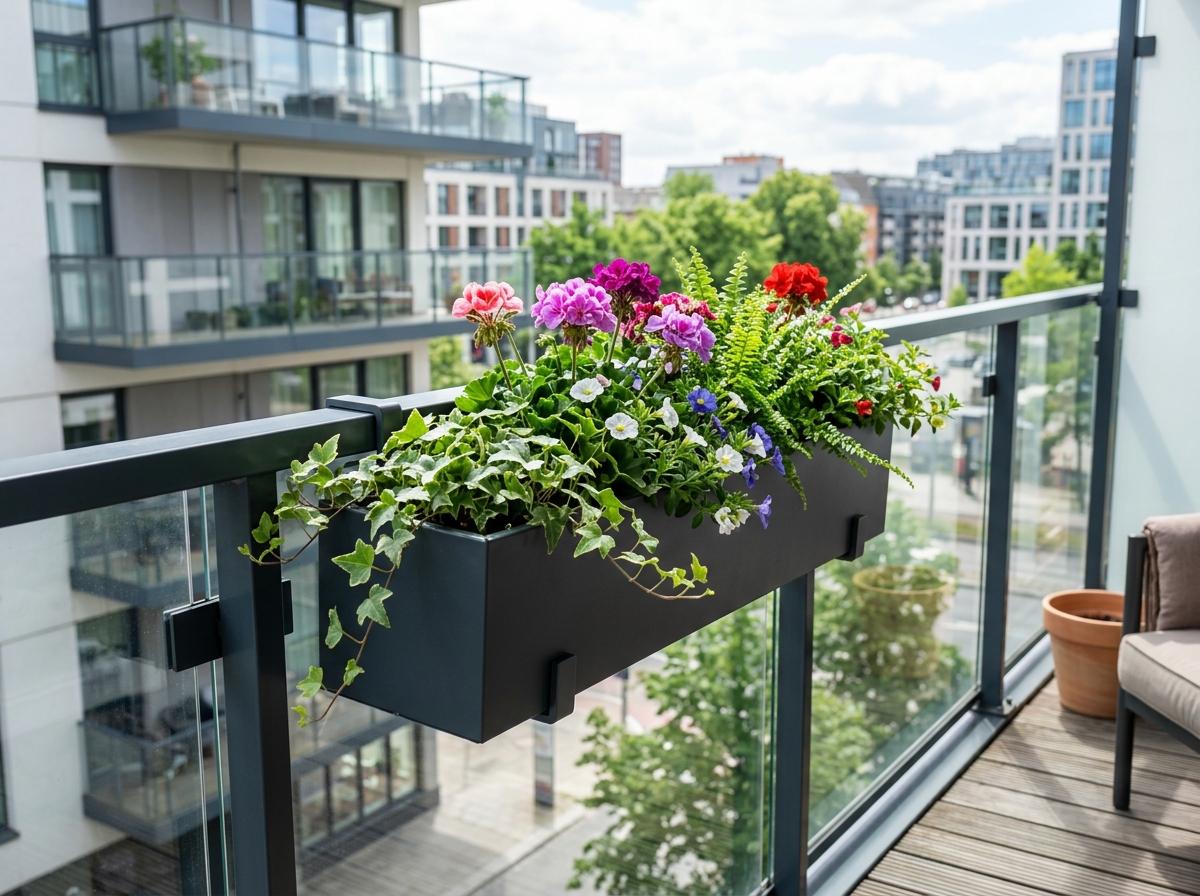
- Railing Mounts: These are the superstars of small spaces. They sit directly on your balcony rail, keeping the floor clear for chairs or a small table.
- Vertical Gardens: If you have a bare wall, vertical planters allow you to stack greenery. This is perfect for herbs and trailing vines.
- Hanging Baskets: These add height and visual interest. However, we must remember that hanging baskets dry out faster than floor pots because they are exposed to wind on all sides.
- Floor Troughs: These long, rectangular boxes are great for creating “hedges” of plants to provide privacy from neighbors.
Space-Saving Railing Balcony Planter Box Options
For many of us, the railing is the only place to grow. Narrow designs are essential here. You will generally find two styles: “saddle” planters that straddle the railing and bracket-based systems that hang off the side.
When we use railing planters, safety is our top priority. We always recommend choosing models with secure fastening systems to prevent them from falling during high winds. Some top-rated railing models feature adjustable brackets that fit different rail widths, ranging from 1 inch to 4 inches. These are incredibly versatile for apartment dwellers who may move between rentals with different balcony styles.
Self-Watering Balcony Planter Box for Busy Gardeners
Let’s be honest: we don’t always remember to water our plants, especially during a heatwave. This is where a self-watering balcony planter box becomes a lifesaver. These systems use a reservoir at the bottom of the planter to provide a consistent moisture level to the roots.
Typical features include:
- Reservoir Systems: A tank that holds several gallons of water.
- Aeration Screens: These keep the soil above the water to prevent the roots from sitting in stagnant liquid.
- Water Indicators: A simple float that tells us when the reservoir is low.
Using these can reduce watering chores significantly. For example, a 30-inch self-watering planter might hold 1.7 gallons of water, which can keep plants hydrated for days or even weeks. If you are interested in sustainable gardening, you might also want to check out our guide on recycled-planters-for-houseplants to see how eco-friendly materials can work in your home.
Choosing the Right Material: Pros and Cons
The material of your balcony planter box affects more than just its looks. It influences how much the box weighs, how often you need to water, and how long the planter will last against the elements.
| Material | Pros | Cons |
|---|---|---|
| Plastic/Resin | Lightweight, affordable, retains moisture well. | Can become brittle in sun; less “natural” look. |
| Terracotta | Classic look, breathable (good for succulents). | Heavy, fragile, dries out very quickly. |
| Metal | Modern, durable, very sturdy. | Can overheat in direct sun; might rust if not galvanized. |
| Wood (Cedar) | Natural rot resistance, beautiful, stays cool. | Requires occasional refinishing; heavier than plastic. |
| Fabric | Excellent drainage, lightweight, breathable. | Dries out fast; not as aesthetically “structured.” |
Choosing the right material is the first step toward a healthy garden. For more details on choosing the best containers, see our article on best-pots-for-indoor-plants.
Budget-Friendly and Lightweight Materials
If we are gardening on a budget or need to keep the weight down for structural reasons, plastic and resin are our best friends. You can easily find functional and stylish balcony planters for under $50. Some basic models start as low as $19.99, while even sophisticated self-watering railing options often sit around the $30 to $50 mark.
Fabric grow bags are another fantastic budget option. They are incredibly light and provide excellent aeration for the roots, though they do require more frequent watering because the material is porous.
Premium and Natural Materials
For a more permanent or high-end look, we often turn to cedar or galvanized steel. Cedar is a favorite because it naturally resists rot and insects. It also has a wonderful earthy scent and complements almost any plant.
Terracotta is a timeless choice, but we must be careful. It is heavy and can crack in freezing temperatures. If you live in a cold climate, we recommend moving terracotta indoors during the winter or choosing “frost-resistant” ceramic alternatives. For more inspiration on how to style these natural materials, take a look at these Balcony Planter Boxes – Pinterest ideas.
Safety and Maintenance: Drainage, Weight, and Wind
Gardening several stories up comes with unique responsibilities. We aren’t just worried about the plants; we have to think about the people below us and the balcony itself.
Preventing Root Rot and Ensuring Drainage
The number one killer of container plants is root rot caused by poor drainage. Most outdoor plants need a way for excess water to escape. If your balcony planter box doesn’t have drainage holes, you can often drill them yourself, though some materials like ceramic carry a risk of breaking.
To manage runoff—especially important if you have neighbors below—we suggest:
- Using Saucers: To catch excess water.
- Landscape Fabric: Placing this at the bottom of the box prevents soil from washing out and clogging the drainage holes.
- Perlite Mix: Adding perlite to your soil mix improves aeration and drainage while keeping the overall weight of the box down.
Proper drainage is especially vital when you are repotting-air-purifying-plants, as many of these species are sensitive to “wet feet.”
Calculating Balcony Weight Capacity
This is the most critical safety step. Saturated potting mix is heavy—weighing approximately 12.5 lb per gallon. When you add the weight of the water (8.34 lb per gallon) and the planter itself, the numbers add up fast.
A standard 30-inch planter box filled with wet soil can weigh between 70 and 80 lbs. A larger, deeper box can easily exceed 200 lbs. If you aren’t sure about your balcony’s load limit, a good rule of thumb is to keep any single planter under 75–100 lb. To stay safe:
- Place planters near structural edges: Balconies are strongest near the building wall or over support beams.
- Use lightweight fillers: Use perlite or vermiculite to lighten the soil.
- Rental-friendly pads: Use rubber feet or furniture pads under your boxes to prevent deck staining and allow for airflow.
DIY Projects for a Custom Look
Sometimes, the perfect balcony planter box isn’t in a store—it’s in your workshop. Building your own allows you to customize the dimensions to fit your specific railing or corner perfectly.
Building a Modern Privacy Screen Planter
If your balcony feels a bit too exposed, a “tall back” planter is a brilliant solution. This design features a standard box base but includes a tall trellis or slatted back panel. This allows you to grow climbing plants like jasmine or clematis, creating a living wall that provides privacy and blocks the wind.
For the best results, we recommend using cedar fence pickets. They are affordable, naturally weather-resistant, and provide a high-end look without the high-end price tag.
Simple Modern Box Construction
For a sleek, contemporary look, we like the “stacked-board” design. By using mitered corners (cutting the ends at 45-degree angles), we can hide the inner structural frame. This makes the box look like a solid piece of furniture.
Key tips for DIY construction:
- Use Pocket-Hole Joinery: This is a fast and easy way to create strong, hidden joints.
- Two-Tone Finishing: Consider staining the frame a dark color and leaving the cedar panels light for a “retro-modern” contrast.
- Pre-drill Everything: To prevent the wood from splitting, always pre-drill your screw holes, especially near the edges.
Best Plants and Styling Tips for Your Balcony
Once you have your balcony planter box ready, it’s time for the fun part: the plants! Choosing the right ones depends entirely on your balcony’s microclimate.
- Sun Exposure: Fruiting crops like dwarf tomatoes and peppers need 6+ hours of direct sun. Herbs like basil and chives are more flexible but still prefer 4-6 hours.
- Wind Tolerance: High-rise balconies can be incredibly windy. Look for low-profile plants or sturdy “architectural” plants like horsetail reed.
- Dwarf Varieties: Modern breeding has given us “patio” versions of almost everything. Look for “determinate” tomatoes or “bush” beans that won’t outgrow their containers.
- Trailing Vines: To soften the edges of your boxes, plant trailing varieties like sweet potato vine or creeping jenny.
When styling, we suggest varying the heights. Use tall plants in the back (like lemongrass or fountain grass) and shorter “fillers” and “spillers” in the front. This creates a professional, layered look that makes your balcony feel like a real garden.
Frequently Asked Questions about Balcony Gardening
How do I stop my balcony planters from blowing over?
Wind is a major factor for balcony gardeners. To keep your planters secure, choose heavy materials for floor pots (like concrete) or use heavy rocks at the bottom of the pot before adding soil. For railing planters, always use adjustable brackets and consider adding extra zip ties or industrial-strength Velcro for added security.
What are the best plants for a windy high-rise balcony?
On a windy high-rise, plants with thin, flexible stems or small, waxy leaves tend to do best. Succulents, ornamental grasses, and low-growing herbs like thyme are very resilient. Avoid plants with large, floppy leaves (like some tropicals) as the wind can easily tear them.
Do I need a permit for heavy planter boxes on my balcony?
Generally, you don’t need a permit for standard planters. However, if you are planning an extensive garden with very large, heavy troughs or a built-in irrigation system, you should check your building’s bylaws or lease agreement. Most balconies are designed to hold a significant amount of weight, but it’s always better to be safe than sorry!
Conclusion
Creating a garden on a balcony is one of the most rewarding ways to improve your living space. By choosing the right balcony planter box, paying attention to weight and drainage, and selecting plants that love your specific sun and wind conditions, you can build a true urban oasis.
We believe that everyone deserves a little bit of nature, no matter how high up they live. For more tips on maintaining your green space and choosing the right accessories, explore our guide on best-pots-for-indoor-plants-2 or visit us at https://financedora.com/ to start your gardening journey today. Happy planting!
