
Why Most Beginners Accidentally Kill Their Succulents (And How to Stop)
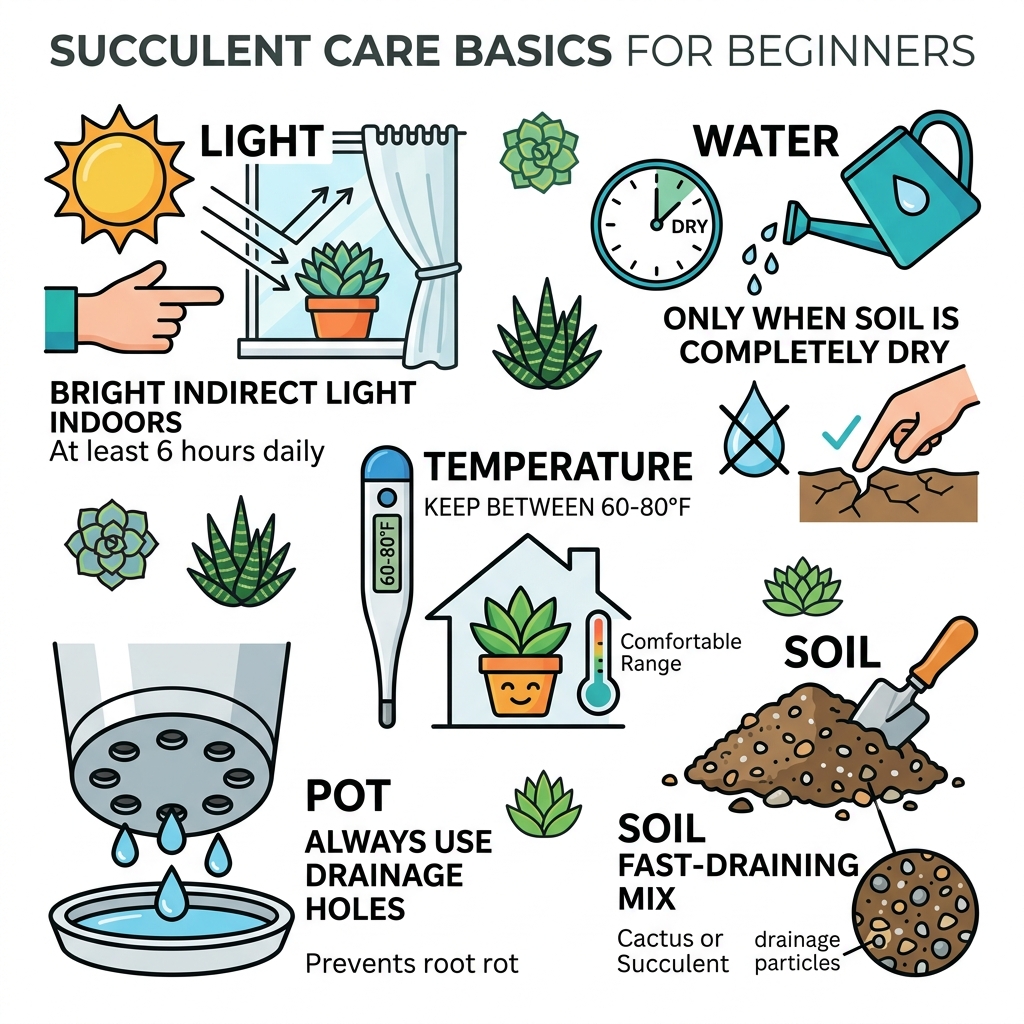
Succulent care for beginners comes down to a few simple rules: bright light, infrequent watering, fast-draining soil, and a pot with drainage holes.
Quick-start checklist:
- Light: Place in bright indirect light for at least 6 hours daily
- Water: Only when the top inch of soil is completely dry
- Soil: Use a cactus or succulent-specific mix
- Pot: Always use a container with drainage holes
- Temperature: Keep between 60-80°F indoors
Succulents have a reputation for being nearly indestructible. And honestly? That reputation is mostly earned.
These plants evolved in some of the harshest, driest places on Earth. They store water directly in their thick, fleshy leaves and stems — which means they’re designed to survive a little neglect.
There are over 10,000 types of succulents, in shades of green, purple, red, and even blue. They’re compact, striking, and genuinely low-maintenance — perfect for a busy household.
But here’s the catch: most beginners don’t kill succulents through neglect. They kill them through kindness. Overwatering is by far the most common mistake. Give a succulent too much water, too often, and the roots rot before you even notice something is wrong.
The good news? Once you understand how succulents think — drought-adapted, sun-loving, drainage-dependent — keeping them alive becomes almost effortless.
Why Succulent Care for Beginners is Easier Than You Think
We often hear from people who claim they have a “black thumb” when it comes to greenery. If that sounds like you, succulents are your new best friends. Their arid origins mean they are biologically programmed to store moisture for long periods. Unlike a tropical fern that might wilt if you miss a single day of misting, a succulent is perfectly happy if you forget about it for a week or two.
With over 10,000 types available, there is a succulent for every aesthetic. Some look like tiny rosebuds, others like stacked stones or trailing pearls. Beyond their beauty, they are functional roommates. You might wonder, Can Succulents Purify Air? NASA’s Surprising Findings suggest that many indoor plants, including certain succulents like the Snake Plant, can help filter common household toxins, a concept popularized by the NASA Clean Air Study.
For those just starting, our Beginner Indoor Plant Care Guide emphasizes that success isn’t about constant attention; it’s about setting up the right environment from day one.
5 Easiest Varieties for Succulent Care for Beginners
If you are standing in a garden center feeling overwhelmed by the rows of fleshy leaves, we recommend starting with these five heavy hitters. They are among the most Low-Maintenance Indoor Plants you can find:
- Jade Plant (Crassula ovata): These look like miniature trees with thick, woody stems and oval leaves. They are incredibly long-lived and can eventually reach a foot or more indoors. Be careful, though—as they grow, they can become top-heavy and might need a sturdy ceramic pot to stay upright.
- Aloe Vera: Famous for the soothing sap inside its leaves, Aloe is a powerhouse. It produces “pups” (offsets) regularly, meaning you’ll soon have a whole colony of plants to share with friends.
- Zebra Plant (Haworthia fasciata): This is a small, striking plant with white horizontal stripes. It typically only grows about 5 inches tall, making it perfect for desks. Unlike many other succulents, the Zebra plant can handle slightly lower light levels.
- Panda Plant (Kalanchoe tomentosa): If you want something unique, the Panda plant has fuzzy, silvery leaves with chocolate-brown spots on the edges. It can eventually reach 2 feet tall, adding a soft texture to your collection.
- Snake Plant (Sansevieria): While technically a succulent, it’s often categorized on its own because it is virtually unkillable. It handles low light better than almost any other variety and can go weeks without a drink.
Choosing Healthy Succulents
Before you even get your plant home, the first step in succulent care for beginners is picking a winner. When shopping, look for plants with firm, plump leaves. If the leaves feel mushy or look translucent/yellow, the plant has likely already been overwatered at the store.
Check for pests like tiny white cottony spots (mealybugs) or brown scales. If possible, gently check the base of the plant; the “crown” where the leaves meet the soil should be firm, not dark or soft. For more tips on what to look for at the nursery, check out our Beginner Indoor Plant Care Guide.
The Golden Rules: Light, Water, and the “Soak and Dry” Method
Light is the fuel that keeps your succulents vibrant. In their natural habitats, these plants soak up the sun all day. Indoors, they need about six hours of sunlight each day to maintain their compact shape and bright colors.
A south-facing windowsill is usually the “prime real estate” for succulents. If your plant starts to stretch out, with large gaps between the leaves, it’s telling you it’s hungry for more light. We recommend rotating your pots a quarter turn every week or two. This ensures all sides of the plant get equal exposure, preventing it from leaning awkwardly toward the glass.

When it comes to hydration, we have to unlearn everything we know about “typical” houseplants. Understanding the Watering Frequency for Houseplants is vital, but for succulents, less is almost always more. If you’re ready to dive deeper into greenery, you can Explore our full guide to indoor plant mastery.
Mastering the “Soak and Dry” Method for Succulent Care for Beginners
The “Soak and Dry” method is exactly what it sounds like, and it is the secret to succulent success. Instead of giving your plant a tiny sip of water every day (which only dampens the top of the soil and leads to shallow roots), you want to mimic a desert rainstorm.
- Check the soil: Stick your finger or a chopstick two inches into the soil. If it feels even slightly damp, walk away.
- Soak it: If the soil is bone-dry, pour water directly onto the soil line until it runs out of the drainage holes at the bottom.
- Drain it: Never let your succulent sit in a saucer of standing water. After 20 minutes, dump out any excess water from the tray.
- Wait: Don’t water again until the soil has completely dried out. This might take 7 days in the summer or 3 weeks in the winter.
Your Indoor Plant Care Schedule should fluctuate with the seasons. Succulents grow actively in the spring and summer, requiring more frequent drinks. In the fall and winter, they go into a dormant “rest” phase and need very little water—sometimes only once a month.
The Perfect Environment: Soil, Pots, and Temperature
In succulent care for beginners, the container is just as important as the plant. We strongly recommend terra cotta pots. Because terra cotta is porous, it allows the soil to breathe and helps moisture evaporate more quickly, which provides a safety net against overwatering.
Whatever material you choose, a drainage hole is non-negotiable. Without one, water pools at the bottom, creating a “swamp” that will rot the roots in days. If you have a beautiful decorative pot without a hole, use the “pot-in-pot” method: keep the succulent in its plastic nursery liner and just set that inside the pretty container.
As for the “dirt,” standard garden soil or moisture-retaining potting mixes are the enemy. You need a gritty, fast-draining mix. You can buy pre-made “Cactus and Succulent Mix,” or you can try some Homemade Plant Soil Mixes by mixing 50% regular potting soil with 50% pumice, perlite, or coarse sand. For more on choosing the right vessel, see our guide on the Best Pots for Indoor Plants.
| Feature | Indoor Succulents | Outdoor Succulents |
|---|---|---|
| Light | Bright indirect (South window) | Full sun to partial shade |
| Watering | Every 2-3 weeks (Soak and Dry) | Weekly (check soil if raining) |
| Hardiness | Tropical types (Jade, Aloe) | Cold-hardy (Sempervivum, Sedum) |
| Pests | Mealybugs, Spider mites | Aphids, Slugs, Snails |
Ideal Temperature and Humidity
Succulents are quite comfortable in the same temperatures we are. They thrive in a range of 60-80°F. While they can handle higher heat, they aren’t fans of frost. If you keep them on a windowsill, make sure they aren’t touching a freezing pane of glass in the winter, and keep them away from drafty air conditioning vents in the summer.
Unlike many tropical plants, succulents don’t need high humidity. In fact, they prefer the dry air found in most homes. If you live in a very humid climate, you’ll need to water even less frequently because the soil will take longer to dry. For general houseplant climate advice, check our Temperature Tips for Houseplants and Humidity Tips for Indoor Plants.
Troubleshooting: How to Fix Stretching, Pests, and Rot
Even with the best succulent care for beginners, problems can pop up. The key is to catch them early.
Etiolation (Stretching): If your once-compact rosette now looks like a tall, skinny vine with wide gaps between leaves, it’s “etiolated.” This happens when the plant is literally stretching toward the nearest light source. While you can’t “shrink” the plant back, you can move it to a brighter spot and prune the top to start over.
Root Rot: This is the #1 killer. If the base of your plant turns black or mushy, or if leaves fall off at the slightest touch, the roots are likely rotting. You can try to How to Revive Dying Indoor Plants by removing the plant from the soil, cutting away the black parts, letting it dry for a few days, and then replanting in fresh, dry soil.
Mealybugs: These are tiny, white, cotton-like insects that hide in the nooks and crannies of the leaves. They suck the sap out of the plant. If you see them, don’t panic! Dip a cotton swab in 70% isopropyl (rubbing) alcohol and dab them directly.
If your plant looks a bit “off,” you can Explore our full guide to indoor plant mastery for more visual cues.
Troubleshooting Common Issues in Succulent Care for Beginners
We’ve all been there: you look at your plant and think, “Why is it yellow?” Here is a quick guide to reading your plant’s sign language:
- Yellow, translucent, mushy leaves: This is a classic sign of overwatering. Stop watering immediately and check the drainage.
- Wrinkled, shriveled leaves: Your plant is thirsty! Give it a good soak.
- Brown, crispy spots: This is usually sunburn. While succulents love light, a sudden move from a dark corner to direct afternoon sun can scorch the leaves. Move it back slightly and acclimate it gradually.
- White, fuzzy spots: These are the mealybugs we mentioned. Isolate the plant so they don’t spread to your other green friends.
For a deeper dive into these bugs and how to banish them, see our guide on Pest Control for Indoor Plants and our list of Common Indoor Plant Problems.
Propagation: Growing New Plants from Scratch
One of the most magical parts of succulent care for beginners is propagation. You can literally grow a whole new plant from a single leaf that fell off.
- The Leaf Method: Gently twist a leaf off the stem. It must be a “clean pull,” meaning no part of the leaf is left on the stem.
- Callusing: Set the leaf on a dry paper towel in a spot with indirect light. Wait 2-5 days until the broken end dries out and forms a “callus” (like a scab). If you skip this, the leaf will just soak up water and rot.
- Wait for Roots: Place the callused leaf on top of some succulent soil. Don’t bury it! Within a few weeks, tiny pink roots and a miniature baby plant will emerge from the end.
- Mist: Once roots appear, you can lightly mist them every few days. Once the mother leaf shrivels up and falls off, you have a brand-new independent succulent!
You can also propagate via “offsets” or “pups”—the tiny baby plants that grow at the base of plants like Aloe or Echeveria. Simply snip them off with a clean knife, let them callus, and pot them up. Learning How to Prune Indoor Plants correctly will help you keep the mother plant healthy while you expand your collection.
Maintenance and Fertilizing
Succulents don’t need much “grooming,” but a little goes a long way.
- Dusting: Because their leaves are often thick or fuzzy, they can collect dust, which blocks sunlight. Every month or so, gently wipe smooth leaves with a damp cloth or use a soft paintbrush to whisk dust off prickly or fuzzy varieties.
- Removing Dead Leaves: It is perfectly normal for the bottom leaves of a succulent to wither and die as the plant grows. Simply pull these dry, crispy leaves away to keep the plant looking tidy and prevent pests from hiding underneath.
When it comes to food, succulents are light eaters. They’ve adapted to nutrient-poor soils. You only need to fertilize during the active growing season (spring and summer). Use a balanced, water-soluble fertilizer diluted to half-strength about once a month. This is a great tip for Plant Care for Busy People because it’s a “set it and forget it” task for the rest of the year. For specific product recommendations, check out the Best Fertilizers for Indoor Plants.
Frequently Asked Questions about Succulents
Do succulents need fertilizer?
Yes, but they aren’t greedy. We recommend feeding them only during the spring and summer months when they are actively putting out new growth. Always use a high-quality fertilizer at half the recommended strength to avoid burning the sensitive roots. You can find more details in our guide to the Best Fertilizers for Indoor Plants.
Can succulents grow outdoors?
Absolutely! Many people move their indoor succulents to a porch or patio during the summer. Just wait until nighttime temperatures are consistently above 60°F. If you want year-round outdoor plants, look for “hardy” varieties like Sempervivum (Hens and Chicks), which can actually survive freezing temperatures as low as -30°F!
Are succulents the same as cacti?
This is a classic “all squares are rectangles, but not all rectangles are squares” situation. All cacti are succulents because they store water, but not all succulents are cacti. The main difference? Cacti have “areoles”—small, round, cushion-like bumps from which spines, hair, or flowers grow. Most other succulents have fleshy leaves, whereas cacti generally do not. For more plant distinctions, see our Beginner Indoor Plant Care Guide.
Conclusion
At Financedora, we believe that bringing nature into your home shouldn’t be a source of stress. Succulent care for beginners is a rewarding journey that teaches us the value of patience and the beauty of resilience. These plants are more than just stylish decor; they are living reminders that with the right foundation—good light, the right “shoes” (pots), and a bit of space—anyone can thrive.
Whether you are starting with a single Jade plant on your desk or building a massive windowsill garden, remember the golden rule: when in doubt, don’t water!
Ready to expand your green thumb? Check out our comprehensive Beginner Indoor Plant Care Guide or Explore our full guide to indoor plant mastery to find your next leafy companion. Happy growing!
