
The Easiest Houseplant You’ll Ever Own: Snake Plant Low Maintenance Care
Snake plant low maintenance care is one of the simplest things in indoor gardening. These plants survive with minimal watering, tolerate low light, and keep growing even when you forget about them for weeks.
Here’s a quick snapshot of what makes snake plants so easy to keep alive:
| Care Factor | What You Need to Do |
|---|---|
| Watering | Every 2 weeks in summer, once a month in winter |
| Light | Indirect light preferred; tolerates low light |
| Soil | Well-draining cactus or succulent mix |
| Fertilizing | Twice a year (spring and mid-summer) |
| Repotting | Every 3-5 years |
| Temperature | 65-90°F (18-32°C) |
Snake plants (Dracaena trifasciata, formerly Sansevieria) are native to West Africa. They evolved in dry, harsh conditions — which is exactly why they thrive on neglect indoors.
Their tall, sword-like leaves add a bold architectural look to any room. And unlike most houseplants, they actually produce oxygen at night, making them a smart choice for bedrooms and living spaces.
The bottom line: If you’ve killed every plant you’ve ever owned, the snake plant is your second chance.

Why the Snake Plant is the Ultimate Low-Maintenance Choice
When we talk about the “hall of fame” for easy greenery, the snake plant sits comfortably at the top. We often joke that it’s the “quiet achiever” of the botanical world. It doesn’t demand your attention with dramatic wilting or constant feeding; instead, it stands like a green sentry, watching over your home with effortless elegance.
The secret to this resilience lies in its origins. Hailing from the tropical regions of West Africa, these plants are built to endure. They are essentially succulents, meaning they store water in their thick, waxy leaves and sturdy rhizomes. This biological “canteen” allows them to survive for weeks—and in some legendary cases, months—without a single drop of water. In fact, one research anecdote notes a snake plant surviving for nearly three years with only “once-in-a-blue-moon” watering!
Beyond their tough-as-nails nature, we love them for their health benefits. Most plants take in CO2 and release oxygen during the day, but the snake plant is a bit of a rebel. It performs Crassulacean Acid Metabolism (CAM), meaning it opens its pores at night to take in CO2 and release oxygen while you sleep. This makes them one of the best low-water-air-purifying-plants/ for your bedroom.
Furthermore, studies have shown that having greenery in your workspace can significantly boost mental health and productivity. Because snake plant low maintenance needs are so minimal, they offer all the psychological perks of nature without the stress of a demanding care schedule. They are truly the easy-indoor-plants-for-beginners/ that keep on giving.
Essential Snake Plant Low Maintenance Care Strategies
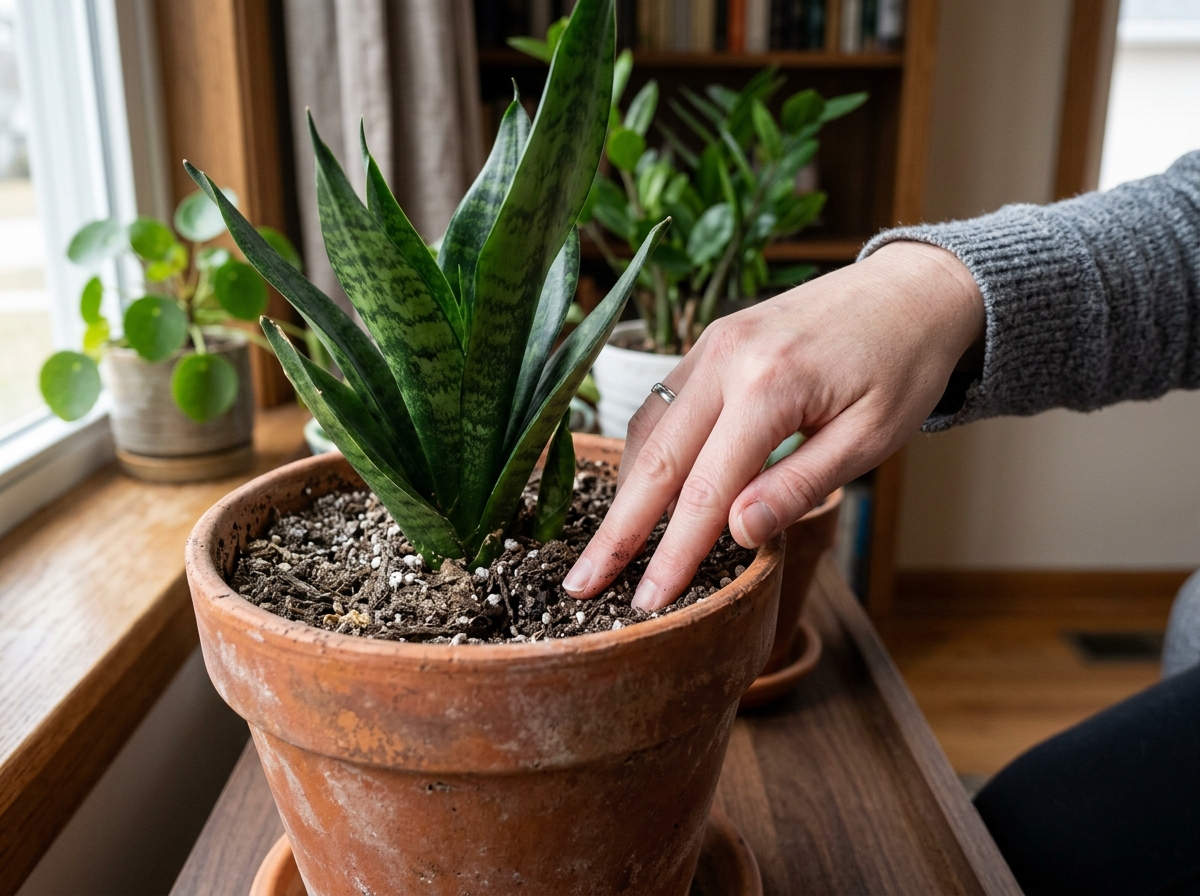
To truly master snake plant low maintenance care, we need to embrace the philosophy of “less is more.” If you are the type of person who loves to fuss over your plants every morning, you might actually be the snake plant’s worst enemy! These plants don’t just tolerate neglect; they practically demand it.
The most important thing to remember is that you cannot treat a snake plant like a tropical fern. It doesn’t want a humid jungle environment. It wants a dry, stable home. When setting up your plant, the container and soil are your first line of defense against the most common plant-killer: overwatering.
We highly recommend using terracotta pots. Why? Because terracotta is porous. it “breathes” and helps wick away excess moisture from the soil. Always ensure your pot has drainage holes. Without them, water settles at the bottom, creating a swampy environment that leads to root rot. For soil, a standard “all-purpose” mix is often too heavy. We suggest a 1:1 ratio of potting soil and cactus/succulent mix, or simply a high-quality pre-mixed cactus soil with added perlite to ensure air pockets remain around the roots.
Here is a quick reference for your seasonal approach:
| Season | Watering Frequency | Fertilizing |
|---|---|---|
| Spring | Every 2 weeks (when top 2″ are dry) | Once (half-strength 10-10-10) |
| Summer | Every 2 weeks | Once (mid-summer) |
| Autumn | Every 3-4 weeks | None |
| Winter | Once a month (or less) | None |
For a deeper dive into general plant health, check out our beginner-indoor-plant-care-guide/.
Optimal Light and Temperature for Snake Plant Low Maintenance Success
One of the greatest myths is that snake plants need to be in a dark corner. While it’s true they are incredibly adaptable and can “tolerate” low light, they won’t exactly thrive there. In very low light, their growth slows to a crawl (they are already slow growers, gaining only a few inches a year), and variegated varieties might lose their bright yellow or silver coloring, turning a solid, dull green.
For the best results, we recommend bright, indirect sunlight. Think of a spot near a south- or west-facing window, but perhaps shaded by a sheer curtain. They can handle a few hours of direct morning sun, but harsh, intense afternoon sun can actually scorch those beautiful leaves, leaving unsightly brown “burn” marks.
Temperature-wise, these plants are quite comfortable in the same climate we are. They prefer a range between 65°F and 90°F. The most important rule here is to avoid the cold. Snake plants are not frost-tolerant. If the temperature drops below 50°F, the plant can suffer cellular damage. Keep them away from drafty windows in the winter and away from the direct blast of air conditioning vents in the summer.
Watering and Fertilizing Your Snake Plant Low Maintenance Routine
If we could give you only one piece of advice, it would be this: When in doubt, don’t water.
The snake plant’s thick leaves are essentially water storage tanks. We recommend the “finger test.” Stick your finger two inches into the soil; if it feels even slightly damp, walk away. Only water when the soil is bone-dry. In the winter, the plant enters a dormant state where it barely uses any water at all. During this time, you might only water once every 4 to 6 weeks.
Overwatering is the fastest way to kill this “indestructible” plant. If the base of the leaves starts feeling mushy or smells slightly fermented, you’ve gone too far. This is why having a solid plan for plant-care-for-busy-people/ is so helpful—it reminds us that sometimes the best care is no care at all.
As for food, snake plants are light eaters. They don’t need a heavy chemical diet. A balanced, water-soluble fertilizer (like a 10-10-10 NPK ratio) diluted to half-strength is plenty. Feed them once in the spring and once in the mid-summer. Skip the fertilizer entirely during the fall and winter months.
Popular Varieties and Aesthetic Maintenance
The world of snake plants is surprisingly diverse. While the classic tall, yellow-edged Laurentii is the most famous, there are over 70 species to choose from. Selecting the right variety can help you style your home without adding extra work to your plate.
- Laurentii: The gold standard. It features tall, upright green leaves with vibrant yellow margins. It can grow up to 4 feet tall, making it a perfect floor plant.
- Hahnii (Bird’s Nest): If you’re looking for something for a desk or bookshelf, this is it. It stays small (about 6 inches) and grows in a rose-like cluster.
- Whale Fin (Dracaena masoniana): This variety produces a single, massive, wide leaf that looks like—you guessed it—a whale fin. It’s a sculptural masterpiece for minimalist decor.
- Cylindrica: These have round, spear-like leaves that grow upwards. They are often braided together for a unique, modern look.
- Bantel’s Sensation: A more elegant variety with thinner leaves and white vertical stripes. It’s a bit rarer but adds a sophisticated touch to any room.
Maintaining the “look” of your snake plant low maintenance superstar is easy. Because the leaves are wide and upright, they tend to collect dust. A layer of dust doesn’t just look bad; it actually blocks the plant’s pores (stomata), making it harder for it to “breathe” and photosynthesize. Every few weeks, we suggest wiping the leaves with a damp microfiber cloth. It keeps them shiny and healthy.
If a leaf becomes damaged, yellowed, or simply grows too tall for your liking, you can prune it. Use a sharp, clean knife or shears and cut the leaf off at the soil line. Don’t worry—this won’t hurt the plant, and it can actually encourage new growth from the base. For more ideas on styling, take a look at our guide on low-maintenance-indoor-plants/.
Propagation and Repotting for Long-Term Health
One of the most rewarding parts of owning a snake plant is that they are the gift that keeps on giving. They are incredibly easy to propagate, meaning you can turn one plant into a whole fleet of green companions over time.
The Division Method is the easiest and most reliable way to propagate. As the plant grows, it sends out “pups” or offshoots from its main root system (the rhizome). When you notice the pot getting crowded, simply tip the plant out of its pot and gently pull or cut the pups away, ensuring each one has its own set of roots. Replant them in fresh soil, and you have a new plant!
Leaf Cuttings are another option, though they take longer (often 1-4 months to see roots). You can cut a healthy leaf into 3-inch sections and place them in water or moist soil. Just remember which end is “down”—if you plant them upside down, they won’t grow! Variegated plants (like Laurentii) will often lose their yellow edges and revert to solid green when grown from leaf cuttings.
When it comes to repotting, snake plants actually enjoy being a little “snug” in their pots. We recommend repotting only every 3 to 5 years. You’ll know it’s time when you see roots peeking out of the drainage holes or if the roots are so strong they actually start to crack a plastic nursery pot! When you do repot, only go up one size (for example, moving from a 6-inch pot to an 8-inch pot). This prevents the “too much soil” problem, where excess dirt holds onto water and causes rot.
For more step-by-step help, our beginner-indoor-plant-care-guide-2/ covers these techniques in detail.
Troubleshooting Common Problems and Safety Concerns
Even the toughest plants run into trouble occasionally. The good news? Most snake plant problems are reversible if caught early.
- Yellow or Mushy Leaves: This is almost always a sign of overwatering or poor drainage. Stop watering immediately, allow the soil to dry out completely, and if the problem persists, check the roots. If they are black and slimy, you’ll need to trim away the rot and repot in fresh, dry soil.
- Drooping or Leaning Leaves: This can happen if the plant is in a spot that is too dark, causing it to “stretch” toward the light. It can also be a sign of root rot. Move it to a brighter location and check the soil moisture.
- Wrinkled Leaves: Believe it or not, this is the plant’s way of saying it’s thirsty! If the leaves look shriveled rather than plump, it’s time for a deep soak.
- Pests: While rare, you might occasionally see mealybugs (white cottony spots) or spider mites. A quick wipe with a cloth dipped in rubbing alcohol or a spray of neem oil usually clears these right up.
A Note on Safety: We have to mention that snake plants contain saponins. This is a natural defense mechanism for the plant, but it makes them mildly toxic to cats, dogs, and small children if ingested. It can cause nausea, vomiting, or diarrhea. If you have curious pets or toddlers, we suggest placing your snake plant on a high shelf or a sturdy plant stand where it’s out of reach.
Frequently Asked Questions about Snake Plants
How long do snake plants typically live?
With even the most basic snake plant low maintenance care, these plants are incredibly long-lived. On average, they live between 5 to 10 years in a home environment. However, many enthusiasts have kept them alive for 25 years or more! Because they are so easy to propagate, you can essentially keep the “lineage” of your original plant going for decades.
Can snake plants survive in windowless rooms?
They can “survive,” but they won’t “thrive.” In a windowless room, a snake plant will eventually stop growing and may lose its vibrant color. If you have an office with no windows but strong fluorescent lights that stay on for 8-10 hours a day, the plant can do quite well. However, if the room is truly dark, we recommend rotating the plant—keep it in the dark room for two weeks, then move it to a sunny window for two weeks to “recharge.”
Why are my snake plant leaves curling or wrinkling?
Curling or wrinkling is usually a sign of underwatering or extreme thirst. The plant is using up its internal water reserves, causing the leaves to lose their structure. It can also be caused by a pest called thrips. Inspect the crevices of the leaves; if you see tiny black or silver streaks, you may have an infestation that needs treatment with insecticidal soap.
Conclusion
At Financedora, we believe that everyone should be able to enjoy the calming presence of nature, regardless of how busy their lifestyle is. Mastering snake plant low maintenance care is the perfect entry point into sustainable indoor gardening. By choosing a plant that thrives on neglect and follows its own slow-and-steady pace, you can create a beautiful, healthy home environment without the stress of complicated schedules.
Whether you are looking for a tall architectural statement for your living room or a tiny “Bird’s Nest” for your desk, the snake plant is a steadfast companion that will be with you for years to come.
Ready to expand your indoor jungle? Master the art of low-maintenance indoor plants with our other expert guides!
