
Why More Homeowners Are Hanging Baskets Inside
how to hang hanging baskets inside is simpler than most people think — and the payoff is huge.
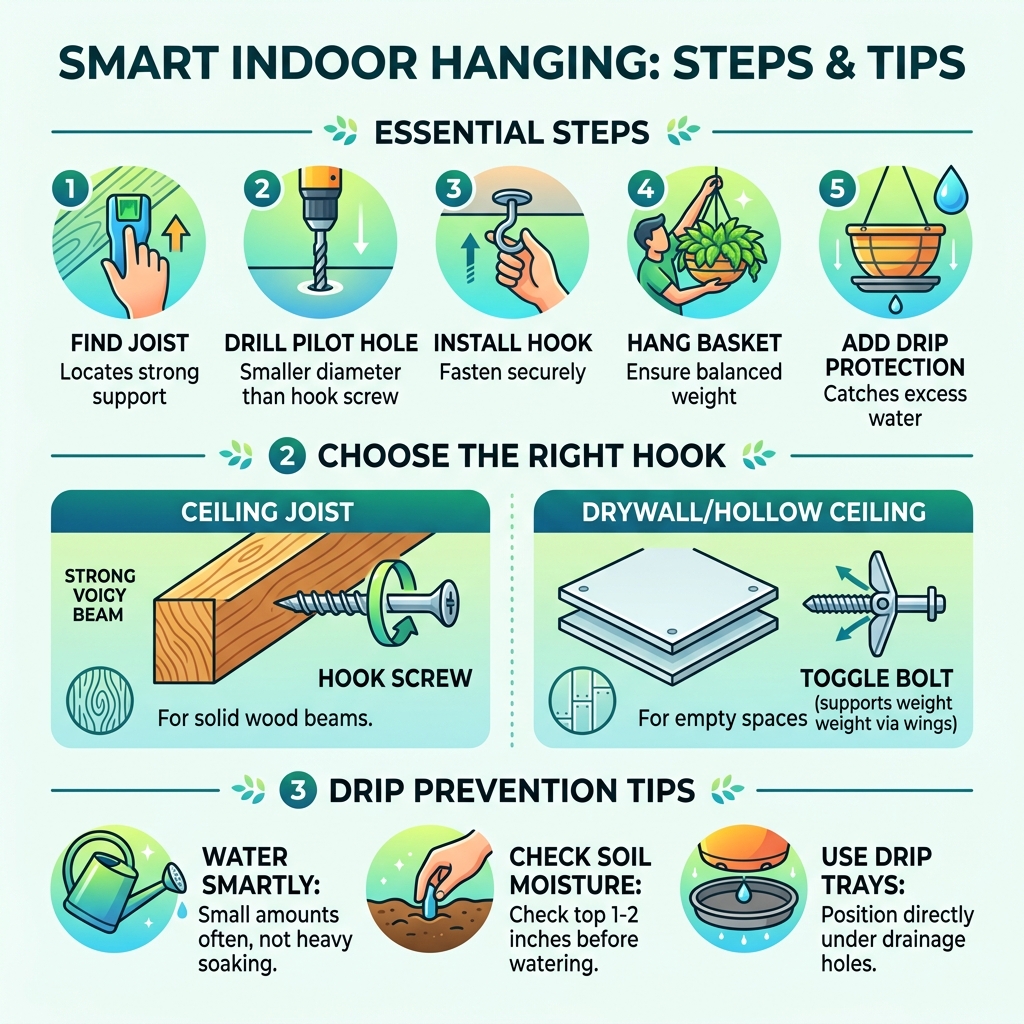
Here’s the quick version:
- Find your ceiling joist using a stud finder
- Drill a pilot hole slightly smaller than your hook
- Install the right hook — a hook screw for joists, a toggle bolt for drywall
- Hang your basket and add a drip tray to protect your floors
- Check soil every 2-3 days — indoor air is warmer and dries soil faster
That’s the core process. But doing it without making a mess takes a little more know-how.
Indoor hanging baskets do more than look good. They save surface space, keep plants out of reach of pets and children, and add a natural, calming element to any room. Biophilic design — the idea of bringing the outdoors in — has been growing in popularity for good reason. Greenery at eye level (or above it) transforms a flat, empty room into something that feels alive.
The challenge? Most guides skip the messy details — dripping water, wobbly hooks, and plants that die because they’re hanging in the wrong spot.
This guide covers all of it.
Essential Tools and Materials for Indoor Hanging
Before we start drilling holes into your beautiful ceiling, we need to make sure we have the right arsenal. Using the wrong hook is the fastest way to find your favorite fern shattered on the floor at 2 AM. Trust us, that is not the kind of “natural alarm clock” anyone wants.
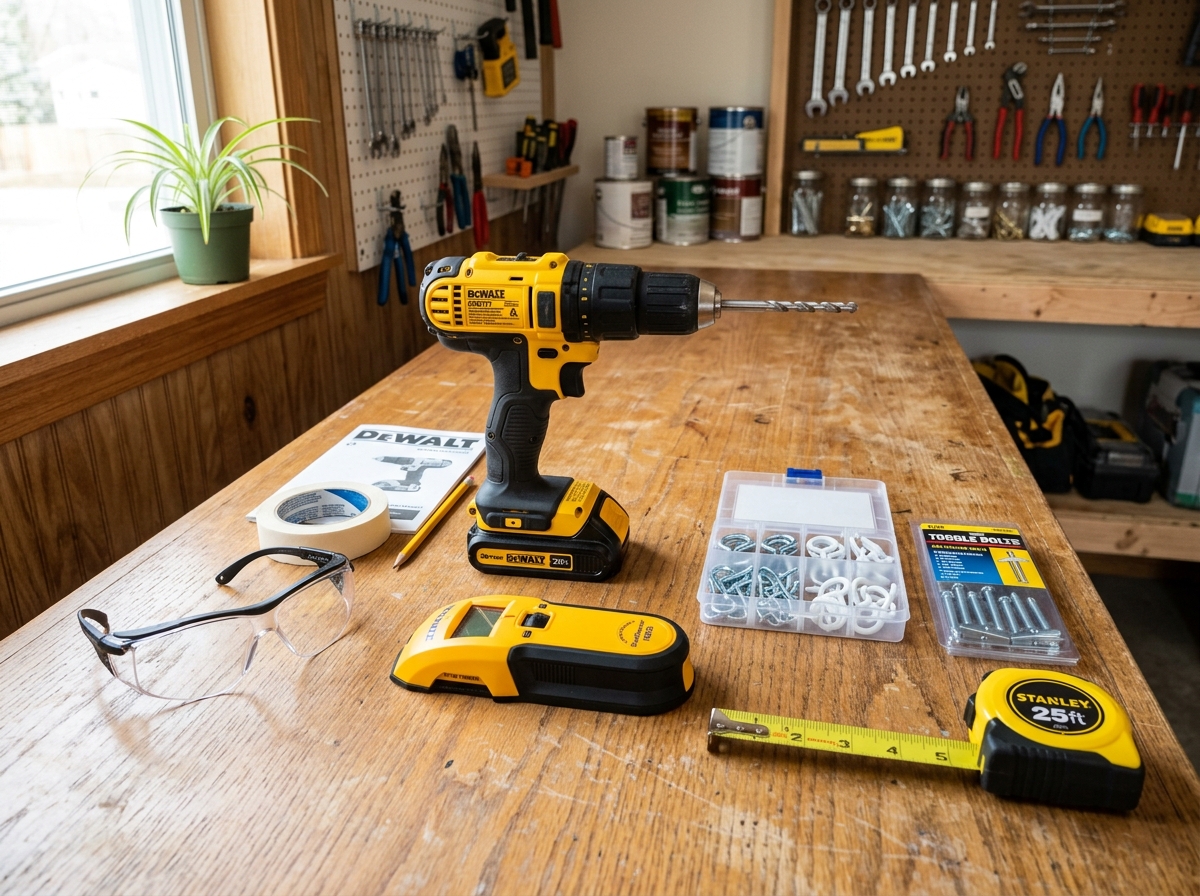
To get started, we recommend gathering these essentials:
- Stud Finder: This is non-negotiable if you want to hang a heavy basket. It helps you locate the solid wood joists behind the drywall.
- Power Drill and Drill Bits: You’ll need a bit slightly smaller than the shank of your screw hook for a pilot hole. According to industry standards, a 5/8-inch drill bit is often used for larger toggle bolts in drywall.
- Ceiling Hooks: These come in several varieties:
- Hook Screws: Best for solid wood joists.
- Toggle Bolts (Toggle Screws): Essential for hollow drywall where no stud is available.
- J-Hooks and S-Hooks: Great for hanging from exposed beams or existing rails.
- Measuring Tape: To ensure your plant isn’t hanging so low that you walk into it every morning.
- Step Ladder: Safety first! Don’t balance on a swivel office chair.
Hook Selection Guide
Choosing the right hardware depends entirely on what your ceiling is made of and how heavy your plant is. A 12-inch hanging basket can hold 3-4 plants and, once watered, can become surprisingly heavy.
| Hook Type | Best Ceiling Surface | Weight Capacity (Approx.) |
|---|---|---|
| Screw Hook | Wood Joist / Exposed Beam | 20–30 lbs |
| Toggle Bolt | Hollow Drywall | 10–15 lbs |
| J-Hook | Exposed Wood Beam | 25+ lbs |
| Tension Rod | Window Frame / Between Walls | 5–10 lbs |
Step-by-Step Guide: How to Hang Hanging Baskets Inside
Now that we have our tools, let’s get into the nitty-gritty of how to hang hanging baskets inside safely and securely.
Step 1: Weight and Measure
Before you even pick up the drill, weigh your plant. A dry plant is light; a freshly watered plant is a heavy-weight contender. Hanging plants can support up to 20-30 pounds when properly installed into a ceiling joist. If you are using a 14-inch basket, you might have 4-6 plants in there, plus soil and water. That adds up fast!
Step 2: Locate Your Support
Use your stud finder to locate a ceiling joist. Joists are the structural beams that hold up your ceiling. If you screw directly into the joist, your plant isn’t going anywhere. If you can’t find a joist exactly where you want the plant, you must use a toggle bolt.
Step 3: Drill the Pilot Hole
For a joist installation, drill a pilot hole that is slightly smaller than the screw hook. This prevents the wood from splitting and makes it easier to twist the hook in. If you are installing into drywall, you will need a hole large enough for the “wings” of the toggle bolt to fit through (this is where that 5/8-inch bit often comes in).
For more detailed DIY inspiration, check out our guide on indoor-hanging-plant-diy/ or explore how to integrate these into a vertical-garden-diy-indoor/.
Step 4: Install the Hook
- For Joists: Simply twist the screw hook into the pilot hole until the base is flush with the ceiling.
- For Drywall: Thread the toggle bolt through the hanger or hook first, then squeeze the wings shut and push them through the hole. You’ll hear a satisfying “snap” as they open on the other side. Tighten the screw until it’s secure.
If you need more help with the technical side of installation, How to Hang a Plant from the Ceiling – The Home Depot offers great visual aids for different hook types.
Locating the Best Spot to Hang Hanging Baskets Inside
Location is everything. You want your plant to thrive, not just survive. When considering how to hang hanging baskets inside, you have to think like a plant.
- Light Requirements:
- Full Sun: South-facing windows are prime real estate for sun-lovers like Jade or certain Orchids.
- Indirect Sun: Creeping figs and many ferns love bright, filtered light.
- Low Light: English Ivy or Philodendrons are hardy choices for corners that don’t get much direct beam.
- Temperature and Airflow: Air near the ceiling is often warmer and drier than air at floor level. Research shows that evaporation rates near the ceiling can increase by up to 20%. This means your hanging plants will dry out much faster than those on your diy-plant-stands-for-desks/.
- Accessibility: Don’t hang a plant so high that you need a 10-foot ladder just to check the soil. If it’s hard to reach, you’ll likely neglect it.
Securing the Hook for Your How to Hang Hanging Baskets Inside Project
If you’re a renter or just hate the idea of drilling into your ceiling, there are alternatives. Tension rods can be placed across window frames to hold several smaller plants. You can also use S-hooks to hang macrame planters from existing architectural features like exposed pipes or sturdy curtain rods.
Safety is paramount. Always ensure your ladder is on a flat surface and, if possible, have a “spotter” hold the ladder while you’re working overhead. For more on structural safety, the Expert Guide from RHS provides excellent advice on basket stability.
Preventing Water Mess and Floor Damage
This is the part everyone worries about. You water your plant, and five minutes later, there’s a puddle on your hardwood floor or, worse, your velvet sofa.
We have a few “pro tips” for keeping your home dry:
- The Pot-Within-a-Pot Method: Keep your plant in its plastic nursery pot (with drainage holes) and place that inside a decorative hanging pot that does not have holes. When you water, the outer pot acts as a reservoir. Just be careful not to let the plant sit in standing water for too long.
- Attached Drip Trays: Many modern hanging baskets come with clip-on saucers. These are lifesavers. If yours didn’t come with one, you can buy clear plastic saucers and use fishing line to secure them to the bottom of your basket.
- The “Sink Trip”: For smaller baskets, the easiest way to avoid a mess is to take the plant down once a week, give it a good soak in the sink or shower, and let it drain for 15-20 minutes before hanging it back up.
- Impermeable Liners: If you’re using a coco coir liner, try placing a piece of a plastic garbage bag (with a few small holes poked in it) at the bottom before adding soil. This slows down the drainage and prevents immediate dripping.
For those looking to create a larger installation without the mess, our article on creating-your-own-vertical-garden-an-indoor-diy-project/ offers some fantastic drainage solutions for multi-plant setups.
Best Plants for Beginners and Creative Displays
If you are new to indoor gardening, don’t start with a high-maintenance diva. Start with the “indestructibles.”
- Spider Plants: These are the gold standard for beginners. They are incredibly hardy and produce “babies” that dangle down, creating a beautiful tiered look.
- Pothos (Devil’s Ivy): These vines grow fast and can tolerate a variety of light conditions. They are very forgiving if you forget to water them once or twice.
- Heartleaf Philodendron: Similar to Pothos but with lovely heart-shaped leaves. They look stunning cascading from a high shelf or ceiling hook.
Creative Display Ideas
Don’t feel limited to a single hook in the ceiling. We love getting creative with vertical space:
- The “Green Curtain”: Hang a series of plants at different heights in front of a window using a sturdy curtain rod.
- Ladders and Rails: Use a vintage wooden ladder leaned against a wall to hang several baskets. This is a great way to display plants without drilling multiple holes.
- Kokedama: These are Japanese moss balls where the plant’s root ball is wrapped in moss and string. They are lightweight and look like floating green planets.
- Spherical Baskets: You can actually join two wire baskets together to create a 360-degree ball of greenery. For a step-by-step on this, check out How to Make a Spherical Hanging Basket in Just 20 Minutes.
If you’re working with a tiny apartment, you might also find inspiration in our guide for diy-plant-shelves-for-small-spaces/.
Frequently Asked Questions about Indoor Hanging Baskets
How often should I water indoor hanging plants?
Because the air near the ceiling is warmer and drier, indoor hanging baskets typically need watering every 2-3 days. However, the “finger test” is your best friend. Stick your finger an inch into the soil; if it’s dry, it’s time for a drink. Always use tepid water to avoid shocking the roots. For more care tips, The Spruce has a wonderful deep dive into long-term maintenance.
Can I hang plants in drywall without a stud?
Yes, but you must use a toggle bolt or a heavy-duty hollow-wall anchor. Standard screws will pull right out of drywall under the weight of a plant. Even with a toggle bolt, we recommend keeping the total weight under 15 pounds to be safe. If your plant is a “chonker,” find a stud!
How do I stop my hanging basket from dripping?
Beyond the drip trays mentioned earlier, you can use self-watering inserts or moss liners treated with water-retaining polymers. Another trick is to use “pottery slips”—small decorative sleeves that catch stray droplets. Also, check out Indoor Hanging Basket | BBC Gardeners World Magazine for advice on choosing the right compost mixes that retain moisture better.
Conclusion
At Financedora, we believe that home improvement shouldn’t be stressful or messy. Learning how to hang hanging baskets inside is a fantastic way to elevate your interior aesthetics and embrace the benefits of vertical gardening. Whether you’re a seasoned “plant parent” or just starting your journey with a single spider plant, the key is preparation.
By choosing the right hooks, locating the best light, and implementing a smart watering routine, you can create a lush, floating oasis that stays in the air and off your floor. Ready to take your DIY skills to the next level? Explore More DIY project ideas and guides on our site to keep your home growing and glowing!
