
More Hardy Herbs Grow Outdoors Than You Think
Hardy herbs to grow outdoors are a surprisingly long list — even in cold climates where winters are brutal.
Here are the most reliable ones to start with:
| Herb | Hardiness Zone | Key Trait |
|---|---|---|
| Chives | Zone 2+ | Most cold-tolerant culinary herb |
| Lovage | Zone 3+ | Celery-like flavor, up to 6 ft tall |
| Thyme | Zone 3-4+ | 350+ varieties, low maintenance |
| Oregano | Zone 4+ | Goes dormant, returns reliably |
| Sage | Zone 4+ | Woody, drought-tolerant |
| Mint | Zone 3-5 | Vigorous, needs containment |
| Rosemary | Zone 5+ (with protection) | Evergreen, drought-tolerant |
| Lavender | Zone 5+ | Ornamental and culinary |
Most gardeners think of outdoor herb growing as a warm-weather hobby. Plant in spring, harvest in summer, done. But that’s leaving a lot on the table.
Many perennial herbs — plants that come back year after year — are tougher than they look. They go dormant in winter, survive hard freezes, and push back up through the soil every spring without you doing much at all.
That’s great news if you want fresh herbs without constant replanting or high upkeep.
A few terms worth knowing before we dive in:
- Hardy perennial — a plant that lives for more than two years and survives cold winters in the ground
- Herbaceous — dies back to the ground in winter, regrows from the roots in spring (like chives or mint)
- Woody — keeps its stem structure through winter, even if it looks dead (like thyme or sage)
- USDA Hardiness Zone — a map-based rating of how cold your winters get, from Zone 1 (coldest) to Zone 13 (warmest)
If you’re in zones 2 through 5, you still have more options than you’d expect.
Essential Growing Conditions for Hardy Herbs to Grow Outdoors
While these plants are tough, they aren’t invincible. Success with hardy herbs to grow outdoors starts with mimicking their native environments. Most culinary favorites hail from the Mediterranean, meaning they crave sun and hate “wet feet.”
Sunlight Requirements
The golden rule for most hardy herbs is at least 6 hours of direct sunlight daily. Sunlight isn’t just for growth; it’s what fuels the production of essential oils. If your herbs are reaching or looking “leggy,” they are likely crying out for more light. Some varieties, like mint and chives, can tolerate partial shade, but their flavor will always be most intense when grown in full sun.
Soil and pH
Herbs aren’t particularly fussy about rich soil—in fact, many prefer “lean” soil. However, they are very picky about pH and drainage. Most hardy perennial herbs thrive in a soil pH between 6.5 and 7.5. If your soil is too acidic (below 6.5), we recommend adding lime; if it’s too alkaline (above 7.3), sulfur can help balance it out.
Drainage is Life
If there is one thing that kills hardy herbs during winter, it isn’t the cold—it’s the moisture. Poor drainage leads to root rot, especially during the freeze-thaw cycles of spring.
To improve drainage, we suggest:
- Poultry grit or pea gravel: Mixing these into the planting hole helps water move away from the roots.
- Coarse compost: This provides structure without making the soil too heavy or water-retentive.
- Mounds or Raised Beds: Elevating your herbs even a few inches can save them from drowning in spring melt.
For a deeper dive into specific care for woody perennials, check out this How to grow Rosemary | RHS Guide.
Comparison of Growing Needs
| Herb | Sun Needs | Soil Preference | Water Needs |
|---|---|---|---|
| Rosemary | Full Sun | Very well-drained, sandy | Low (Drought-tolerant) |
| Chives | Full Sun/Part Shade | Rich, moist but drained | Moderate |
| Mint | Part Shade/Full Sun | Moist, fertile | High |
| Thyme | Full Sun | Gritty, poor soil | Low |
| Sage | Full Sun | Well-drained, sandy | Low |
Top Perennial Varieties for Your Garden
When selecting hardy herbs to grow outdoors, it helps to know the “superstars” of the perennial world. These are the plants that offer the highest return on investment for your kitchen and your garden’s ecology.
Chives (Zone 2) and Garlic Chives (Zone 3)
Chives are perhaps the most indestructible herb you can grow. They are hardy all the way to Zone 2. They provide beautiful edible purple flowers in spring and onion-flavored blades all season. Garlic chives (Zone 3) offer a flatter leaf and a distinct garlic punch. We recommend dividing your chive clumps every three years to keep them vigorous.
Thyme (Zone 3-4)
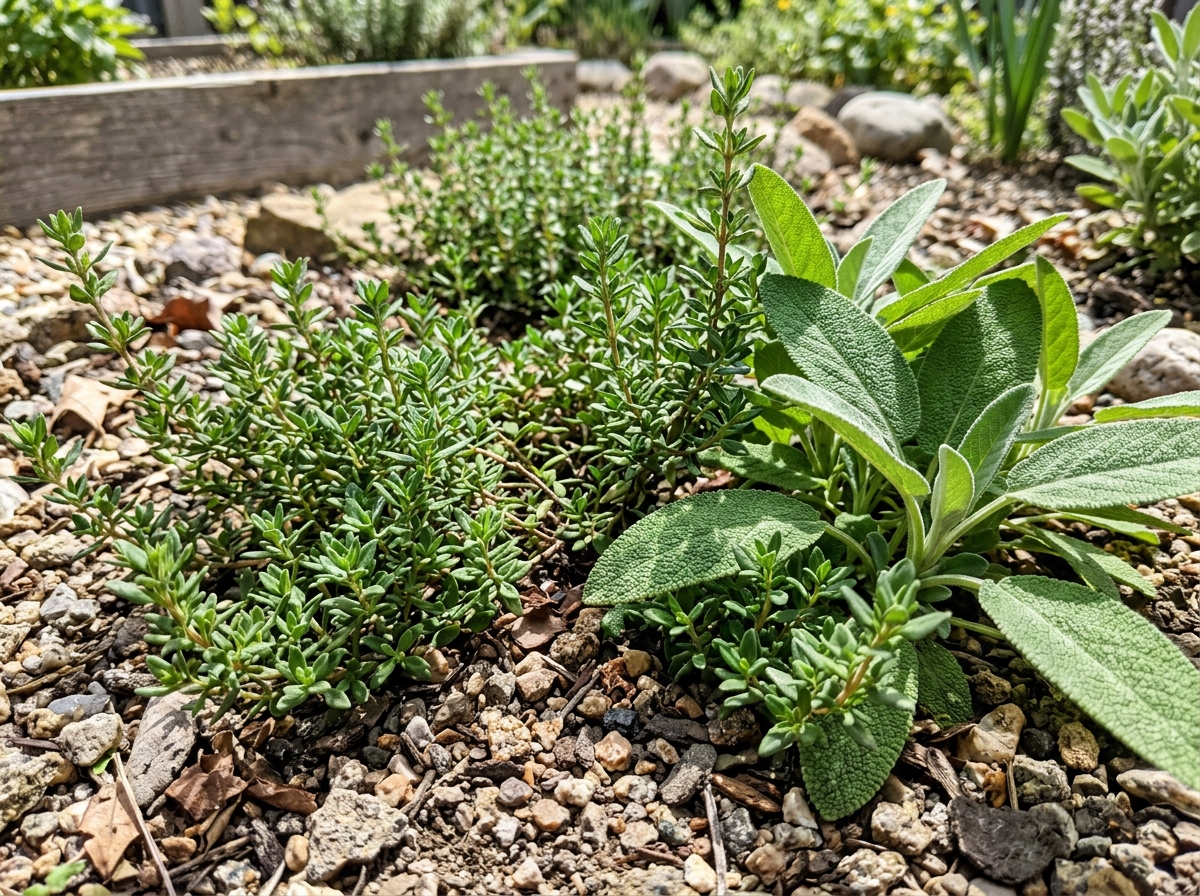
With over 350 varieties available, thyme is a versatile powerhouse. Whether you want a creeping variety for a rock garden or an upright English thyme for stews, most are hardy to Zone 3 or 4. Thyme is a favorite for pollinators and is remarkably drought-tolerant once established.
Sage and Oregano (Zone 4)
Garden sage is a woody perennial that provides year-round interest. It prefers a sunny, dry spot. Oregano is similar but more of a spreader. It will go completely dormant in the winter, often looking like a patch of dead sticks, only to erupt with fresh green growth the moment the ground warms.
Lovage (Zone 3)
If you love celery but find it hard to grow, lovage is your answer. This herb is a giant, reaching up to 6 feet tall and 3 feet wide. Every part of the plant tastes like a concentrated, peppery celery. Fun tip: the hollow stems make excellent, environmentally friendly straws for savory cocktails!
Mint (Zone 3-5)
Mint is famous for its hardiness—and its aggression. With over 40 varieties ranging from chocolate to peppermint, there is a flavor for everyone. Because it spreads via underground runners (rhizomes), it is often best kept in a container or a spot where it can’t escape.
For a more exhaustive list of options, see these 23 of the Best Cold-Hardy Herbs that Survive Winter.
Best Hardy Herbs to Grow Outdoors for Cold Climates
If you live in a region with particularly short growing seasons, consider these specialized hardy options:
- French Tarragon: Unlike the flavorless Russian variety, French tarragon offers a sophisticated anise flavor. It is hardy to Zone 4 but requires excellent drainage to survive the winter.
- Winter Savory: A peppery, woody herb that is much hardier than its annual cousin, Summer Savory. It’s perfect for bean dishes.
- Sorrel: One of the first greens to appear in spring. It has a bright, lemony tang that is incredible in soups and salads.
- Angelica: A dramatic plant that can grow 4-6 feet tall. It’s a biennial that acts like a perennial if you deadhead the flowers. Note: The seeds require “cold stratification”—about 6-8 weeks in the refrigerator—to germinate.
- Anise Hyssop: A pollinator magnet that smells like licorice. It is incredibly hardy (Zone 3) and makes a wonderful tea.
Planting, Maintenance, and Winter Protection
Starting and Planting
Most hardy perennials can be started indoors 7-11 weeks before the last frost. However, many gardeners find it easier to start with “softwood cuttings” (small snips of new growth rooted in water or soil) or by “division” (splitting an existing plant into two).
When transplanting outdoors, wait until the soil has warmed. For rosemary, the soil should be at least 70°F. Space your plants according to their mature size—remember, a tiny lovage seedling will eventually become a 6-foot bush!
The Philosophy of “Benign Neglect”
One of the best things about hardy herbs to grow outdoors is that they thrive on a little bit of neglect. Over-watering and over-fertilizing often lead to lush growth with very little flavor. Let the soil dry out between waterings. Prune your herbs regularly to encourage bushy growth; cutting back woody herbs like lavender or rosemary after they flower prevents them from becoming too “leggy” or brittle.
Winter Protection Strategies
Survival in cold zones is all about insulation.
- Winter Mulching: Once the ground freezes, apply 8-10 inches of loose straw or shredded leaves around the base of the plants. This prevents the “freeze-thaw” cycle that can heave plants out of the ground.
- Christmas Boughs: If you have an old Christmas tree, cut the branches and lay them over your herb beds. They catch snow, which is the best natural insulator available.
- Windbreaks: Cold, drying winds are often more lethal than the temperature itself. Planting near a wall or using a burlap screen can help.
If you are just getting started with herbs, you might also be interested in our guide on indoor-herb-garden-diy to keep some flavors close at hand during the darkest months.
Harvesting and Preserving Flavor Year-Round
To get the most out of your hardy herbs to grow outdoors, timing is everything.
The Morning Harvest
The best time to harvest is in the morning, right after the dew has dried but before the sun gets too hot. This is when the essential oil concentration is at its peak. Avoid bruising the leaves, especially with delicate herbs like lemon balm, as this causes the oils to dissipate.
Preserving the Bounty
- Air Drying: This is best for woody herbs like rosemary, sage, and thyme. Bundle the stems and hang them upside down in a warm, dry place out of direct sunlight.
- Freezing: For “soft” herbs like chives, parsley, or mint, freezing is superior to drying. We love chopping the herbs and placing them in ice cube trays covered with water or olive oil. Just drop a cube into your soup or pan later!
- Herb Butters: Mix finely chopped hardy herbs into softened butter, roll into a log, and freeze.
- Creative Uses: Use sturdy rosemary stems as skewers for grilled meats to infuse flavor from the inside out.
Frequently Asked Questions about Hardy Herbs
Which hardy herbs to grow outdoors are the most cold-tolerant?
Chives are the champions here, surviving down to Zone 2. Horseradish, lovage, and Russian tarragon are also incredibly tough, reliably returning in Zone 3. If you are in a very cold climate, these should be the backbone of your garden.
How do I manage aggressive spreaders like Mint and Lemon Balm?
The best way to manage these is through containment. Use container gardening even within your garden beds—sink a large pot into the ground with the rim slightly above the soil surface to stop the roots from wandering. Deep edging or plastic root barriers can also work, but regular harvesting and pulling of stray runners is usually necessary.
Why didn’t my perennial herbs return in the spring?
The most common culprit is “wet feet.” If the soil remains soggy during winter, the roots rot. Another reason is the lack of winter mulch; without it, the soil can expand and contract, snapping the roots of young perennials. Always ensure your planting site has excellent drainage and a thick blanket of winter protection.
Conclusion
Growing hardy herbs to grow outdoors is about more than just having fresh seasoning for your Sunday roast. These plants are essential for a healthy garden ecosystem. They provide companion planting benefits—for instance, chives can deter certain pests from your rose bushes—and their flowers are vital food sources for bees and butterflies.
By choosing perennial varieties, you are engaging in sustainable gardening. You save money on seeds and starts each year, and you build a landscape that gets more productive and beautiful over time. Whether you are using lovage stems as straws or harvesting chives from under a light dusting of snow, these resilient plants are the true cornerstones of any functional garden.
We hope this guide inspires you to add a few more “hardy souls” to your backyard this season.
