
15 Thrilling Container Plants for Height and Pizzazz
Why Hardy Plants for Pots for Outdoors Transform Any Space
Hardy plants for pots for outdoors are the smartest way to add lasting color and structure to your patio, porch, or balcony — without constant replanting or babysitting.
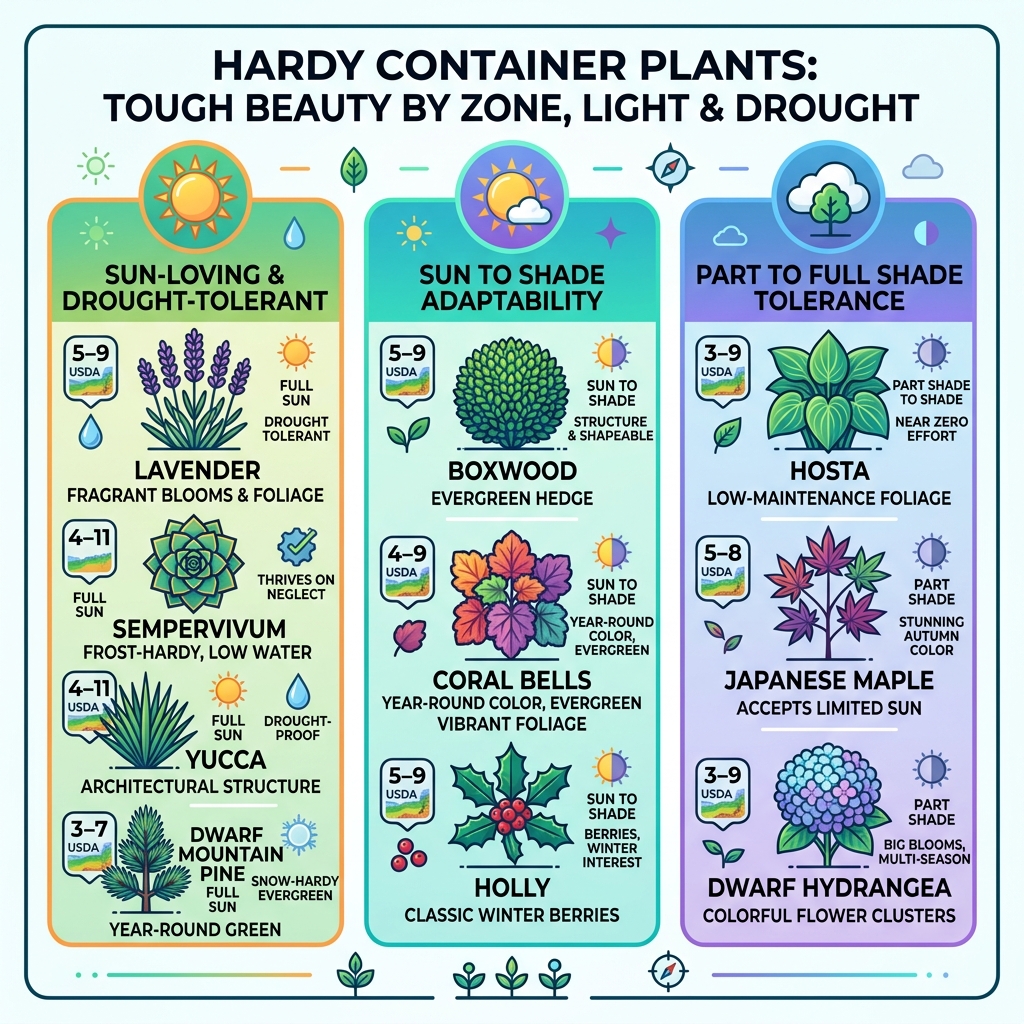
Here are the top options at a glance:
| Plant | Sun/Shade | USDA Zones | Key Benefit |
|---|---|---|---|
| Hosta | Shade | 3–9 | Lush foliage, near zero effort |
| Coral Bells (Heuchera) | Sun to shade | 4–9 | Year-round color, evergreen |
| Boxwood | Sun to shade | 5–9 | Structure, shapeable, evergreen |
| Lavender | Full sun | 5–9 | Drought-tolerant, fragrant |
| Sempervivum | Full sun | 4–11 | Thrives on neglect, frost-hardy |
| Hydrangea (dwarf) | Part shade | 3–9 | Big blooms, multi-season appeal |
| Yucca | Full sun | 4–11 | Architectural, drought-proof |
| Japanese Maple | Part shade | 5–8 | Stunning autumn color |
| Dwarf Mountain Pine | Full sun | 3–7 | Evergreen, snow-hardy |
| Holly | Sun to shade | 5–9 | Berries, winter interest |
Most gardeners think of containers as a warm-season thing — bright annuals in summer, bare pots in winter. But it doesn’t have to work that way.
The right plants stay interesting all year. They handle frost, heat, and drought. And many of them practically thrive on being left alone — which is exactly what a busy homeowner needs.
Whether you have a sun-baked south-facing porch or a shaded north-facing balcony, there’s a lineup of tough, beautiful container plants that will work hard for you season after season.
Defining Hardy Plants for Pots for Outdoors
When we talk about “hardy” in a garden bed, we usually mean a plant can survive the winter in the ground. However, hardy plants for pots for outdoors face a much tougher challenge. In a pot, a plant’s root system is elevated above the ground, exposed to the air on all sides. This means the roots experience much more dramatic temperature fluctuations than they would in the earth, where the soil acts as a massive insulator.
To ensure success, we often recommend the “two-zone rule”: choose plants that are hardy to at least two USDA zones colder than your actual location. For example, if you live in Zone 6, look for plants rated for Zone 4. This extra buffer helps the roots survive when the pot freezes solid.
Understanding the Pot Environment
The container itself plays a huge role in hardiness. Porous materials like terra cotta can absorb moisture, which then expands when it freezes, leading to cracked pots. For year-round outdoor use, we suggest glazed ceramic, thick plastic, or stone.
Key factors for survival include:
- Drainage Holes: Essential to prevent root rot, especially during wet winters.
- Freeze-Thaw Cycles: Rapid freezing and thawing can cause “frost heaving,” where the plant is literally pushed out of the soil.
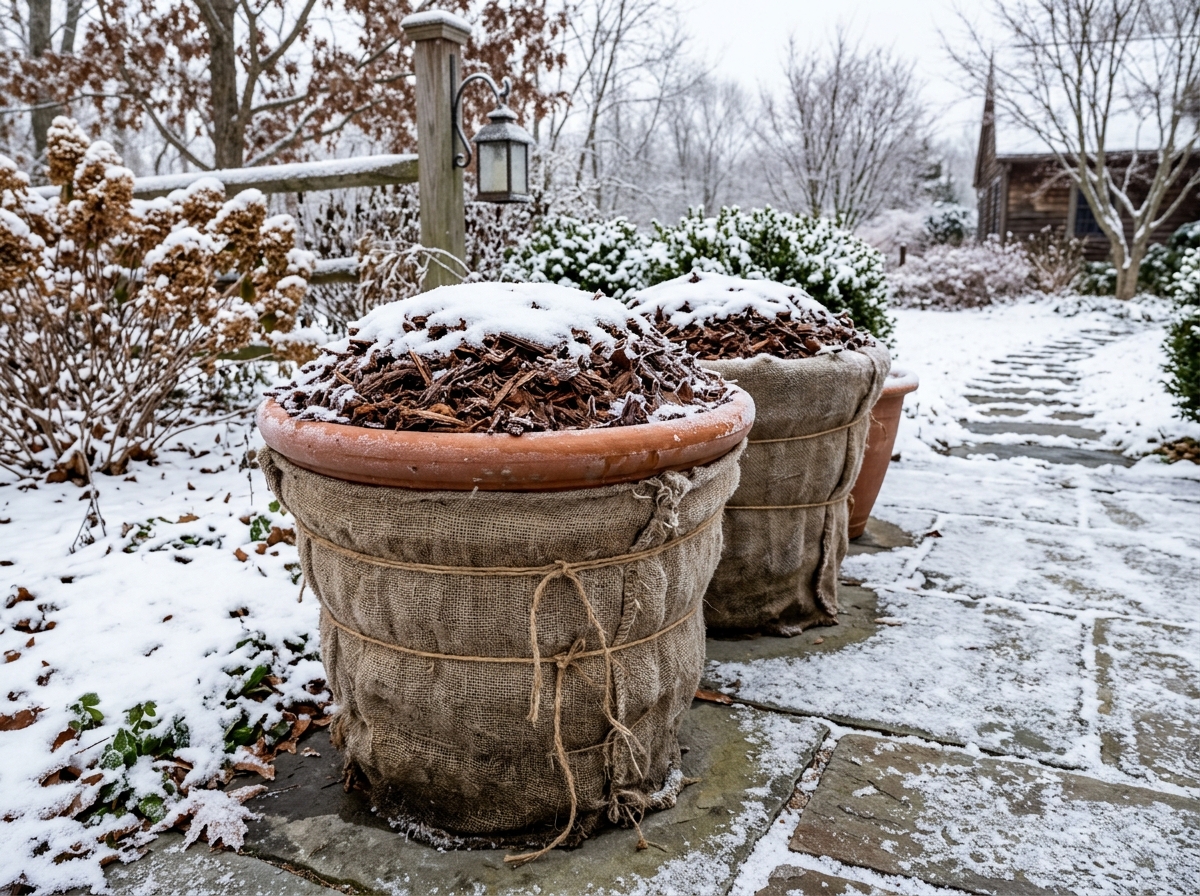
- Winter Protection: In extreme cold, wrapping pots in burlap or bubble wrap can provide necessary insulation.
- Moisture Management: While we don’t want soggy roots, pots shouldn’t bone-dry in winter either. Avoid moisture-retaining crystals for xeric plants, as these can cause rot during dormant periods.
Interestingly, many of these durable selections also serve as hardy air-purifying plants, contributing to a cleaner environment while they beautify your entrance.
The Top 15 Hardy Plants for Height and Visual Impact
To create a professional-looking display, we look for “thrillers”—plants that provide height, architectural interest, and a “wow” factor. By mixing textures and forms, you can create a container that looks like a curated piece of art.
Sun-Loving Giants and Architectural Hardy Plants for Pots for Outdoors
If your patio or porch is a sun-trap, you need plants that revel in the heat and can handle a missed watering or two. These xeric stars are built for survival.
- Texas Sage (Leucophyllum frutescens): Often called the “barometer bush” because it blooms in response to humidity changes, this shrub offers silvery foliage and purple flowers. It thrives in loose, sandy soil and actually performs better without fertilizer.
- Penstemon strictus (Rocky Mountain Penstemon): This is a champion of the Rocky Mountain penstemon Herbaceous Perennial/RHS world. It produces upright spikes of royal blue to purple flowers and is hardy down to -15°C (H5 rating).
- Yucca: With their sword-like leaves, yuccas provide an instant desert-chic vibe. They are incredibly drought-proof and hardy across Zones 4–11.
- Agave: Varieties like the Caribbean Agave or the Variegated American Agave offer stunning geometry. They perform exceptionally well in tight containers with minimal soil.
- Lavender (Lavandula angustifolia): The epitome of a Mediterranean summer. It can survive temperatures as low as -15°C and provides that classic fragrance every time you walk by.
- Sempervivum (Hens and Chicks): These are a “doddle to grow” according to the Sempervivum / RHS Plant Guide. They form evergreen rosettes and are perfectly adapted to temperature extremes.
- Echinocactus grusonii (Golden Barrel Cactus): For a truly unique look, this spiny globe is a showstopper. While it needs to be moved if temperatures drop below 5°C, it is an Echinocactus grusonii RHS Award of Garden Merit winner for a reason.
- Clematis: Use a trellis to add vertical interest. Many varieties are surprisingly hardy and provide a vertical sheet of color.
- Ornamental Grass: Varieties like Blue Fescue or Feather Reed Grass add movement and height, staying attractive even when they turn golden in the winter.
Shade-Tolerant Stars and Cold-Hardy Plants for Pots for Outdoors
Shaded porches don’t have to be boring. These plants bring lush textures and vibrant foliage to the darker corners of your home.
- Hosta: A classic for a reason. Hardy in Zones 3–9, hostas offer massive leaves in shades of blue, gold, and emerald. They are nearly indestructible in pots as long as they get water.
- Wildberry Heuchera (Coral Bells): The Wildberry Heuchera | Proven Winners is a standout with intense purple foliage that stays vibrant all year. It’s a native perennial that works in both sun and shade.
- Boxwood (Buxus): The ultimate for structure. Whether you keep them as natural mounds or prune them into formal topiary, they provide year-round green.
- Hydrangea: Dwarf varieties like ‘Little Lime’ are perfect for pots. They offer massive flower heads that transition from green to white to pink as the seasons change.
- Japanese Maple (Acer palmatum): These small trees never fail to impress with their delicate leaves and fiery autumnal colors. Just ensure young plants are protected from heavy frost.
- Holly (Ilex): For winter interest, nothing beats the glossy leaves and bright red berries of a hardy holly. They provide excellent structure and a festive feel.
Essential Care and Maintenance for Potted Success
To keep your hardy plants for pots for outdoors thriving, we need to focus on the basics of container culture. It starts with the right vessel—you can find more details on best-pots-for-indoor-plants and best-pots-for-indoor-plants-2 which share many of the same material requirements for durability.
Soil and Feeding
Don’t just use garden soil; it’s too heavy and will compact in a pot, suffocating the roots. We recommend a high-quality soilless potting mix. For xeric plants like agave or Texas sage, add extra grit, perlite, or pumice to ensure rapid drainage.
For feeding:
- Slow-release fertilizer: Mix this into the soil at planting time for a steady supply of nutrients.
- Liquid feed: During the peak growing season (spring and summer), use a balanced liquid fertilizer at half strength once a month to boost blooms.
Watering and Pruning
Watering is the most frequent task. Even drought-tolerant plants need regular water during their first season to establish roots. Once established, let the soil dry out between waterings.
Pruning is generally minimal for hardy perennials, but for shrubs like boxwood or holly, a light trim in late spring helps maintain their shape. Deadheading—removing faded flowers—is a simple way to encourage plants like penstemon and lavender to keep blooming longer.
Pest and Disease Management
Watch out for common culprits:
- Vine Weevil: Their larvae can eat roots in containers.
- Aphids: Often found on new growth; a quick blast of water usually dislodges them.
- Root Rot: Usually caused by overwatering or poor drainage. If the plant looks wilted but the soil is wet, check the drainage holes!
Frequently Asked Questions about Outdoor Potted Plants
What are the best low-maintenance plants for a hot sunny porch?
For a sun-drenched area, you can’t beat succulents like Sempervivum (hens and chicks) or Sedum. These plants store water in their leaves and can survive weeks without a drink. Texas Sage and Lavender are also excellent choices that thrive in heat and require very little pampering once they are established. You can find many of these in the Patio Plants For Container Gardens – High Country Gardens collection.
Can perennials stay in pots outdoors over winter?
Yes, provided they are hardy enough for your zone. Perennials like Hosta, Heuchera, and Penstemon go dormant in the winter. Their top growth may die back, but the roots remain alive. To help them through, ensure the pot is made of a frost-proof material and avoid overwatering during the winter months, which can lead to rot. For more variety, check out Plants Perfect for Pots | PlantingTree.
How do I protect my outdoor pots from cracking in the frost?
The best protection is prevention. Choose non-porous pots like glazed ceramic or heavy-duty resin. You can also “pot up” by placing a smaller plastic pot inside a larger decorative one, creating an insulating air gap. If a hard freeze is coming, move pots to a sheltered spot against the house or wrap them in burlap. For more advice on specific species like Heuchera pulchella | RHS, consult expert guides.
Conclusion
Creating a stunning outdoor display doesn’t have to be a seasonal chore. By choosing hardy plants for pots for outdoors, you are investing in a living landscape that grows more beautiful with each passing year. From the architectural punch of a Yucca to the soft, reliable foliage of a Hosta, these plants provide the height and pizzazz your home deserves.
At Financedora, we believe that a beautiful home starts at the front door. Sustainable gardening with hardy plants is a fantastic way to boost curb appeal while respecting your time and the local environment. For more expert advice on transforming your living spaces, Visit Financedora for more gardening tips. Happy planting!
