
8 Must-Have Pothos Varieties for the Lazy Gardener
The Best Easy Grow Pothos Varieties at a Glance
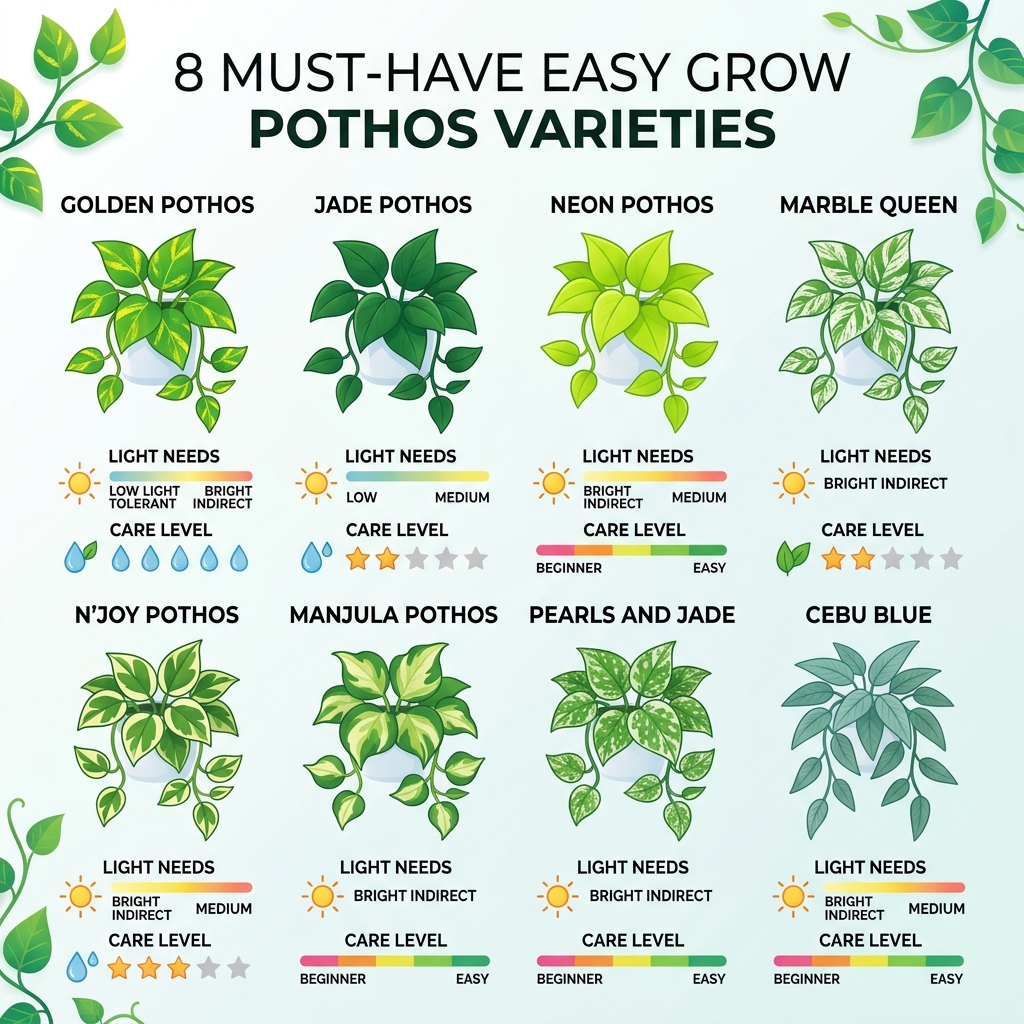
Easy grow pothos varieties are the #1 pick for busy people who want beautiful indoor plants without the fuss. At Financedora, we believe that creating a lush, green home should be a simple and rewarding investment. Here are the 8 best options to start with:
- Golden Pothos – Most forgiving, yellow-green variegation, thrives almost anywhere
- Jade Pothos – Deep green, handles low light better than most
- Neon Pothos – Bright chartreuse color, great for adding a pop of life to a room
- Marble Queen – Stunning white marbling, needs a bit more light
- N’Joy Pothos – Compact, cream-and-green leaves, perfect for small spaces
- Manjula Pothos – Wavy, designer-looking leaves with creamy variegation
- Pearls and Jade – Green-and-white spotted leaves, slow and steady grower
- Cebu Blue – Silvery-blue sheen, develops splits in mature leaves
Pothos has been a staple houseplant for decades — your grandmother probably had one trailing across a shelf. And for good reason.
This vine is nearly impossible to kill. It tolerates low light, bounces back from missed waterings, and grows fast enough to feel rewarding. According to growers, pothos can add 12 to 18 inches of length in a single month under good conditions — and can live anywhere from 5 to 10 years with only basic care.
For anyone who wants greener indoor spaces without a complicated routine, pothos is the obvious starting point.
But with so many varieties now available — from classic golden to silvery-blue — picking the right one can feel overwhelming. This guide cuts through the noise and shows you exactly which varieties are worth your time and shelf space.
Why Pothos are the Best Easy Grow Pothos Varieties for Beginners
If you’ve ever felt like a “plant serial killer,” pothos is here to offer you a redemption arc. These plants are often called “Devil’s Ivy” because they are notoriously difficult to kill and stay green even when grown in less-than-ideal conditions.
What makes them the ultimate easy grow pothos varieties? First, their resilience is legendary. They don’t “hold a grudge” if you forget to water them for a week or two. In fact, one of the best things about a pothos is that it will visibly droop when it’s thirsty, giving you a clear signal to grab the watering can before any permanent damage occurs.
Beyond being tough, they are masters of adaptability. Whether you have a bright sunroom or a dim office corner, there is a pothos variety that will feel right at home. They are also functional; like many low-maintenance-indoor-plants, pothos act as natural air purifiers, helping to scrub common indoor toxins from your living space.
For the lazy gardener, the growth habit is the real selling point. You can let them trail from a hanging basket, crawl across a mantle, or climb up a moss pole. If they get too long, a quick snip is all it takes to keep them tidy—and those snips can easily be turned into brand-new plants.
8 Must-Have Easy Grow Pothos Varieties to Collect
Not all pothos are created equal. Some grow like weeds, while others take their royal time. Some crave the spotlight, while others prefer the shadows. To help you choose, we’ve broken down the top 8 varieties that combine high visual impact with low-effort care.
| Variety | Growth Rate | Variegation Stability | Best Light |
|---|---|---|---|
| Golden Pothos | Fast | High | Low to Bright Indirect |
| Marble Queen | Moderate | Medium | Bright Indirect |
| Neon Pothos | Moderate | High | Medium to Bright Indirect |
| Jade Pothos | Fast | N/A (Solid) | Low to Medium |
| Pothos N’Joy | Slow | High | Bright Indirect |
| Cebu Blue | Fast | N/A (Silvery) | Bright Indirect |
| Manjula | Slow | Medium | Bright Indirect |
| Pearls & Jade | Slow | Medium | Bright Indirect |
1. Golden Pothos (Epipremnum aureum)
The Golden Pothos is the “OG” of the houseplant world. If you close your eyes and picture a pothos, this is likely what you see. It features heart-shaped green leaves splashed with cheerful yellow or gold marbling.
What makes it a top-tier easy grow pothos variety is its sheer toughness. It is perhaps the most variegated variety that still maintains a rapid growth rate. In frost-free outdoor areas, its leaves can reach 12 inches wide, but indoors, it stays a manageable size while happily trailing several feet. For a more refined version of this classic, look for the Beautifall® Golden Glen™ – Golden Pothos, which offers more intricate, finer variegation than the standard types found in big-box stores.
2. Marble Queen: A Royal Easy Grow Pothos Variety
If the Golden Pothos is the reliable friend, the Marble Queen is the sophisticated cousin. This variety is famous for its heavy white-and-green variegation that can look almost like a rare Philodendron. Because the leaves have more white (which lacks chlorophyll), the Marble Queen grows a bit slower than its golden counterpart.
To keep her looking “royal,” she needs a bit more light. In low light, the white marbling may turn back to green as the plant tries to boost its energy production. For a high-quality specimen, the Beautifall® Snowy Morning™ – Marble Queen Pothos is bred to maintain that snowy, delicate marbling even as the vines grow long and lush.
3. Neon Pothos: A Pop of Chartreuse
The Neon Pothos is impossible to ignore. Its leaves are a solid, glowing chartreuse or lime green that stays vibrant year-round. It doesn’t have the speckles or splashes of other varieties, making it a “cleaner” look for modern decor.
This is one of the best small-apartment-indoor-plants because it instantly brightens up a room. However, a word of advice: while it can survive in lower light, the color will dull to a muddy green if it’s kept in the dark too long. Give it bright, indirect light to keep that “neon” glow striking.
4. Jade Pothos: The Solid Green Classic
For those truly dark corners where other plants struggle, the Jade Pothos is your best bet. Because its leaves are solid, deep green, it is packed with chlorophyll, allowing it to photosynthesize efficiently even in dim conditions.
It is one of the most reliable low-light-air-purifying-plants you can own. It has a sturdy, classic look that works well in any setting, from a library shelf to a bathroom windowsill. If you want a plant that you can truly “set and forget” (within reason!), the Jade is the one.
5. Pothos N’Joy: Compact and Variegated
Discovered as a natural mutation of the Marble Queen, the N’Joy is perfect for gardeners who don’t have a lot of vertical space. Its leaves are smaller, more rounded, and have a slightly ruffled texture. The variegation is distinct—instead of speckles, you get large, clean blocks of cream and green.
Because of its high white content and compact nature, it is a slower grower. This makes it an excellent choice for a desk or a small shelf where you don’t want a vine taking over the entire wall in six months. It does require bright, indirect light to keep those cream patches crisp and white.
6. Cebu Blue: The Unique Easy Grow Pothos Variety
Technically a different species (Epipremnum pinnatum), the Cebu Blue is often grouped with pothos because the care is nearly identical. It features long, lance-shaped leaves with a stunning silvery-blue metallic sheen.
The Cebu Blue has a secret: if you let it climb a moss pole rather than trail, the leaves will eventually develop “fenestrations” (natural holes or splits), much like a Monstera. It’s a fast grower and a favorite for collectors who want something that looks exotic but is still an easy grow pothos variety.
7. Manjula Pothos: The Designer Choice
The Manjula is like the “haute couture” of the pothos world. Developed by the University of Florida, it features wide, heart-shaped leaves with wavy edges. The variegation is a swirling mix of cream, silver, white, and green.
Because it was created through selective breeding, it has a very specific, lush look that stands out in any collection. You can learn more about managing its unique needs in our beginner-indoor-plant-care-guide. It’s a bit rarer than the Golden or Jade, but its stunning foliage makes the search well worth it.
8. Pearls and Jade: The Spotted Beauty
Often confused with the N’Joy, the Pearls and Jade variety is actually a sport of the Marble Queen. The main difference? While N’Joy has clean blocks of color, Pearls and Jade has the “classic” pothos speckles and flecks within its white and green patches.
It is a resilient, slow-growing beauty that is perfect for those who like a more “painterly” or textured look on their foliage. As one of the most recommended easy-indoor-plants-for-beginners, it handles typical home humidity and temperatures with ease.
Essential Care Guide for Low-Maintenance Pothos
While pothos are famous for “thriving on neglect,” they do have a few preferences that will help them go from “surviving” to “thriving.”
Light Requirements
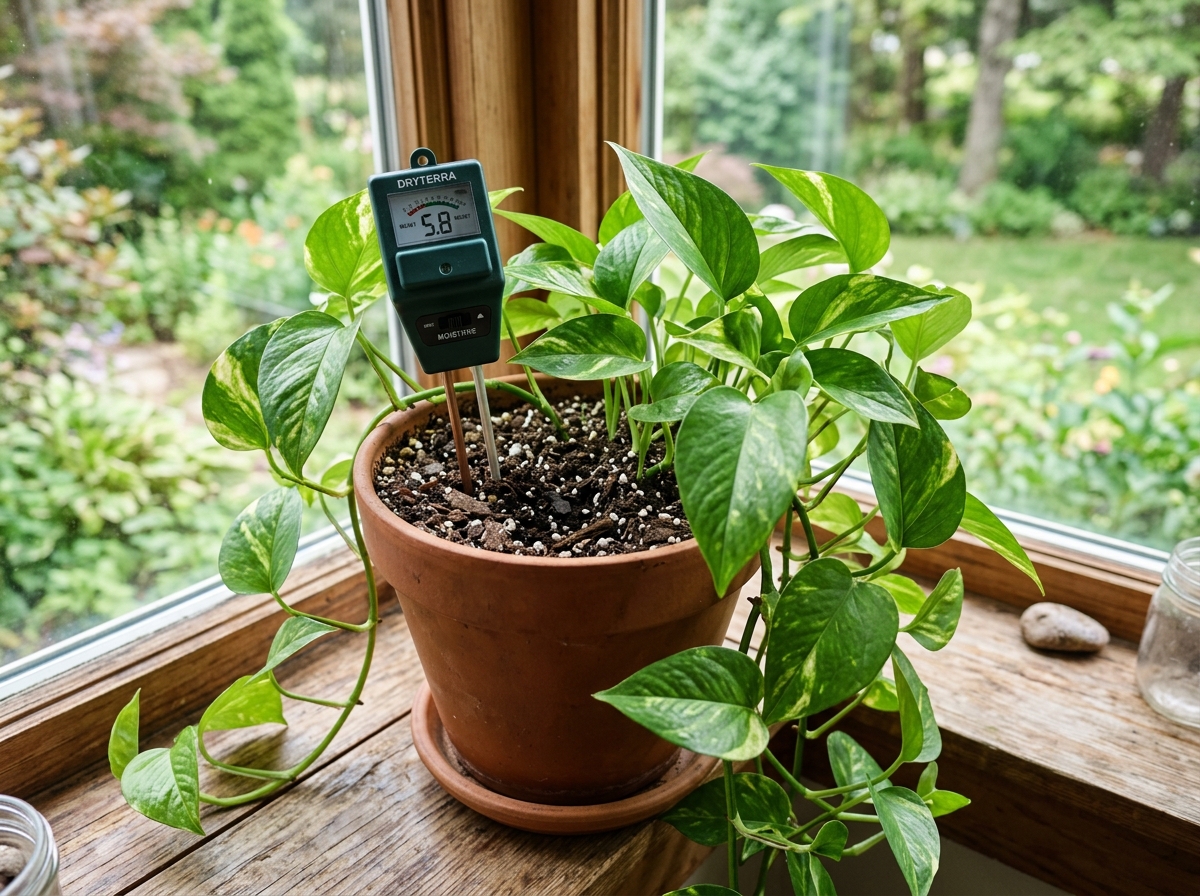
Most easy grow pothos varieties prefer medium to bright indirect light. Think of an east- or west-facing window. While they can tolerate low light, you’ll notice that variegated types (like Marble Queen or N’Joy) will lose their color and turn solid green if they don’t get enough light. Avoid direct afternoon sun, which can scorch the leaves and leave brown, crispy patches.
Watering the “Golden Rule”
The #1 killer of pothos isn’t neglect—it’s overwatering. We recommend the “finger test”: stick your finger into the soil. If the top 1–2 inches are dry, it’s time to water. Usually, this happens every 1–2 weeks. If the leaves start to droop slightly, the plant is telling you it’s thirsty. Always use a pot with drainage holes to prevent the roots from sitting in soggy soil, which leads to root rot.
Temperature and Humidity
Pothos are tropical plants, so they like it warm. The ideal range is 65-80°F (18-27°C). They can tolerate temperatures down to 50°F, but growth will slow significantly. As for humidity, they are very adaptable. While they love the 40-60% humidity found in their native habitats, they handle average home air just fine. If your air is exceptionally dry in winter, a quick misting or a nearby humidifier can help.
Soil and Fertilizer
Use a standard, well-draining houseplant potting mix. Adding a handful of perlite can help improve aeration. During the growing season (spring and summer), you can feed your pothos with a balanced liquid fertilizer once a month at half strength. If the plant isn’t putting out new leaves in the winter, skip the fertilizer until spring. You can keep track of these tasks with our indoor-plant-care-schedule.
Troubleshooting Common Pothos Problems
Even the easiest plants run into trouble sometimes. Here is how to fix the most common pothos gripes:
- Yellow Leaves: This is the most common issue. If the soil is soggy, it’s likely overwatering. If the soil is bone dry and the leaves are crispy, it’s underwatering. Check the roots; if they are firm and white, the plant is fine. If they are mushy and brown, you have root rot.
- Leggy Stems: If your vines have long stretches of stem with no leaves, your plant is “reaching” for more light. Move it closer to a window and prune the leggy bits to encourage bushier growth.
- Brown, Crispy Tips: This usually points to low humidity or tap water with too many minerals. Try using filtered water or increasing the humidity around the plant.
For more detailed help, check out our guides on common-indoor-plant-problems and how-to-revive-dying-indoor-plants.
Frequently Asked Questions about Pothos Care
Are Pothos plants toxic to pets and children?
Yes. Pothos plants contain calcium oxalate crystals, which are toxic if ingested. If a pet or child chews on the leaves, it can cause intense mouth irritation, swelling, and digestive upset. It is best to keep these plants on high shelves or in hanging baskets out of reach. If ingestion occurs, contact a medical professional or veterinarian immediately.
How do I propagate my Pothos successfully?
Propagation is incredibly easy! Simply cut a 4-6 inch segment of vine, ensuring there are at least 2-3 “nodes” (the little bumps where leaves grow) on the stem. Remove the bottom leaf and place the stem in a jar of water. In a few weeks, you’ll see white roots growing. Once the roots are an inch or two long, you can pot them in soil. For a step-by-step walkthrough, see our beginner-indoor-plant-care-guide-2.
Why is my Pothos losing its variegation?
Variegation is a result of the plant having less chlorophyll in certain parts of the leaf. If the plant is kept in low light, it will produce more chlorophyll (turning the leaf green) to survive. To bring the color back, move your plant to a spot with brighter, indirect light.
Conclusion
At Financedora, we believe that a busy schedule shouldn’t keep you from enjoying a lush, green home. Choosing the right easy grow pothos varieties is a smart, cost-effective way to build an indoor jungle that fits your lifestyle. Whether you go for the classic Golden Pothos or the trendy Cebu Blue, these plants will reward your minimal effort with years of beauty.
Ready to simplify your plant routine? Check out our guide on plant-care-for-busy-people and start your indoor garden journey today!
