
Why Indoor Hanging Plant Ideas Are Perfect for Small Apartments
Indoor hanging plant ideas are one of the smartest ways to add life to a small space without giving up precious floor or shelf space.
Here are the most popular and practical ideas to get started:
- Pothos in macramé hangers – trail beautifully, tolerate low light, nearly impossible to kill
- Spider plants on tension rods – safe for pets, produce baby plants, great for beginners
- String of pearls in ceramic pots – stunning cascading look, needs bright indirect light
- Boston ferns in woven baskets – lush and full, loves humidity (perfect for bathrooms)
- Air plants in glass terrariums – no soil needed, hang anywhere with fishing line or hooks
- Heartleaf philodendron on S-hooks – fast-growing, low-maintenance, gorgeous trailing vines
Apartments present a real challenge: you want greenery, but windowsills fill up fast and floor space is precious. Hanging plants solve both problems at once by using vertical space that most people completely ignore.
Plant experts consistently point out that trailing plants are the natural choice for hanging pots – they prefer the freedom to grow downward rather than being cramped on a shelf. And the good news for busy urban dwellers? Many of the best trailing plants are also the most forgiving ones.
Whether you have a sun-drenched south window or a dim north-facing corner, there’s a hanging plant that fits your space and your schedule.
Top Indoor Hanging Plant Ideas for Beginners and Busy Owners
If you are just starting your journey into the “urban jungle” lifestyle, the last thing you want is a high-maintenance diva of a plant that wilts the moment you forget to mist it. For those of us with busy schedules or limited gardening experience, the best indoor hanging plant ideas involve species that are resilient, adaptable, and naturally inclined to trail.
The Golden Pothos (often called Devil’s Ivy) is the undisputed king of beginner plants. Its heart-shaped, variegated leaves can grow on vines reaching over 20 feet long. It is incredibly forgiving of inconsistent watering and can thrive in almost any light condition. Similarly, the Spider Plant is a classic for a reason. Not only is it tough, but it also produces “spiderettes”—tiny baby plants that dangle from the mother plant like living ornaments.
The Heartleaf Philodendron is another “interior design staple” that we highly recommend. It features glossy, deep green leaves and is flexible enough to be draped over curtain rods or allowed to spill out of a high wall planter. If you find your desk or shelves are already overflowing, you might want to look into more info about DIY plant stands to help organize your workspace before adding hanging elements.
Light and Water Comparison for Beginner Hanging Plants
To help you choose the right roommate, here is a quick breakdown of the needs of these beginner favorites:
| Plant Name | Light Requirement | Watering Frequency | Growth Habit |
|---|---|---|---|
| Golden Pothos | Low to Bright Indirect | When top 2 inches are dry | Long trailing vines |
| Spider Plant | Bright Indirect | Weekly (prefers moist soil) | Arching leaves & babies |
| Heartleaf Philodendron | Medium to Bright Indirect | Allow soil to dry slightly | Fast-growing trailer |
| English Ivy | Bright Indirect | Keep consistently moist | Dense, classic vines |
Pet-Friendly Indoor Hanging Plant Ideas for Animal Lovers
One of the biggest concerns for apartment dwellers is the safety of their furry friends. Many popular trailing plants, like Pothos and English Ivy, are unfortunately toxic if ingested by cats or dogs. However, you don’t have to sacrifice the aesthetic to keep your pets safe.
The Boston Fern is a fantastic, non-toxic option that adds a lush, prehistoric feel to any room. It loves humidity, making it a star in bathrooms. Another quirky favorite is the Burro’s Tail (Sedum morganianum). This succulent features thick, tear-drop-shaped leaves that trail down in heavy braids. It is completely safe for pets, though you should hang it somewhere it won’t be bumped, as the leaves drop easily.
Swedish Ivy is another winner for pet owners. Unlike its English cousin, Swedish Ivy is non-toxic and produces lovely scalloped leaves that grow rapidly. These plants allow us to enjoy a green home without the constant worry of a trip to the emergency vet.
Low-Maintenance Varieties for New Plant Parents
For those who travel often or simply have a “black thumb,” drought-tolerant plants are the way to go. While the Snake Plant and ZZ Plant are typically seen in floor pots, smaller varieties can be tucked into hanging baskets. They are famous for their ability to survive weeks of neglect and very low light levels.
If you prefer the trailing look, the Satin Pothos (Scindapsus pictus) is a low-maintenance gem. It has matte, grey-green leaves with silvery splashes that feel like velvet. It grows slower than the Golden Pothos, meaning you won’t have to prune it as often, and it is quite vocal about its needs—the leaves will curl slightly when it’s thirsty, giving you a helpful hint.
Creative Display Methods to Maximize Vertical Space
In a small apartment, the goal is to get plants off the floor and into the air. This isn’t just about utility; it’s about creating visual “drama.” By varying the heights of your plants, you can mimic the layered look of a natural forest.
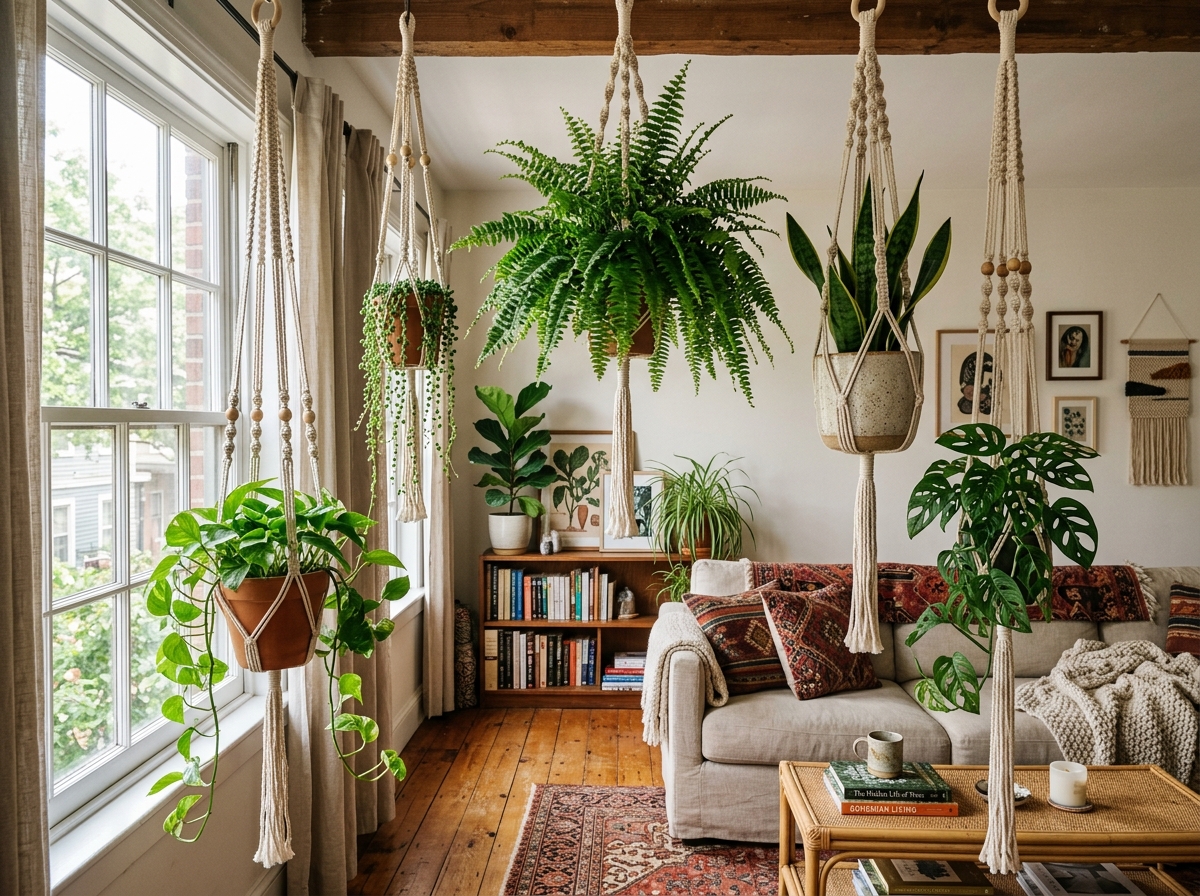
Macramé hangers are perhaps the most popular way to display plants today. They add a bohemian, textured feel to the room and can hold a variety of pot shapes. If you are feeling ambitious, you can learn how to create a vertical garden to turn an entire blank wall into a living masterpiece.
For a more modern look, consider using tension rods across window frames. This allows you to hang multiple small pots in front of the glass without drilling a single hole. Using S-hooks is another clever trick; you can loop them over existing curtain rods, shelving units, or even door frames to add a touch of green to unexpected places.
DIY Renter-Friendly Hanging Solutions
Renters often face the “no holes in the wall” rule, which can put a damper on indoor hanging plant ideas. Thankfully, there are several workarounds. Command hooks (heavy-duty versions) can support small, lightweight plants like Air Plants or small succulents in plastic pots.
Another stylish solution is the vintage ladder. Leaning a wooden ladder against a wall provides multiple “rungs” to hang plants from using S-hooks or macramé. This creates a multi-tiered display that is completely self-supporting. If you have a small balcony or a sturdy coat rack, these can also serve as makeshift plant stands. For more inspiration on saving space, check out these DIY plant shelves for small spaces.
Stylish Planters and Hangers for Every Aesthetic
The container is just as important as the plant when it comes to home decor.
- Woven Baskets: Best for a warm, organic, or “Japandi” look. Just ensure there is a plastic liner inside to prevent water from rotting the fibers.
- Terrariums: Glass globes are perfect for Air Plants (Tillandsia). Since these plants don’t need soil, they can be hung with thin fishing line, making them look like they are floating in mid-air.
- Kokedama: This is a traditional Japanese art form where the plant’s root ball is wrapped in moss and string. These “moss balls” can be suspended directly from hooks for a minimalist, sculptural effect.
Room-Specific Solutions for Every Corner
Not every room in your apartment has the same environment. To keep your hanging garden thriving, we need to match the plant to the room’s specific light and humidity levels.
High-Humidity Bathroom Plant Selections
Bathrooms are often the most overlooked space for plants, yet they provide the perfect tropical microclimate. The steam from your daily shower creates a high-humidity environment that certain plants crave.
The Staghorn Fern is a unique choice; it is an epiphyte, meaning in nature it grows on trees. It can be mounted on a wooden board or nestled in a slatted basket. The Orchid Cactus (Epiphyllum) also loves the warmth and moisture of a bathroom and will reward you with breathtaking, oversized blooms if given enough indirect light. If you want to get creative with your bathroom setup, consider an indoor hanging plant diy project like a hanging shower rail for your greenery.
Low-Light Kitchen and Bedroom Indoor Hanging Plant Ideas
Kitchens and bedrooms sometimes suffer from “north-facing window syndrome”—meaning they don’t get much direct sun. For these darker corners, we recommend the Satin Pothos or the Marble Queen Pothos. Their variegated leaves can actually lose some of their color in too much sun, so they are perfectly happy in the shadows.
English Ivy is another classic for low-light areas, though it does prefer cooler temperatures. It looks particularly elegant trailing down from the top of a kitchen cabinet or a bedroom bookshelf.
Safe Installation and Weight Support for Hanging Greenery
Safety is paramount when hanging plants. A medium-sized ceramic pot filled with wet soil can easily weigh 10 to 15 pounds. You do not want that falling on your head—or your floor.
- Find the Stud: For heavy plants, always use a stud finder to locate the ceiling joists. Screwing a hook directly into a wooden joist provides the maximum support.
- Use the Right Hardware: If you can’t find a stud, use toggle bolts (also known as butterfly anchors). These expand behind the drywall to distribute the weight. Never rely on a simple screw in plain drywall for a hanging plant.
- Drill Pilot Holes: Always drill a pilot hole slightly smaller than your hook’s screw. This prevents the wood from splitting and makes installation much easier.
- Check Weight Ratings: Ensure your hooks and chains are rated for at least 25% more than the plant’s maximum weight (remember, plants are heaviest right after watering!).
Essential Care and Maintenance for Thriving Trailing Plants
Hanging plants have slightly different needs than their floor-bound cousins. Because they are higher up, they are exposed to warmer, drier air (since heat rises). This means they often dry out faster.
Air purification is a major benefit of these plants. Species like the Spider Plant and Golden Pothos are famous for filtering common household toxins from the air. To keep them doing their job, wipe the leaves with a damp cloth occasionally to remove dust.
Rotation is another key tip. Plants naturally grow toward the light. If you don’t rotate your hanging basket a quarter turn every week, you’ll end up with a “lopsided” plant that is lush on the window side and bald on the room side. You can see more about maintaining these arrangements in our guide on how to vertical garden diy indoor.
Propagation Tips for Trailing Vines
One of the best things about trailing plants is how easy they are to “multiply.” This is a great way to fill your apartment with greenery on a budget.
- Stem Cuttings: For Pothos or Philodendron, snip a vine just below a “node” (the little bump where a leaf meets the stem).
- Water Rooting: Place that cutting in a glass of water. In a few weeks, you’ll see white roots appearing. Once they are an inch long, you can pot them in soil.
- Spiderettes: For Spider Plants, simply snip off the small babies that grow on the long stems and tuck them into a small pot of moist soil. They take root almost instantly!
Watering Techniques to Avoid Messy Drips
Watering a hanging plant can be a recipe for a soggy carpet if you aren’t careful.
- The Sink Method: The most reliable way is to take the plant down, bring it to the kitchen sink, and water it thoroughly until water runs out the bottom. Let it sit for 15 minutes to drain completely before rehanging.
- Self-Watering Pots: These have a reservoir at the bottom that allows the plant to drink as needed, which is perfect for high-up plants that are hard to reach.
- The Incremental Pour: If the plant is too heavy to move, add water very slowly in small amounts. Wait a minute between pours to allow the soil to absorb the moisture before it hits the drainage hole.
Frequently Asked Questions about Indoor Hanging Plants
Which hanging plants are safest for cats and dogs?
The best pet-safe indoor hanging plant ideas include the Boston Fern, Spider Plant, Burro’s Tail, and Swedish Ivy. Always double-check a plant’s toxicity on the ASPCA website before bringing it home to a curious pet.
How do I hang plants from the ceiling without a drill?
If you can’t drill, look for alternative “anchors.” You can use S-hooks on existing pipes (like in industrial-style lofts), tension rods in window frames, or heavy-duty adhesive hooks for very lightweight plants like Air Plants. You can also use tall furniture or coat racks to create height without ceiling mounts.
How often should I water plants in hanging baskets?
Generally, hanging plants need water more often than floor plants—sometimes 1.5 to 2 times as frequently. Check the soil by sticking your finger an inch deep; if it feels dry, it’s time to water. Succulents like String of Pearls may only need water every 2 weeks, while ferns might need a drink every few days.
Conclusion
Transforming a small apartment into a vibrant, living oasis doesn’t require a backyard or even a lot of floor space. By embracing these indoor hanging plant ideas, you can use your vertical real estate to create a lush “urban jungle” that improves your air quality and your mood.
At Financedora, we believe that sustainable living and beautiful home design go hand-in-hand. Whether you are starting with a single Pothos or building an elaborate multi-tiered wall, the key is to choose the right plant for your light and to hang it safely. Ready to take your greenery to the next level? Explore more DIY plant projects and start your home transformation today!
