
How to Make a DIY Hanging Indoor Planter (Quick Start Guide)
A diy hanging indoor planter is one of the fastest, cheapest ways to add greenery to your home without sacrificing floor space. Many projects cost under $10 and take less than an hour to complete.
Here’s the simplest way to make one right now:
- Cut two pieces of twine or rope to equal length
- Fold them together in half to form a loop
- Tie the four ends together, splitting two on each side
- Hang the loops from a cup hook screwed into the wall or ceiling
- Drop your potted plant into the cradle, resting on the knot
That’s it. No power tools. No special skills.
Whether you want a simple rope hanger, a rustic wooden crate, or a boho macrame design, there’s a style that fits your space and skill level. You can build something that looks store-bought for a fraction of the price — and customize it to match your home decor exactly.
If you’re a busy homeowner who wants more greenery without the hassle, hanging planters are ideal. They use vertical space, keep plants off crowded surfaces, and work beautifully with low-maintenance plants like pothos, trailing ivy, or succulents.
Why You Should Build a DIY Hanging Indoor Planter
We all know that feeling of walking into a room filled with lush greenery and instantly feeling a sense of calm. Beyond just looking pretty, creating your own diy hanging indoor planter offers a range of benefits that go far beyond simple aesthetics.
First, let’s talk about space. Many of us live in homes where shelf and floor space are at a premium. By looking up, we unlock an entirely new “floor” for our decor. Vertical gardening allows us to display dozens of plants without cluttering our desks or tables. In fact, some indoor-hanging-plant-diy projects can be designed to hold up to 16 pots at once!
There is also the matter of mental well-being. Research suggests that indoor plants improve air quality by filtering out common household toxins. Furthermore, the act of crafting—what some call “recalibration”—provides a necessary break from the digital world. As noted in some of our favorite DIY circles, working with your hands can remind us to “rest” when we feel “rusty” or overwhelmed.
Finally, building your own is incredibly budget-friendly. While high-end boutiques might charge $50 or more for a modern plant hanger, we can often make them for less than $10, or even for free by using upcycled materials. It’s a form of creative expression that allows us to tailor every knot and wood stain to our specific taste.
Essential Materials and Tools for Beginners
Before we dive into the “how-to,” let’s look at what you’ll need. You don’t need a professional workshop to get started. Many of the most beautiful easy-indoor-plant-crafts use items you likely already have in your junk drawer or garage.
Material Cost Comparison Table
| Material Type | Estimated Cost | Skill Level | Best For |
|---|---|---|---|
| Macrame/Rope | $5 – $15 | Beginner | Boho, Minimalist styles |
| Wood (Scrap/Pallet) | $0 – $20 | Intermediate | Rustic, Mid-Century Modern |
| Upcycled (Bottles/Tins) | $0 | Beginner | Sustainable, Eclectic |
| Metal (Buckets/Chain) | $15 – $30 | Intermediate | Industrial, Glam |
Basic Supplies
- Rope and Cord: Cotton rope is a classic choice for its softness and strength. For heavier projects, ensure your rope is rated for at least 25 lbs. Jute twine offers a more rustic look, while leather cord adds a modern, high-end feel.
- Pots: Choosing the best-pots-for-indoor-plants is crucial. Terracotta is breathable and classic, but for hanging, lightweight plastic or galvanized buckets can reduce the strain on your ceiling hooks.
- Wood: White oak is heavy and durable, while birch wood or poplar boards are easier to cut and paint. You can even use recycled-planters-for-houseplants like coconut shells or old wooden bowls.
Basic Tools
If you’re moving beyond simple knots, you might want to have these handy:
- Drill: For making holes in wood or creating drainage in upcycled containers.
- Jigsaw or Miter Saw: Necessary for custom wood shapes like circles or teardrops.
- Adhesives: E-6000 glue is the gold standard for attaching saucers to wood bases.
- Finishing: Sandpaper for smooth edges and polyurethane or Mod Podge to protect wood and clay from water damage.
Creative Styles for Your DIY Hanging Indoor Planter
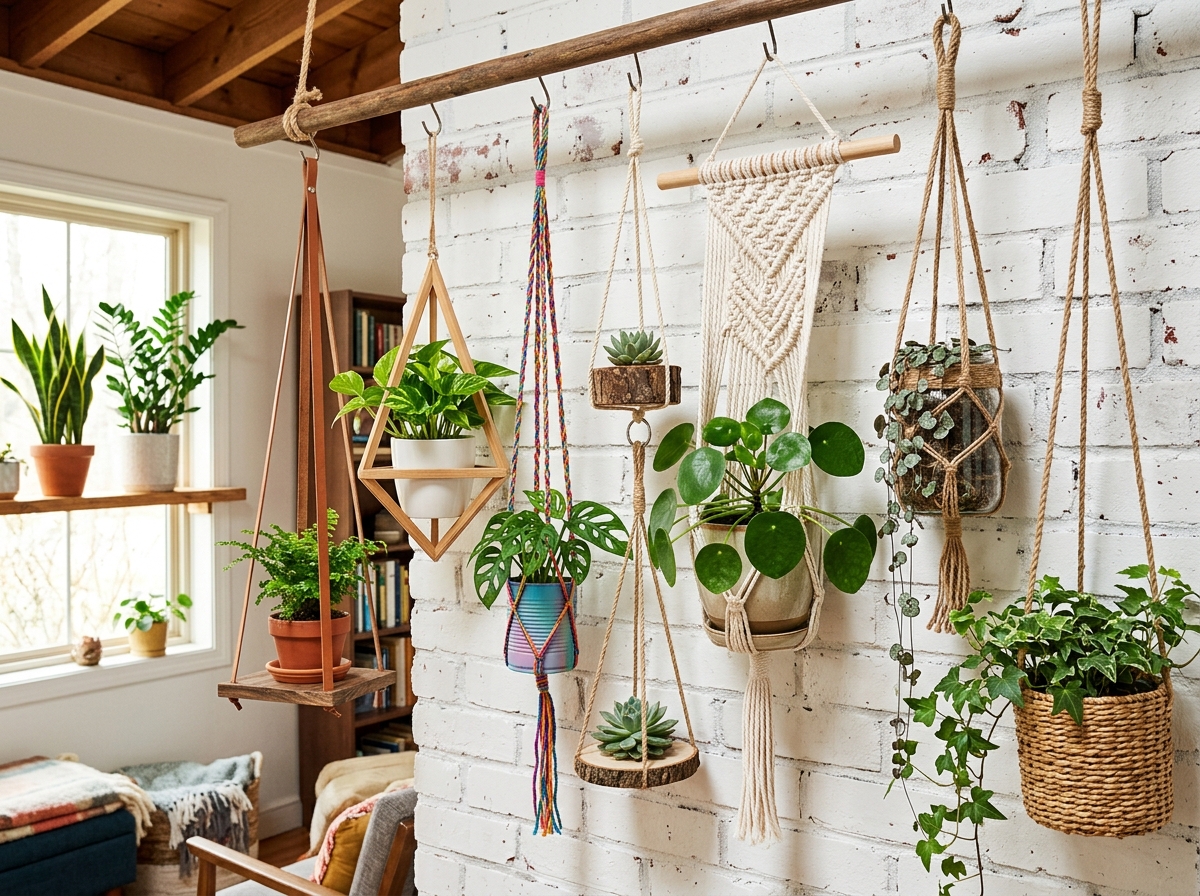
There is no “one size fits all” when it comes to plant hangers. Depending on your home’s vibe, you can choose from several popular styles:
- Mid-Century Modern Teardrop: A popular beginner woodworking project involves cutting a teardrop shape from a hardwood panel. By adding a simple wooden base and a leather cord, you create a piece of functional art.
- Multi-Tiered Dowel Hangers: Using two sizes of wood dowels, you can create a ladder-like structure that holds multiple terracotta pots. This is a fantastic way to create a “hanging garden” in a window.
- Semi-Circle Wall Mounts: If you don’t want to hang things from the ceiling, a semi-circle wood base can be mounted flush against the wall. This design often uses a terracotta saucer glued to a birch wood circle, providing a sturdy shelf for your plant babies.
- Crate-Style Boxes: Building a simple wooden box from 1×8 white oak provides a sturdy, “farmhouse” look. Secure it with heavy-duty cotton rope and Alpine Butterfly knots for a professional finish.
- Upcycled Accents: Don’t overlook household items! Old IKEA lanterns can be repurposed into glass-walled planters, and wine bottles can be cut and hung to create a stunning, uniform display.
Choosing Plants for Your DIY Hanging Indoor Planter
Not every plant is a candidate for life in the air. When selecting greenery, consider weight and maintenance. Since hanging plants are often harder to reach, low-maintenance varieties are your best friend.
- Pothos and Heartleaf Philodendron: These are the “gold standard” for hanging. They are incredibly hardy and produce long, beautiful vines that trail down gracefully.
- Trailing Ivy: Perfect for creating a lush, English garden feel indoors.
- Spider Plants: These produce “babies” on long stems that look spectacular when suspended.
- Succulents: Great for smaller, lighter planters. Just ensure they get enough light, as many hanging spots (like corners) can be surprisingly dark.
- Air Plants: The ultimate lightweight option. They don’t even need soil!
Be sure to pick the best-pots-for-indoor-plants-2 that match the plant’s needs. For example, succulents need excellent drainage, while pothos are more forgiving.
Customizing Your DIY Hanging Indoor Planter for Any Decor
The beauty of DIY is that you can match your decor perfectly.
- Bohemian Chic: Use unbleached cotton rope, incorporate wooden beads, and leave long, fringed tassels at the bottom of your macrame.
- Rustic Farmhouse: Opt for dark walnut stains on your wood and use jute or sisal rope. Adding decorative Spanish moss to the top of the soil can soften the edges and add a “nest-like” feel.
- Modern Glam: Spray paint galvanized buckets gold and use brass rings or chandelier chains instead of rope. This transforms a simple planter into oversized wall art.
- Scandinavian: Keep it clean with light-colored woods (like pine or birch) and simple white pots.
Step-by-Step: The 15-Minute Rope Hanger Method
If you’re ready to get started right now, this 15-minute method is the way to go. It requires no power tools and very few supplies.
- Measure Your Rope: Cut four lengths of rope, each about 6 feet long. This allows for a 30-inch hanging height once knotted.
- The Base Knot: Gather all four strands and tie a large, secure knot about 4 inches from the bottom. This creates the “tassel” and the base for the pot.
- Create the Cradle: Separate the strands into four pairs. Tie a simple knot in each pair about 2-3 inches above the base knot.
- Connect the Pairs: Now, take one strand from a pair and tie it to one strand from the adjacent pair, about 2 inches higher. Repeat this until all strands are connected in a diamond pattern.
- Secure the Top: Gather all strands at the top. You can tie them directly to a metal ring or use an Alpine Butterfly bend knot if you’re dealing with heavier loads.
- Installation: Find a ceiling stud using a stud finder. This is crucial! A plant, soil, and water can be heavy. Screw in a heavy-duty cup hook (rated for at least 35 lbs) and hang your creation.
For more detailed craft ideas, check out easy-indoor-plant-crafts-2.
Ensuring Proper Drainage and Long-Term Care
The biggest challenge with a diy hanging indoor planter is watering. You don’t want dirty water dripping onto your white rug!
- The “Pot-in-Pot” Method: Place your plant in a plastic nursery pot with drainage holes, then place that inside your decorative hanging planter. When it’s time to water, take the plastic pot to the sink, let it drain, and then put it back.
- Sealing the Base: If you are using wooden planters, apply at least two coats of water-based polyurethane to prevent rot. For terracotta saucers, a coat of outdoor Mod Podge can provide an extra layer of moisture protection.
- Vertical Watering: In multi-tiered systems, you can design them so that excess water from the top plant drips into the one below. However, for the bottom-most pot, we recommend using E-6000 glue to permanently attach a saucer to catch any stray drops.
- Soil Mix: Use a light potting mix and add perlite to improve drainage and keep the overall weight of the planter down.
If you’re interested in growing edibles, a indoor-herb-garden-diy follows many of the same rules but requires even more attention to light and drainage. For those in tight quarters, diy-plant-shelves-for-small-spaces can also be a great alternative or supplement to hanging planters.
Frequently Asked Questions about DIY Hanging Planters
How do I prevent water from dripping on my floor?
The most effective way is to use a “cachepot” (a decorative outer pot with no holes) and keep the plant in a slightly smaller plastic pot inside it. Alternatively, glue a terracotta saucer to the bottom of your planter using waterproof epoxy or E-6000 glue.
What is the best rope to use for heavy indoor planters?
For heavy wood or ceramic planters, we recommend 1/4-inch or 3/8-inch cotton or nylon rope rated for at least 25-35 lbs. Always check the weight of your planter after watering, as wet soil is significantly heavier than dry soil.
Can I make a hanging planter without power tools?
Absolutely! The macrame and simple rope methods require nothing more than a pair of scissors. You can also use upcycled items like fabric scraps or old t-shirts to create “yarn” for your hangers.
Conclusion
At Financedora, we believe that a beautiful home shouldn’t have to cost a fortune. Building a diy hanging indoor planter is a rewarding, sustainable way to bring life into your living space while practicing a bit of “handmade” therapy. Whether you start with a 15-minute rope hanger or tackle a mid-century woodworking project, the result is the same: a more vibrant, healthy, and personalized home.
Ready to keep building? Explore More DIY project inspiration for your next weekend adventure!
External References for Further Inspiration:
- For a beautiful wooden design, see the DIY Hanging Planter – Angela Marie Made.
- Learn how to Make a Beautiful Indoor Hanging Planter – Make and Takes using semi-circle wood bases.
- Check out the Mid-Century Inspired DIY Plant Hanger for a teardrop-style project under $20.
- Explore 32 Free DIY Plant Hangers for a variety of styles and materials.
